

 Comments
  Print
Print  Mail
Mail  Large Medium Small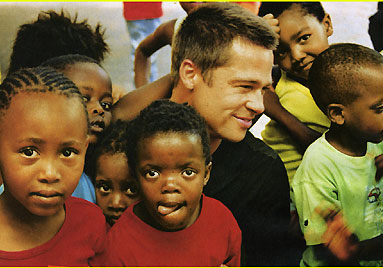
Brad Pitt is calling from France, where he's living with Angelina Jolie and their adopted kids, Maddox and Zahara, to talk about a project close to his heart. No, not impending fatherhood, or his upcoming movie about Jesse James. Instead, the 42-year-old superstar is pumped about a PBS documentary, Rx for Survival-The Heroes, which profiles people who have found solutions to world medical crises. "We wanted a celebrity who had done work on global health and poverty issues," says senior producer Lisa Mirowitz of her search for a narrator. "He was down-to-earth, patient and very educated about these topics." We couldn't agree more.
You're a $20-million-a-picture superstar. Why stop to do this project?The ultimate reason, of course, is that everybody matters equally. There's a great imbalance when you see so many people dying-especially kids-from mosquito bites or diarrhea. It tells me more should be done. And the main reason is that these kinds of issues don't seem to make our print and airtime. We're not getting this information. And our society has great ingenuity and great empathy and we could create more change.
So America's not doing enough to combat global poverty and disease?I'm not saying that. I'm saying we don't know enough. It's just not on our front page. What I like about the series is not only does it make the humanitarian argument, but it also makes the self-interest argument-that we should be paying attention to global health because diseases can certainly spread. We're all sitting in the same petri dish...hold on...one of my kids' toys is going off... OK, I got it.
The documentary is about humanitarian heroes. Who are your heroes?The survivors. The people who are fighting every day under horrible circumstances to provide for their families.
Was there a wake-up moment for you?Well, for me, someone who's so fortunate, it became a question about equality. We may have all been created equally, but we're not born equally.
What have you seen that breaks your heart?You hold these children, who have already lost their parents to these diseases-TB, AIDS, malaria-and you know how vulnerable they are. And I look at them and I can't help but ask, "What is their future?" And my response is, "This is unacceptable." But I don't limit it to children-it's the families that really break my heart.
So what can people do?It's more than just witnessing it and saying it's a terrible situation. This should be our focus: the solution. This is where Bono has been very successful. Bono is a wonderfully dedicated beast unto himself. I find him very inspiring. But the Web site related to the documentary-pbs.org/rxforsurvival-provides links [to] ways for people to get involved.
Did you learn anything from Rx for Survival?I did. I learned about how simple some of the solutions can be, like adding vitamin A to a child's diet prevents river blindness. As the documentary shows, vitamin A costs 2 cents for a dose. A bed net [to prevent malaria] is a third the price of a CD. These things aren't out of reach.
Are you planning any more humanitarian trips right now?What's next? No. My plan right now is to have a child...
Right. Congratulations! So can I ask-[Laughs] I'm absolutely not going to talk about that here.
OK. Well then, congratulations on doing a good thing and on getting yourself educated about some issues.Yeah, who'd have thought?


Copyright 1995 - . All rights reserved. The content (including but not limited to text, photo, multimedia information, etc) published in this site belongs to China Daily Information Co (CDIC). Without written authorization from CDIC, such content shall not be republished or used in any form. Note: Browsers with 1024*768 or higher resolution are suggested for this site.
License for publishing multimedia online 0108263 Registration Number: 20100000002731