

 Comments
  Print
Print  Mail
Mail  Large Medium Small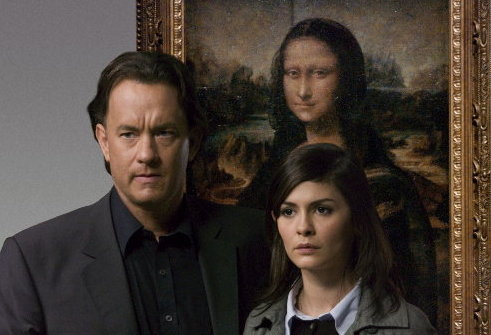
Tom Hanks and Audrey Tautou star in The Da Vinci Code./Columbia Pictures
Come Tuesday, all heaven's gonna break loose.
The hotly anticipated paperback version of "The Da Vinci Code" -- the novel that wrings high drama and lowdown behavior out of church history -- is scheduled for release. Five million copies will pop up in stores, ready to capitalize on the May release of the film version of Dan Brown's cheerfully blasphemous blockbuster.
First published in hardcover in 2003, the book has sold some 43 million copies worldwide. Not too shabby for a work that mixes theology, art history and lots of foreign words.
But why is "The Da Vinci Code" such a hit? What accounts for its sensational success?
Never content simply to observe a phenomenon from an envious distance, we've gone where angels fear to tread: into the heart of the "The Da Vinci Code" to explicate its irresistible appeal.
And we've enlisted other scribes to help us solve the mystery.
"It is the inhalable book," declares Donna Seaman, associate editor of Booklist and author of "Writers on the Air: Conversations About Books" (2005). "Everything about it is so charming."
And so flattering: As Seaman notes, readers feel smart because often they're figuring out the clues before the book's characters do. "Dan Brown tricks people into thinking they're getting an education. It's `cultural history lite.' People feel they're benefiting."
Aside from the fact that its fans can claim honorary doctoral degrees in ecclesiastical history, how else does "The Da Vinci Code" weave its magic spell?
SIZZLIN' SUDOKU: Everybody loves a puzzle. "In the untidy realities of everyday life," says Chicago author Blue Balliett, "there's a sense of mystery, challenge and then clean satisfaction in figuring out a code, whether you're 10 or 80. " Brown's book, of course, includes a number of puzzles and secret writing.
OO-LA-LA!: It's a fact: Sex sells. Most popular novels have a goodly share of hot and heavy action. Brown, however, trumps 'em all. His book claims that Jesus -- the purportedly virginal founder of a major world religion, often considered a stunt double for God -- was a swinger. He not only had sex but also spawned a secret family line continuing in the present day.
WHEREFORE ART THOU? High culture -- famous paintings and classical music -- makes a lot of people all itchy and inferior. Brown taps into the uncertainty most of us feel in fancy museums. "Don't worry," his book implies. "You don't know great art from grated cheese? So what? Neither do the experts!" The novel shows that even a seemingly straightforward depiction of the Last Supper by Leonardo Da Vinci is bristling with hidden clues.
LEONARDO DI CAPTIVO: Enticing characters are the sine qua non of popular novels. A famous artist; an affable academic; a pretty and whip-smart young woman; an eccentric rich guy; a crazed albino -- what's not to like?
THRILLS! CHILLS! SPILLS! The CPP count -- that's "Cliffhangers Per Page" -- is off the charts, as the book barrels along at a breakneck pace. Each chapter ends with events very much up in the air. Clever escapes, midnight flights, desperate chases down dark corridors proliferate. "It just has amazing momentum," Seaman says. "We love a good story."
THE FEET OF CLAY FACTOR: Want to make a splash, get some attention, sell a few books? Pick on a biggie. Brown's sensational assertion that the Roman Catholic Church has been lying about Jesus and his teachings for 2,000 years is absolute catnip to readers. The novel's popularity, says Nuala O'Faolain, the Irish memoirist and novelist, grows organically from "the scandals" within the Catholic Church. "The reading public has always loved stories that chip away at establishments."


Copyright 1995 - . All rights reserved. The content (including but not limited to text, photo, multimedia information, etc) published in this site belongs to China Daily Information Co (CDIC). Without written authorization from CDIC, such content shall not be republished or used in any form. Note: Browsers with 1024*768 or higher resolution are suggested for this site.
License for publishing multimedia online 0108263 Registration Number: 20100000002731