


 Comments
  Print
Print  Mail
Mail  Large Medium Small
China's coastal economies are fighting a grim battle to adapt to changes and to generate new business opportunities at a time when overseas trade is weakening and much of the fiscal stimulus is going to the interior provinces.
These coastal provinces and cities used to be the powerhouses of the country's rapid economic growth in the past 20 years.
But with the financial crisis sweeping across the world, it is now easy to see the difficulty they are in, as their gross domestic product (GDP) records declined compared with the rest of the country in the first quarter of the year.
Stumbling champions
|
Construction workers labour near a skycraper in the Bund, Shanghai. CFP |
In the first quarter of this year, in terms of year-on-year growth, Shanghai, the largest business city in the country, found itself placed second from bottom (3.1 percent) of all the Chinese mainland provinces - better only than Shanxi province (minus 8.1 percent), an energy-producing province that suffered from a major fall in product prices.
Zhejiang province, once regarded as China's cradle of private enterprise and boasting perhaps of the largest cluster of small and medium-sized private companies in the country, fell to the third position from bottom (3.3 percent).
Guangdong province, the largest province in China in terms of economic strength (in both GDP and foreign trade), was only slightly better (5.8 percent), and ranked sixth from the bottom.
The three regions' GDP fell below the national average of 6.1 percent, with only Beijing's performance matching the national standards.
Shanghai and Zhejiang also showed larger declines from their growth records in the same period last year (Shanghai minus 8.4 percentage points and Zhejiang minus 8.5 percentage points) than most other provinces.
With the central government trying to maintain the economy's growth by extending huge fiscal stimulus to projects such as expressways and bridges, mostly in the poorer central and western regions, areas in the relatively developed eastern and southeastern regions would have to be more creative in evolving a future business model.
Take Shanghai, for instance. Fixed assets investment (FAI) grew only 1.7 percent in the first quarter from the same period last year, in a stark contrast with the 34.3 percent growth in the provinces of Central China.
In Guangdong, although FAI showed a more decent expansion of 12.7 percent over last year it still remained far below the national average of 28.6 percent.
Lack of services
The main problem for China's coastal cities and provinces is the lack of overseas orders. But on a deeper level, the pain in adjustment comes from a prolonged imbalance between the strong manufacturing and weak services. It is only now that these regions, especially the cities, are trying to work out their own strategies to effectively boost the growth of their services industry.
In fact, although both the Yangtze and the Pearl Delta have developed so much as to be comparable to the economies of Taiwan and Hong Kong, in terms of GDP and in manufacturing diversity, the local service industry has only commanded a markedly smaller share. In most of the mainland coastal economies, services account for less than 50 percent of the GDP, much lower than in Taiwan more than 20 years ago.
In the developed countries of the world, this proportion is often more than 70 percent of the entire economy.
Shanghai is the only exception, where services account for more than 60 percent of the GDP. But this was only reported in the first quarter, after it had lost considerable steam in its manufacturing industry.
Shanghai's difficulty is also partly reflected in its foreign trade records. Its imports declined 32.1 percent, while exports fell 20.8 percent, both larger than the national average (30.9 percent for imports and 19.7 percent for exports).
Economists have for long been criticizing that the service industry is enjoying too little latitude, let alone incentives, from the government in China and should have developed more quickly.
Domestic consumption is a smaller component of the GDP than it is in many other countries. Through the economic reform, which first started in 1978, the service industry has outpaced the manufacturing industry only in a few periods. For a few years till the onset of the global financial crisis, the manufacturing sector continued to show a faster growth rate.
Catching up
Officials in the coastal cities have now realized that if their cities do not catch up in services, they stand to lose considerable overseas and domestic opportunities in the future.
The cities cannot expect to prosper by dispatching endless shipments of manufactured goods all over the world. They also cannot expect to prosper domestically by just re-directing to the interior provinces the manufactured goods that they cannot sell in the global market. The interior provinces are now getting ample development funds from the central government for building their own public infrastructure and soon enough, their own manufacturing capacity.
Indeed, the only way for the Chinese coastal cities to maintain growth is to develop services - for both overseas and domestic clients.
Enough evidence can be drawn from the first quarter data for this year. At the end of 2008, except Beijing, in no regional economy was the share of services larger than 60 percent of the local GDP, when the so-called tertiary industry (statisticians' term for services) accounted for only 40.1 percent of the national GDP in 2007 - even lower than 2002's record high of 41.5 percent.
In the first quarter, it was only with the difficulties for the manufacturing sector, did Shanghai see its share for services exceed 60 percent (60.2 percent to be exact) in GDP - based on an annualized sectoral growth of 13.1 percent, four times faster than that of the city's whole economy. In contrast, in industry and construction, the city only saw an annualized net decline of 8.1 percent. Many other coastal cities and provinces, like Zhejiang, Guangdong and Fujian also reported over 10 percent growth in services during the same period.
New plans
Local officials in coastal cities are now yearning for more policy leeway for their urban programs. The two cities with securities' exchanges, Shanghai and Shenzhen (sharing border with Hong Kong), have already got the nod from the central government to expand urban land and boost their service industry.
Shanghai has decided to incorporate Nanhui, a former suburban district far away from the urban center, into its Pudong development area. More urban land will allow the city to build more modern service facilities that it will need to become a financial and logistics service center in the world.
In the next couple of years, many new exchanges will be launched in the city for various commodities and securities.
Manufacturing, at the same time, will become focused - and concentrate on operations that are globally competitive, such as the building of sophisticated equipment. Industrial operations that envisage high consumption of resources or those with high emission will be entirely phased out.
A similar service-oriented development plan will also be adopted by Shenzhen - and probably by more coastal cities later this year.
Of course, all these urban development plans are only in the nascent stage. Larger urban areas and more buildings do not necessarily make cities more competitive and attractive to visiting business people. To reconfigure a city's service industry would require a lot more things to be done, from the government's public services to the responsiveness of the local labor market.
Cities don't compete by size. Rather they compete by creating their own unique business environment.
|
Workers manufacture toys at a factory in Shantou, Guangdong province. Bloomberg News |

(China Daily 05/25/2009 page12)

 Night views of Harbin through the lens
 Tibetans take train home after pilgrimage or travelling
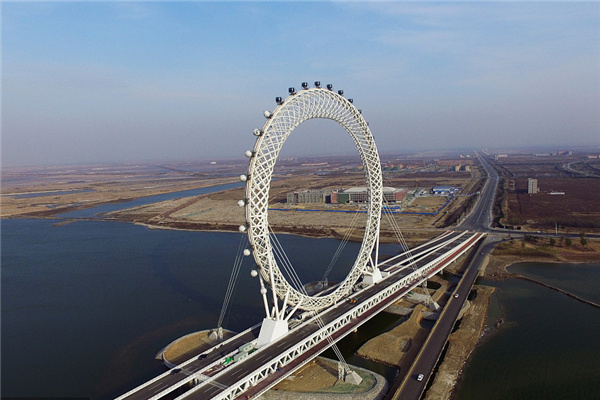 World's largest shaftless Ferris wheel built in China
 Ancient cities to be connected by Xi'an-Chengdu high-speed railway
 Snow turns Harbin into winter wonderland
 Reed Catkin Festival held in Wuhan
 Is it a building or a bookshelf?
 First flight
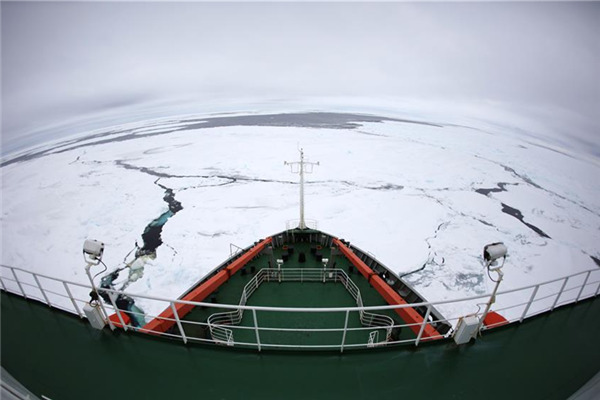 Polar icebreaker Snow Dragon arrives in Antarctic
 Xi's vision on shared future for humanity
 UN's top environmental honors go to three in China
 German trains collide near Duesseldorf, several people injured
 China beats Germany 7-4 in men's curling Olympic qualification
 Bayern beat Paris Saint-Germain 3-1 in UEFA Champions League


Copyright 1995 - . All rights reserved. The content (including but not limited to text, photo, multimedia information, etc) published in this site belongs to China Daily Information Co (CDIC). Without written authorization from CDIC, such content shall not be republished or used in any form. Note: Browsers with 1024*768 or higher resolution are suggested for this site.
License for publishing multimedia online 0108263 Registration Number: 20100000002731