

 Comments
  Print
Print  Mail
Mail  Large Medium Small
|
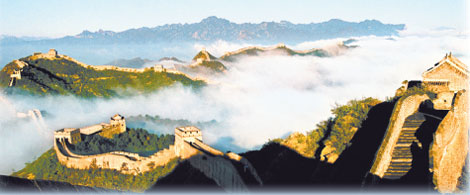
Jinshanling Great Wall. |
With a convenient location, long history and varied culture, cities in Hebei province are now hot tourism destinations attracting visitors from home and abroad.
Langfang and Zhuozhou
With a total population of 3.957 million and a total area of 6,429 sq km, the city of Langfang is in the east-central part of Hebei bordering Beijing in the north, Tianjin on the east, Cangzhou in the south and Baoding in the west, part the nexus linking Beijing and Tianjin.
According to historical records, ancestors of Langfang's people inhabited the area as far back as thousands of years ago.
It was just a small village in the eighteenth century and gradually became a town in the late Qing Dynasty (1644-1911).
|
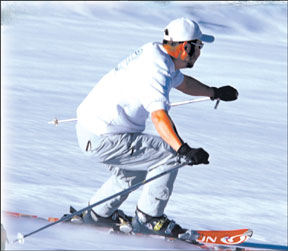
Skiing in Hebei. |
The terrain of the city is mostly low and flat, with hills and mountains in its northern sector.
Langfang enjoys a temperate climate with four distinct seasons. The weather in spring is dry and windy and hot and rainy in summer.
Autumn is cool and comfortable, while winter is chilly. January is the coldest month with an average temperature of 4.7 C and July the hottest with an average temperature of 26.2 C. Autumn is the best season to visit Langfang.
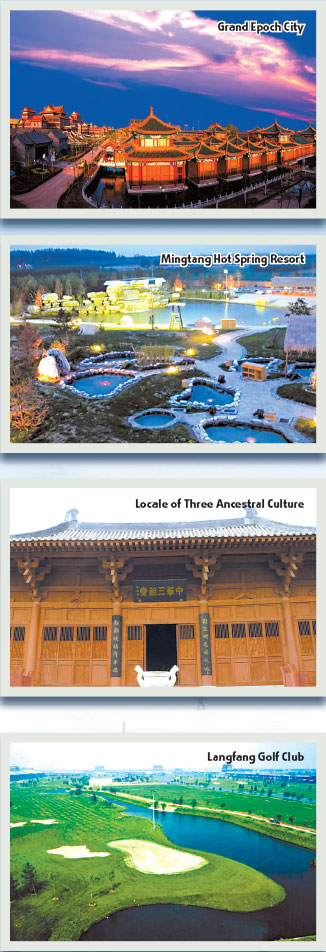
Grand Epoch City, one of Langfang's attractions, is an authentic replica of old Beijing during the Ming (1368-1644) and Qing (1644-1911) dynasties as well as a large multifunctional center for international conventions, exhibitions, sightseeing, entertaining, catering, shopping and filmmaking, sprawling over 200 hectares.
The style of the attraction brings together traditional and modern Chinese culture that each year attracts large numbers of tourists from home and abroad.
Langfang's numerous golf courses offer a scenic and enjoyable respite from city stress. The city has a total of 198 holes, including Oriental University City Golf Club, the largest golf course in north China.
Hot springs are another attraction in Langfang. Mingtang Hot Spring Resort in the Hebei Bazhou Development Zone covers about 333,333 sq m and has more than 100 hot spring pools.
Its spring water has various mineral constituents that are thought to have curative properties.
Zhuozhou, another Hebei city only 60 km away from Tian'anmen Square in Beijing, has a population of 600,000 and covers of 742 sq km. As a popular tourism destination, it has a history stretching back more than 2,300 years.
It was the cradle of culture for the Three Kingdoms (220-280) and locale for the well-known story of the Oath of the Peach Garden.
It was an oath in the historical novel Romance of the Three Kingdoms, by which the three warriors Liu Bei, Guan Yu, and Zhang Fei became sworn brothers in a ceremony amid peach blossom trees. The original goal of the Peach Garden Oath was to protect the Han Dynasty from the Yellow Turbans. This act bound the three key men of the future Shu-Han Kingdom of China and is often alluded to as a symbol of fraternal loyalty.
Zhangjiakou and Chengde
Zhangjiakou in the northwestern Hebei province covers 37,000 sq km and has a population of 4.5 million. Its natural terrain divides the city into two sectors, Bashang and Baxia.
The Great Wall, grasslands and ancestral cultures attract tourists to Zhangjiakou.
Only 200 kilometers from Beijing, Zhangbei county is located in the Bashang plain over 1,500 m high.
The Bashang grasslands are 280 km north of Beijing. The climate and lands at the junction of the north China plain and Inner Mongolia give the area a unique landscape and make it a popular destination for tourists and photographers.
With an average temperature much lower than Beijing, the grasslands offer a nearby escape from the summer heat. May through November is the best time to visit, and as early as October visitors may have the chance to see snow.
In recent years, tourism in Bashang has flourished and many special activities for tourists have been started. An inexpensive and interesting holiday is spending time at a farmer's home - eating roasted whole sheep and other simple food, chatting with farmers and sleeping on heated brick beds.
From the Liao Dynasty (916-1125) to the Yuan Dynasty (1271-1368), Bashang was where the imperial families went to escape the summer heat.
Today, the ecology of Bashang remains well preserved. Beautiful scenery and local foods like milk tea, mutton and mushrooms are all part of the experience.
Besides the charm of Bashang, visitors from Beijing can enjoy the sights during the six-hour drive along mountain highways, relaxing along the way at restaurants run by farmers.
Chengde is in the northeast of Hebei province about 230 km from Beijing, Tianjin, Tangshan and Qinhuangdao. The topography of Chengde is divided into plateaus and mountains, including Yanshan, Yinshan and Qilaotushan mountains, as well as the Luanhe, Liaohe, Chaobaihe and Jiyunhe rivers flowing through the city.
Chengde, originally called Rehe, was once the summer resort capital of the Qing Dynasty (1644-1911). It still offers rich history and relics dating as far back as the Neolithic Age. Ethnic groups such as Xiongnu (Hun), Xianbei, Qidan, Nuzhen and Mongols once led a nomadic existence in this region from the Qin (221BC-AD206) to the Ming (1368-1644) dynasties.
The Chengde Bashang grasslands cover 350 sq km and are a part of the topography that begins in Inner Mongolia.
It is now a place where many overseas Chinese come to find their roots and also a destination for investment.
Great Wall in Hebei
Hebei province boasts that it has the longest and best-preserved parts of the Great Wall in all of China.
The Great Wall of the Ming Dynasty with over 200 passes zigzags more than 2,000 km through the province. Dozens of sections are famous, including the walls at Laolongtou and Jiaoshan, Shanhaiguan Pass, Xifengkou Gateway and Zijingguan Pass.
Shanhaiguan Pass holds the strategic route from north China to the northeast. Jiaoshan is the first mountain the Great Wall climbs in Hebei province. Laolongtou is where the Great Wall meets the sea, termed the head of this giant dragon. Xifengkou Gateway, now submerged by Panjiakou Reservoir, likewise possessed a strategically important position in history, as did Zijingguan Pass, where many famous battles took place.
Starting from Beijing along the Beijing-Chengde highway, it takes about two hours to drive the 100 km to the Jinshangling Great Wall - and then onward to other sections.
|
Zhongdu Grassland. |
(China Daily 08/11/2008 page10)
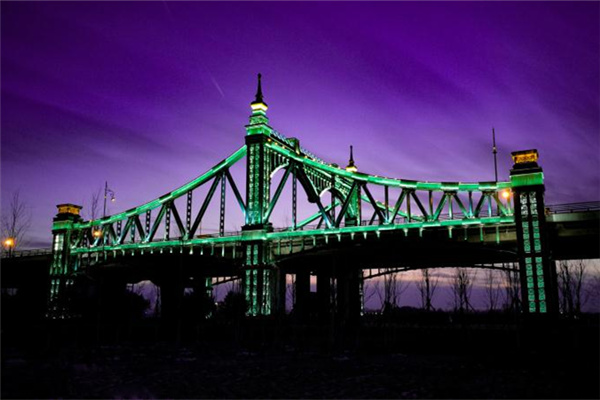
 Night views of Harbin through the lens
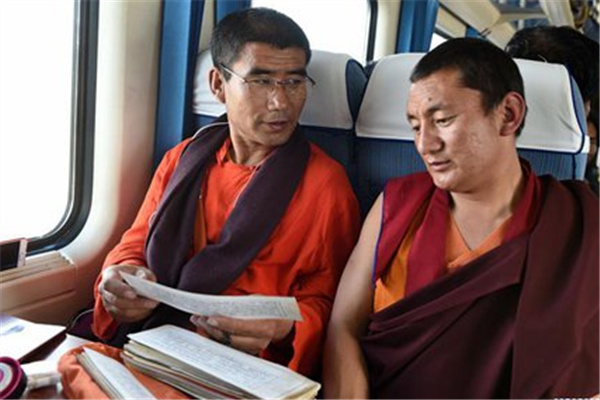 Tibetans take train home after pilgrimage or travelling
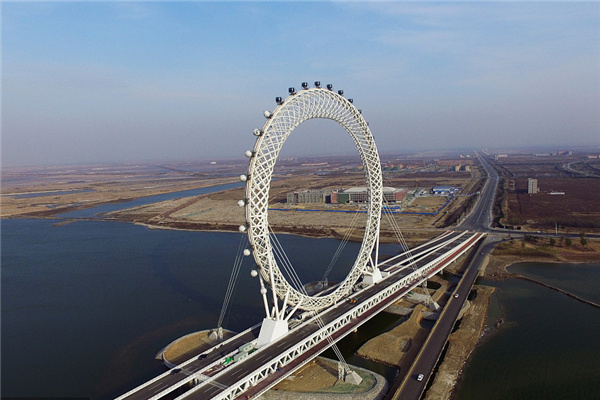 World's largest shaftless Ferris wheel built in China
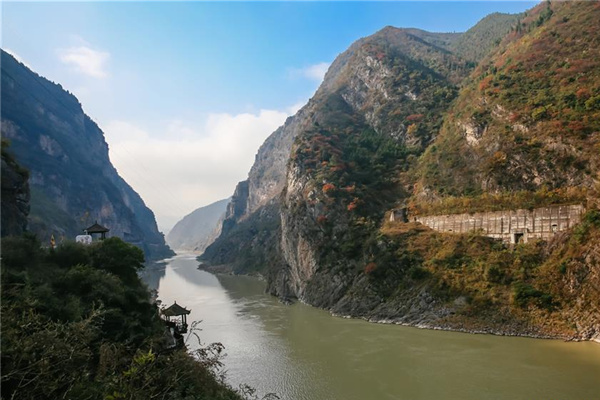 Ancient cities to be connected by Xi'an-Chengdu high-speed railway
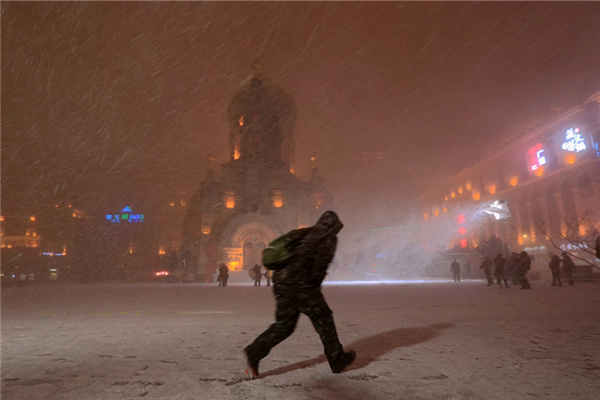 Snow turns Harbin into winter wonderland
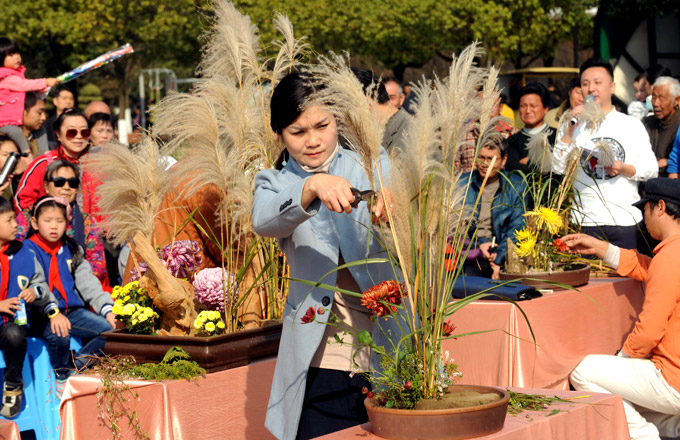 Reed Catkin Festival held in Wuhan
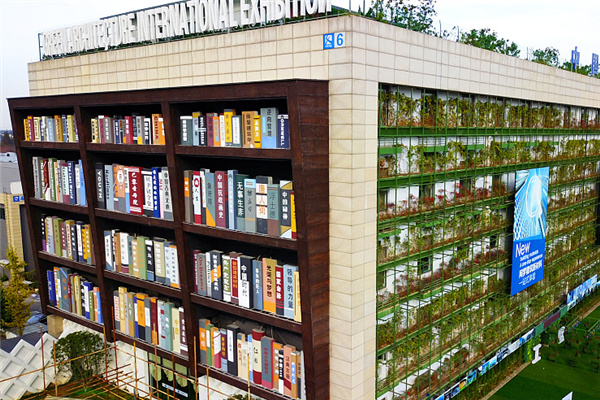 Is it a building or a bookshelf?
 First flight
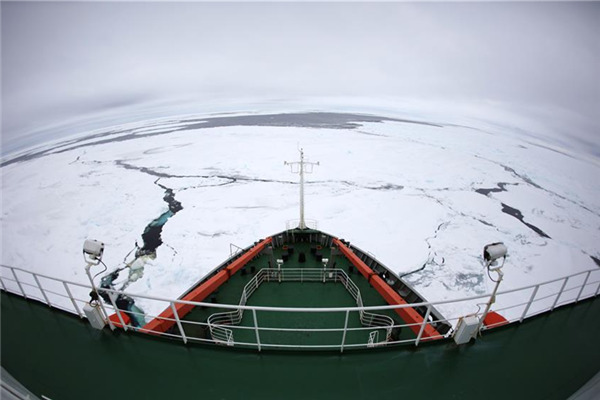 Polar icebreaker Snow Dragon arrives in Antarctic
 Xi's vision on shared future for humanity
 UN's top environmental honors go to three in China
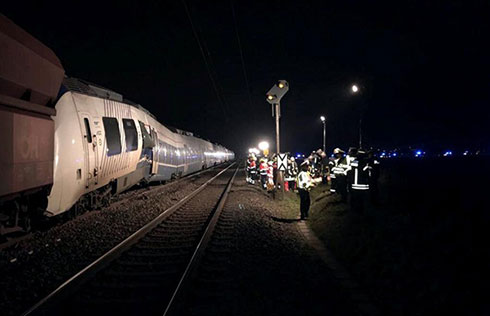 German trains collide near Duesseldorf, several people injured
 China beats Germany 7-4 in men's curling Olympic qualification
 Bayern beat Paris Saint-Germain 3-1 in UEFA Champions League


Copyright 1995 - . All rights reserved. The content (including but not limited to text, photo, multimedia information, etc) published in this site belongs to China Daily Information Co (CDIC). Without written authorization from CDIC, such content shall not be republished or used in any form. Note: Browsers with 1024*768 or higher resolution are suggested for this site.
License for publishing multimedia online 0108263 Registration Number: 20100000002731