


 Comments
  Print
Print  Mail
Mail  Large Medium Small
The compensation package spread before him by a top-tier global bank was, in Nazir Razak's word, "fabulous".
The 26-year-old investment banker had just finished helping Tenaga Nasional Bhd, Malaysia's State-controlled power producer, roll out $1.2 billion of shares in an initial public offering. Here was a chance to join a regional team a step up from Kuala Lumpur. He told his wife, Azlina Aziz, to pack for Hong Kong.
They never made it - and they didn't look back.
One change of heart and 15 years later, Nazir (like many Malays, he goes by his given name) is a banking force in his own right. He's used acquisitions to transform Commerce International Merchant Bankers Bhd, the small, State-controlled firm where he worked on the Tenaga IPO, into CIMB Group. It ranks as Malaysia's biggest investment bank, is a global force in Islamic bonds and is staking a claim as a diversified financial services power in Southeast Asia. Nazir, now 41, has been CIMB's CEO for eight years.
His decision to stay home and make something bigger of CIMB began with Tenaga, Nazir says. He took notes on how the big banks operated as the share offering was drafted, saying he learned that Wall Street's ways weren't so mysterious after all.
"It's not terribly complicated, and we could actually replicate some of it and build CIMB into a competitive franchise," Nazir recalls thinking as he reconsidered the job change. "Wouldn't that be something?"
Islamic bonds
He's already closing in on his goal. Since 2004, Kuala Lumpur-based CIMB has ballooned amid 12.8 billion ringgit ($3.8 billion) in mergers, including the 2005 purchase of Bumiputra-Commerce Bank Bhd. During the past two years, the workforce has surged from 1,000 in Malaysia to 24,170 in 11 countries ranging from the US and Bahrain to Thailand and Brunei.
|
Nazir Razak, CIMB Group CEO, in Kuala Lumpur, Malaysia. MUNSHI AHMED/BLOOMBERG MARKETS VIA BLOOMBERG NEWS |
CIMB ranks as one of the world's largest underwriters of Islamic bonds, or sukuk, according to Bloomberg data. The bonds are instruments structured to avoid interest payments that are barred under Islam's Shariah religious principles.
CIMB ranked third in 2007 equity underwriting in Southeast Asia through October, Bloomberg data show. In Asia-Pacific mergers, not including Japan, CIMB ranked eighth in 2006, up from 15th in 2005.
Nazir's buying spree includes a 2006 hostile takeover of Malaysian rival Southern Bank Bhd. A year earlier, CIMB acquired the stock brokerage unit of Singapore's G.K. Goh Holdings Ltd. The predecessor to CIMB's parent company bought a controlling stake in PT Bank Niaga, Indonesia's seventh-largest lender, in 2002.
Market value doubles
The market value of Bumiputra-Commerce Holdings Bhd, CIMB's listed holding company, more than doubled to 35.4 billion ringgit as of November 23 from 15.7 billion ringgit at the end of 2005. During the same period, Bumiputra-Commerce shares jumped 84 percent compared with a 50 percent rise in the Kuala Lumpur Composite Index. Annual net income at Bumiputra, whose name refers to ethnic Malays (literally, "sons of the soil"), also doubled to a record 1.5 billion ringgit in 2006 from 2004.
In the sukuk market, CIMB handled 88 issues of Islamic bonds totaling $6.1 billion during 2006 and the first 10 months of 2007, according to Bloomberg data. That was worth 15 percent of the global market.
The bonds replace coupons with payouts backed by tangible assets. In an Ijarah sukuk, or sale-leaseback arrangement, a company sells an asset to a special-purpose vehicle structured by a bank and then leases the asset and pays rent. Investors buy sukuk certificates from the SPV, receiving periodic distributions. On maturity, the asset is sold back to the company at a predetermined price.
In Malaysia, where about 60 percent of the 27 million people are Muslims, CIMB held a quarter of the Islamic bond market, twice the share of its nearest competitor, the data show.
Rivals have taken notice of CIMB's climb. "He's done a fantastic job of taking what was originally a fairly sleepy government merchant bank, then making it into Malaysia's first regional financial-services company," says Willard McLane, Hong Kong-based head of the Asia-Pacific financial institutions group at Morgan Stanley, which competes with CIMB in investment banking.
Leadership runs in the family. Abdul Razak, Nazir's late father, was the nation's prime minister from 1970 to 1976, and older brother Najib, 54, is the current deputy prime minister and defense minister. Nazir chose finance, not politics. Educated in Britain and known among friends by his nickname "Jay", Nazir isn't satisfied with a toehold for CIMB in just a few neighboring countries.
Target: Southeast Asia
"We can't really say that we are a complete Southeast Asian franchise by any means because we only have good presence in Malaysia, Indonesia and Singapore," Nazir says, seated in a 10th-floor CIMB lounge in Kuala Lumpur that's adorned with a traditional carved wooden boat and large abstract paintings he selected. "In five years, I would like us to be a franchise that Southeast Asia is proud of."
CIMB Group is a product of years of banking consolidation involving a dozen institutions, including Bank Bumiputra Malaysia Bhd, Bank of Commerce Bhd and Southern Bank. Khazanah Nasional Bhd, Malaysia's state-owned investment company, is the largest shareholder of CIMB's listed entity.
To fulfill his wider ambitions, Nazir says CIMB will seek further mergers in Thailand, Vietnam and unspecified nations in the Middle East.
To strengthen his balance sheet while targeting fresh mergers, Nazir in early 2007 sold 117 million new shares of Bumiputra-Commerce to Bank of Tokyo-Mitsubishi UFJ Ltd, raising 1.34 billion ringgit.
He's betting Southeast Asia's economic trajectory will stay on track. The Asian Development Bank on September 17 predicted 6.1 percent growth for the region for 2007. Southeast Asia has 570 million people and GDP totals $1 trillion.
Malaysia's success stands out, thanks largely to growth in the services sector and exports of electronics, natural gas and palm oil. Kuala Lumpur's 88-story Petronas Twin Towers, officially opened by then Prime Minister Mahathir Mohamad on August 31, 1999, symbolize the country's development since it gained independence from Britain in 1957. That year, Malaysia's GDP of 5.1 billion ringgit was on par with Sri Lanka's. Southeast Asia's third-largest economy, behind Indonesia and Thailand, has grown at an average pace of 6.8 percent a year since 1971.
Bloomberg News
(China Daily 12/01/2007 page10)

 Night views of Harbin through the lens
 Tibetans take train home after pilgrimage or travelling
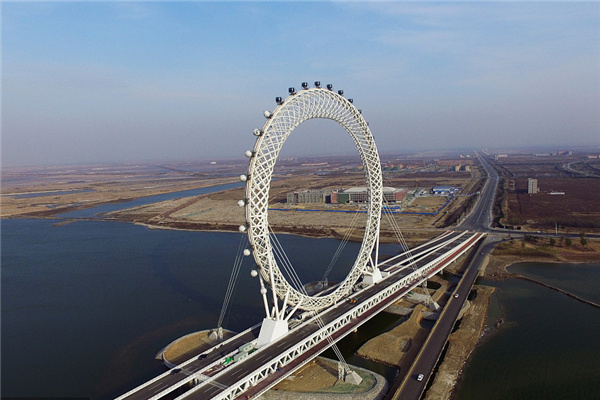 World's largest shaftless Ferris wheel built in China
 Ancient cities to be connected by Xi'an-Chengdu high-speed railway
 Snow turns Harbin into winter wonderland
 Reed Catkin Festival held in Wuhan
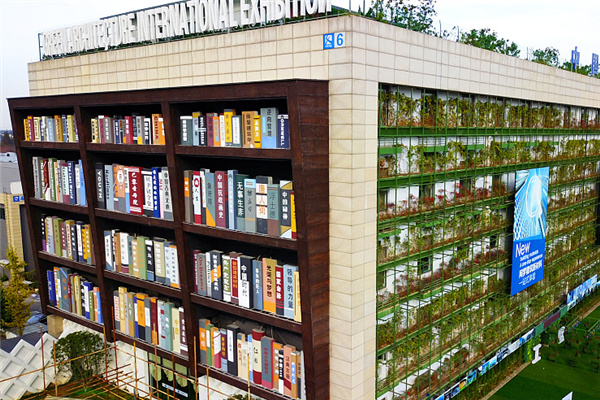 Is it a building or a bookshelf?
 First flight
 Polar icebreaker Snow Dragon arrives in Antarctic
 Xi's vision on shared future for humanity
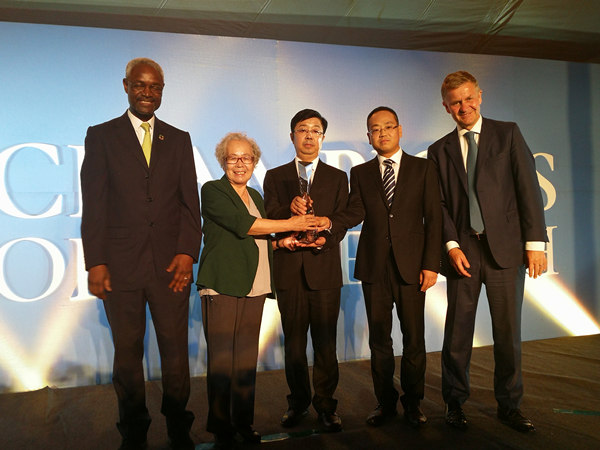 UN's top environmental honors go to three in China
 German trains collide near Duesseldorf, several people injured
 China beats Germany 7-4 in men's curling Olympic qualification
 Bayern beat Paris Saint-Germain 3-1 in UEFA Champions League


Copyright 1995 - . All rights reserved. The content (including but not limited to text, photo, multimedia information, etc) published in this site belongs to China Daily Information Co (CDIC). Without written authorization from CDIC, such content shall not be republished or used in any form. Note: Browsers with 1024*768 or higher resolution are suggested for this site.
License for publishing multimedia online 0108263 Registration Number: 20100000002731