

 Comments
  Print
Print  Mail
Mail  Large Medium Small
 3i is a leading private equity business with a history of 62 years. Established in 1945 with funding from the Bank of England, UK clearing banks and the City, seasoned entrepreneur William Piercy (later Lord Piercy) was appointed to manage the initial fund. 3i Group listed in London in 1994 and remains the only FTSE 100 Private Equity business, with five different asset classes and $14.3 billion under management.
The company has invested over $250 million in many well-known Chinese companies, such as: Focus Media, China's largest multi-channel advertising media company; D.Phone, one of China's earliest mobile phone retailers; PCD, established by Ports CEO, a high-end department store; and Inner Mongolia Little Sheep Catering Chain Co, China's leading retail hotpot restaurant chain.
3i is currently invested in more than 500 businesses worldwide. At least 60 of these businesses operate in Asia, of which more than 35 are in China.
In an exclusive interview, China Business Weekly reporter Zhang Ran speaks to Lily Jin, chief representative of 3i's Beijing office.
Jin was voted the best venture capitalist in 2006 by Forbes for her investments in Mengniu Dairy and Suntech Power.
Q: What was the situation when 3i came to China in 2001? Have circumstances for foreign private equity investments in China changed over the past six years?
A: 3i came to China when there were few other competitors operating in the market and private equity was not yet a buzzword. Successful listings of companies such as Focus Media and Mengniu Dairy, and increasing numbers of high-quality Chinese companies have delivered great results and expanded very quickly. Therefore, more and more international investors are flooding into the market.
Over the past three to four years, with proven high returns for overseas listings, the number of funds in the market has risen significantly. This is making China a competitive place to make investments. With so much capital in the market, Chinese companies are no longer interested in how much money you have, but rather the strategic advantages that you can bring to the table.
Q: How many deals is 3i likely to make this year? And what is the average investment amount?
A: We recently closed our first onshore investment, investing around $35 million. We are focused on other high-growth, traditional sectors such as branded consumer products (which includes retail and food products), oil, gas and renewable energy, and affordable real estate. We will probably look to invest in four to five Chinese companies this year, investing close to $200 million in total.
Q: Which sectors in China offer the greatest opportunity?
A: Globally we focus on high-growth sectors where we have the most experience and resources. There are great opportunities in a number of sectors in China. China has a large domestic market with a population that has increasing disposable income, making consumer-related goods and services a good area for investment. Likewise, with an average GDP growth rate of 9 percent, China's energy demands fit well with 3i's experience in the oil, gas and renewable sector.
Q: So far 3i has focused on making minority investments in Chinese investee firms. Why?
A: When we were set up over 60 years ago, our sole focus was to invest 'growth' capital. We pioneered the minority investment model and have developed a very good understanding and method of making these kinds of investments. We believe that the business is the management's responsibility to run and that we provide the necessary strategic support, which can be in a variety of forms. Perhaps another important difference between the situation in China compared with Europe or the US is that many private companies are relatively younger and thus owners are less keen to relinquish majority control. In Europe people are looking for ways to turn the business around or handle succession issues.
Q: How do you persuade investee companies that 3i is a good business partner?
A: 3i offers a global network of entrepreneurs, sector experts, experienced practitioners, corporates and advisers that can be very useful to our investee companies, both in developing their competitive edge at home and in expanding overseas. 3i's international offer is fundamental to investing in China. For example, when we invested in Jason Jiang's Focus Media back in 2004 we introduced Eric Rozenkranz who was appointed as the company's VP. Eric's experience both in Asia and the US was very useful both in understanding Jason's model and raising their profile before listing in April 2005.
We later came across an identical start-up business in India and immediately thought of Jason, introducing him to the business prior to providing capital to fund the company's expansion. This is the largest company in Asia that Jason has partnered with and has over 50 percent of the Indian market. Another example is PDC, which we invested in at the end of 2005. In the following spring we took the CEO to London to meet with members of our branded retail network in Europe.
We organized an exclusive lunch with over 60 of our contacts and several media interviews with the key European trade press. Following that we introduced the CEO to the former CEO for Le Prentemps who we know well in Paris, and brought her to Beijing to spend a week with Alfred.
Q: What does 3i's People Program involve?
A: Our People Program was set up back in the late 1980s to develop our network of independent directors and is unique to 3i. It is a global network of seasoned executives who work with us to source, assess and manage deals, sometimes taking a seat on the board or a non-executive position.
We have brought our People Program model to China and have a dedicated person based in Shanghai who is in charge of developing the network across Asia. Having experienced local professionals on our People Program adds a different dimension to the group internationally and it is easier for them to work with local businesses.
Q: Of all the well-known international private equity firms, what makes 3i different? And what are the benefits of being listed as a private equity firm?
A: 3i's own transparency and corporate governance levels are enhanced due to it being listed as a public company. The greatest advantage from an investee's point of view is that 3i's capital is largely perpetual (3i's own money) and therefore stable, flexible and in no hurry to exit. On the other hand, the vast majority of large funds in Europe and the United States are raised through limited partnerships with a limited life span.
Q: As the traditional red chip-plus-overseas-listing model through which most foreign private equity firms exit has become difficult, many private equity firms are trying an exit model on the A-share market. Does 3i have any plans to do this?
A: Yes we are helping one of our investments to explore this and are looking to invest in joint venture companies which could go for an A-share listing in the future. We strongly support the development of China's local capital markets as this provides greater choice for businesses.
Q: How many people cover 3i's investment projects in China?
A: Currently there are 15 professionals based in Beijing, Shanghai and Hong Kong who source and execute investment opportunities in China, three of which focus on cross-border promotion, value-adding and developing our People network.
(China Daily 07/23/2007 page5)

 Night views of Harbin through the lens
 Tibetans take train home after pilgrimage or travelling
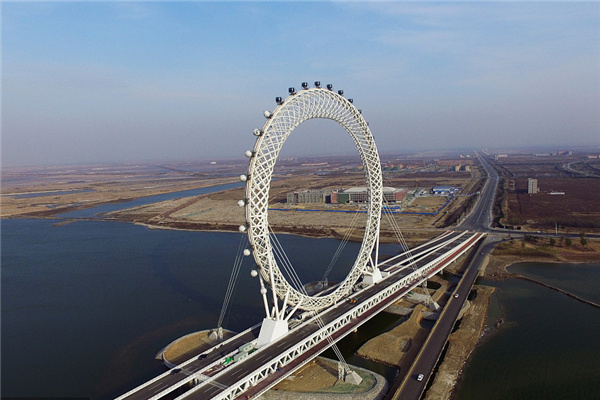 World's largest shaftless Ferris wheel built in China
 Ancient cities to be connected by Xi'an-Chengdu high-speed railway
 Snow turns Harbin into winter wonderland
 Reed Catkin Festival held in Wuhan
 Is it a building or a bookshelf?
 First flight
 Polar icebreaker Snow Dragon arrives in Antarctic
 Xi's vision on shared future for humanity
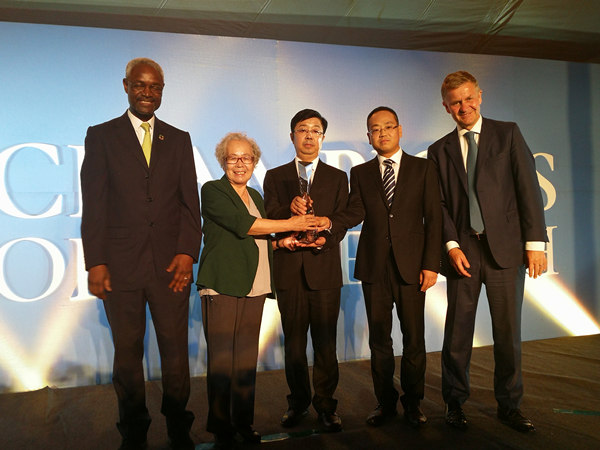 UN's top environmental honors go to three in China
 German trains collide near Duesseldorf, several people injured
 China beats Germany 7-4 in men's curling Olympic qualification
 Bayern beat Paris Saint-Germain 3-1 in UEFA Champions League


Copyright 1995 - . All rights reserved. The content (including but not limited to text, photo, multimedia information, etc) published in this site belongs to China Daily Information Co (CDIC). Without written authorization from CDIC, such content shall not be republished or used in any form. Note: Browsers with 1024*768 or higher resolution are suggested for this site.
License for publishing multimedia online 0108263 Registration Number: 20100000002731