


 |
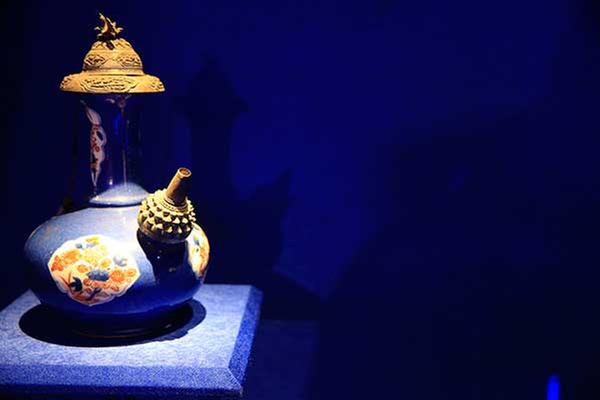
| The ongoing exhibition in the Palace Museum showcases 140 sets of relics including porcelain, enamel pieces, antique clocks, paintings and scientific instruments.[Photo by Jiang Dong/China Daily] |
The last section traces how Western fine arts and science blossomed in the Forbidden City. For example, Western painting skills became popular in the Qing court after being introduced by Christian missionaries here. A scroll painting from Chinese artists during the reign of Qianlong (1736-95) portrays British people who inspired the piece.
"While admiring these items, today's people can imagine the scenes of ancient travelers across oceans for frequent communication," Shan says."This is like time-travel."The exhibition started ahead of the Belt and Road Forum for International Cooperation, which was held in Beijing over the weekend.
Culture Minister Luo Shugang said at the opening ceremony of the exhibition on Monday:"The ancient Maritime Silk Road started from China's southeastern coast, went through South China Sea and the Indian Ocean, to finally reach Africa and Europe.
"It was the arterial route for Sino-foreign links and created common prosperity in regions along it. It promoted the spirit of inclusiveness,mutual learning and common benefits."





