Mechanical mutts meander through the crowd as robot bats flutter over the heads of awed attendees, many of whom watch a fully-automated rock band kick out the jams or a full-size android Yao Ming shoot hoops. This was the scene at last week's 2018 World Robot Conference in Beijing.
Back in 1992, the land now occupied by the Beijing Economic-Technological Development Area, also known as Beijing E-Town, was one of the capital's agricultural areas. Nowadays, however, it has evolved into an important and dynamic national high-tech cluster, home to about 80 Fortune Global 500 companies.
As a national hub for innovation, Beijing is attracting a growing number of artificial intelligence companies, according to a white paper on the development of the city's AI industry recently.
At the International Conference on Image, Video Processing and Artificial Intelligence recently held in Shanghai - also known as SHAI 2018 - medical software company TPP unveiled its new AI initiative in an exclusive global launch.
Global event also aims to promote scientific, technological exchanges, cooperation
Beijing is launching an environmental campaign to reduce air, water and soil pollution and seek sustainable growth, local officials said.
Beijing announced in mid-July that it had drawn a "red line" around key ecological areas in need of protection and preservation that cover 4,290 square kilometers.
Daxing district in the southern part of Beijing has become a livable industrialized area with a friendly environment, thanks to the city's efforts in environmental protection over the past few years.
Beijing issued a guideline recently calling for improving the compensation mechanism for ecological protection in mountainous areas.
Weifang Hi-tech Industrial Development Zone - located in central Shandong province - is taking dynamic measures to attract more innovative-oriented businesses and projects to the region, aiming to achieve high-quality economic growth in upcoming years, officials said.
Copyright 1995 - . All rights reserved. The content (including but not limited to text, photo, multimedia information, etc) published in this site belongs to China Daily Information Co (CDIC). Without written authorization from CDIC, such content shall not be republished or used in any form. Note: Browsers with 1024*768 or higher resolution are suggested for this site.
License for publishing multimedia online 0108263 Registration Number: 20100000002731 


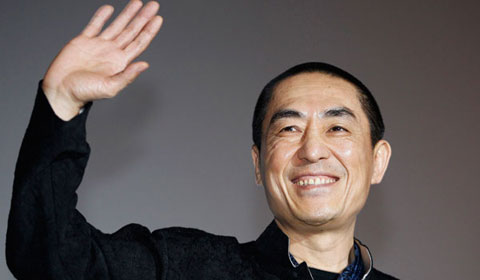


 Raymond Zhou
 Op Rana
 Berlin Fang
 Zhu Yuan
 Huang Xiangyang
 Chen Weihua