



Tourism boosts incomes for Ewenkis









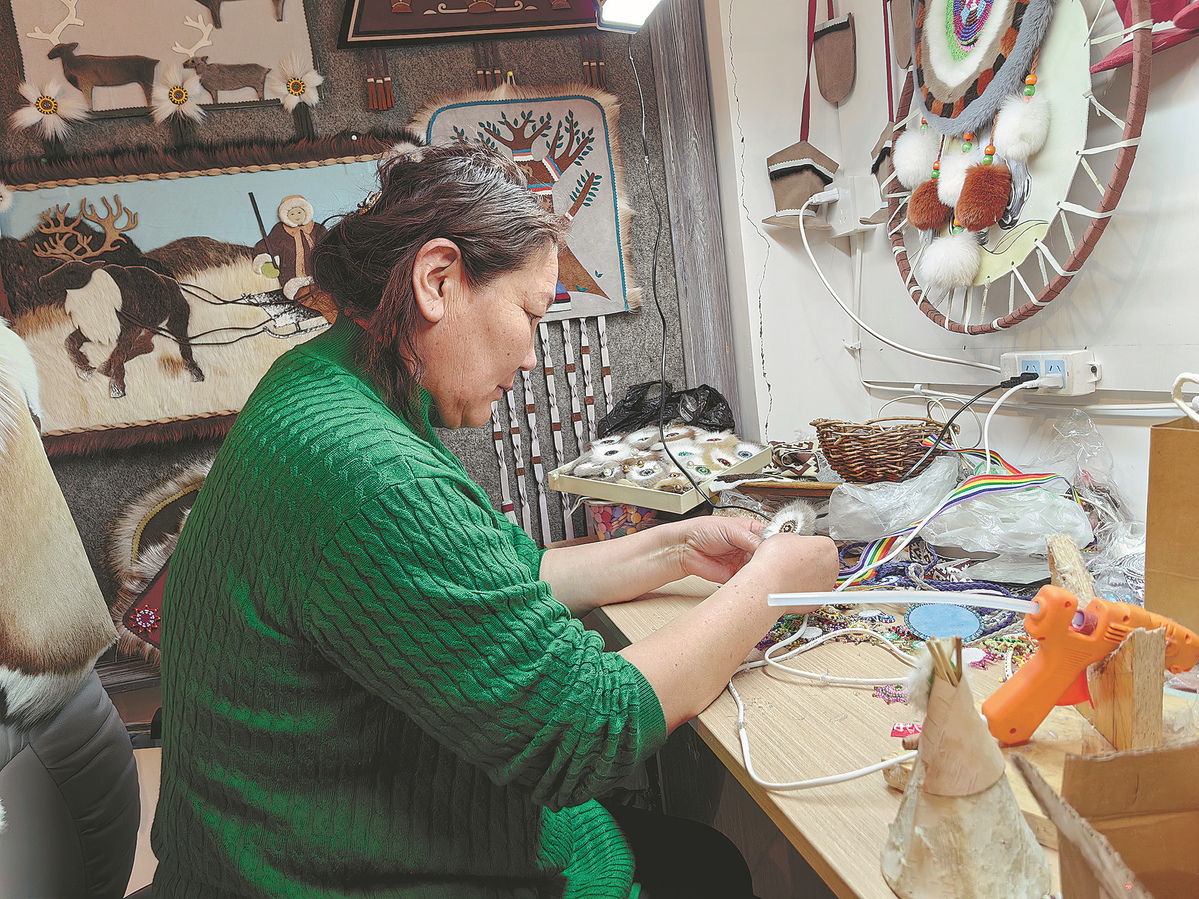
HOHHOT — Holding a small, round piece of cowhide in her left hand, Uran used her other hand to meticulously stitch a pinch of white wool evenly to its edge.
After a series of procedures, a piece of traditional Ewenki handicraft called "sun flower" was created, with the cowhide in the center representing the sun and the wool around it symbolizing rays of light.
Uran, a 55-year-old member of the Ewenki ethnic group, runs a traditional handicraft workshop in Ewenki Autonomous Banner in the city of Hulunbuir, Inner Mongolia autonomous region.
The ice and snow that blanket the region during winter — as well as China's 14th National Winter Games — have drawn tourists to the city, and the traditional Ewenki handicraft has become a popular souvenir, earning income for the locals.
Uran said the sun flower handicraft, a regional-level intangible cultural heritage, comes from an Ewenki folk tale, representing the Ewenki ancestors living in the forest yearning for warmth and light.
"Now, the handmade accessory is loved by many tourists at home and abroad as fashionable gifts," she said.
Figures show the city received more than 1.6 million tourists during the Lunar New Year holiday, nine times more than the same period last year, and tourism revenue skyrocketed to 1.14 billion yuan ($160 million), 10 times higher than the 2023 period.


- China implements new rules on the criminal liability of minor offenders
- China issues rules to strengthen overseas travel, exit-entry management
- Orange alert issued for geological disaster risks in three provinces
- Chongqing honors community worker killed during landslide evacuation
- China issues highest alert for flash flood risks amid heavy rain forecast
- Five government departments target malpractice in the matchmaking sector





