


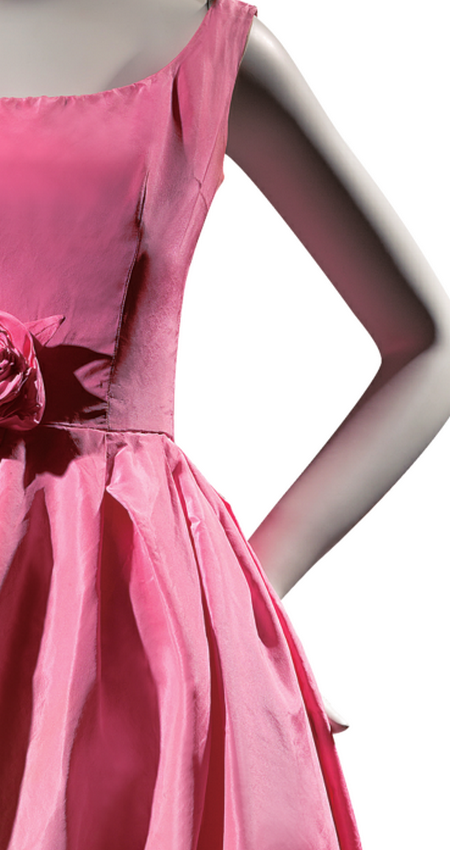
Pink is one of the most divisive colors, yet attitudes toward the hue are changing as it shifts to something increasingly regarded as cool and androgynous. Although popularly associated with little girls, ballerinas and all things feminine, the stereotype of "pink for girls and blue for boys" only really gained traction in the United States in the mid-20th century; the symbolism of pink has varied greatly across world history.
It's no small irony that by the 18th century, pink was a new and highly fashionable unisex color in Europe, in contrast to the 19th and 20th centuries, when pink became coded as a feminine color. The New York Fashion Institute of Technology's perky exhibition Pink: The History of a Punk, Pretty, Powerful Color starts from the 18th-century premise, with a section titled "Pompadour Pink" featuring several 18th-century ensembles, including a woman's pink robe à la Française, a man's pink habit à la Française and a man's pink banyan. By the 18th century, pink had also become a key component of painting and interior design.





