



Beijing to follow Shanghai's suit on garbage sorting









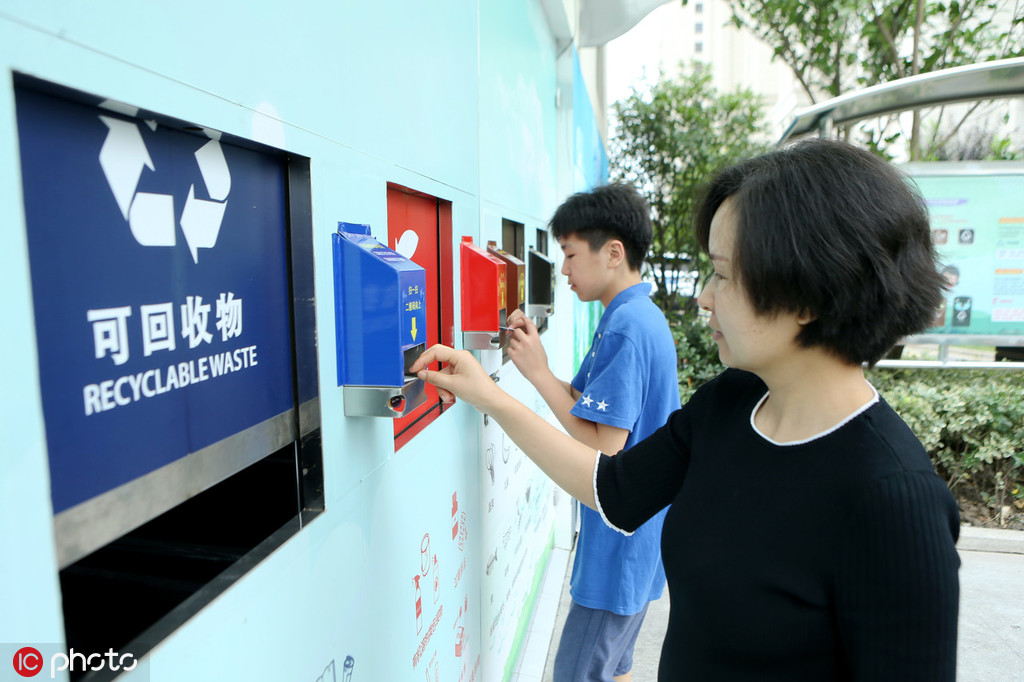
BEIJING -- The Beijing urban management commission said on Wednesday that Beijing will follow Shanghai's suit on mandatory household garbage sorting, though in different garbage classification standards.
On the first day of the new regulation on Monday, Shanghai issued 623 notices for rectification to institutes and companies who failed to sort their garbage accurately.
Shanghai's garbage classification standards require residents to separate dry refuse, wet trash, recyclable waste and hazardous waste. Individuals who fail to sort garbage may be fined up to 200 yuan (about $29).
The Beijing urban management commission said it plans to classify residential garbage into kitchen waste, recyclable waste and hazardous waste. The punishment standard will be no less than that in Shanghai.
In 2018, Beijing collected 9.3 million tonnes of household waste.
The Beijing Environmental Sanitation Group has been promoting new garbage sorting facilities such as recycling cabinets and smart kitchen waste trash cans since 2016. With intelligent devices, residents in Beijing can receive points and exchange small gifts regularly when classifying kitchen waste and recyclable objects.
According to the sanitation staff, if kitchen waste can be separated from dry waste, the garbage transfer pressure in the city can be greatly reduced.
In 2017, China's State Council set a goal that the country should realize a utilization rate of 35 percent in household garbage recycling by 2020, and 46 Chinese cities should take the lead in implementing mandatory classification of residential waste.


- Global legal experts advocate for enhanced legal system exchanges
- Giant two-kilogram black bolete mushroom found in Yunnan forest
- China upgrades flood emergency response for Guangxi
- Xizang to award vlogger 500,000 yuan after viral taxi trip to Lhasa
- New alliance launched in Shanghai to upgrade urban renewal
- Three reservoirs at risk, evacuations underway in Nanning, Guangxi





