China has an underdeveloped banking system with relatively low-quality service, but the system might be blamed most for its lack of small- and medium-sized banks (SMBs) and regional capital markets.
The momentum of continuous rise in China's stock market over the past few months recently suffered a heavy setback.
The most authoritative energy organization just indicated that the end of oil is much nearer than expected.
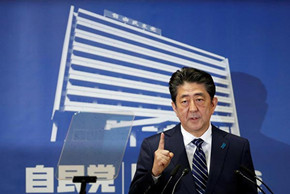
Japan stands on the threshold of change as the Aug 30 election to its Lower House of Parliament is expected to see the end of Liberal Democratic Party (LDP) rule for just the second time in more than half a century.
Since the outbreak of the international financial crisis, China, while endeavoring to maintain steady and relatively fast growth of its own economy...
US President Barack Obama has less than a month to decide whether to restrict the import of tires from China.
The US International Trade Commission's (ITC) recommendation to impose heavy tariffs on tire imports from China is a violation of free trade policy.
The carbon tariff proposed by the United States is not only an excuse for protectionism dressed in green drag, but also a provocation that will spur a trade war.
China has cut its holding of US Treasury bonds by $25 billion to $776 billion at the end of June compared with the previous month, according to a report released by the US Treasury Department on Aug 17.
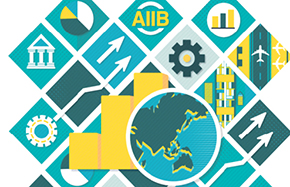
Economic integration and cooperation among members of the Association of Southeast Asian Nations (ASEAN) and a wider East Asian region are expected to intensify with the 10-member bloc having reached a series of agreements.
The issue of corruption is always eye-catching. In recent years, environmental administration has become a new field of corruption. Along with the intensified emphasis on environmental issues by the Chinese government, the power of the administration, too, has expanded.
Recently on my way to Dunhuang, the Gansu city of caved Buddha fame, I was fascinated by what must be the largest wind farm on earth.
As an old friend of China and an admirer of the Chinese people and their 5000-year-old history and culture, I have always pointed out aspects of life and attitudes in the People's Republic that do not match the glory of China and its civilization. It is in such a context that I would like to point out the high and low points during my and my wife's recent visit to China.
Until recently, investors had enjoyed market gains in the US and China. By early August, the Standard & Poor's 500 Stock Index had climbed about 50 percent from its low in March, while US stock-market capitalization increased by almost $4 trillion during that period.
The economic crisis seems to undermine the importance of China's self-employed but unregistered street vendors, even though they comprise a large number of people laid off because of the slump.
Samdhong Rinpoche's recent remarks that the "Tibetan government-in-exile" is a secular one are ridiculous and fully expose the Dalai Lama clique's attempt to conceal its nature as a politico-religious one.
The rise in traffic accidents throughout China caused by drunk drinking over recent months has provoked great indignation among the public over this irresponsible behavior.
A lengthy article by Greg Sheridan, foreign editor of The Australian, on Thursday instructing notorious Uygur separatist Rebiya Kadeer how to counter the Chinese government is a naked violation of journalistic ethics.
On July 20, US Secretary of Defense Robert Gates announced a temporary increase of American troops by 22,000 in the next three years. The increase, which will raise the number of US active-duty troops from 547,000 to 569,000, is said to ease the strain on US troops in Afghanistan and not as a move to expand its combat forces.
The backdrop this year is markedly different from that of last year, when the Wall Street crisis had just unleashed the global financial tsunami that engulfed financial markets and severely curtailed business activity.
As world leaders are slated to gather in Copenhagen this month to find a replacement to the Kyoto Protocol, talks about climate change are gathering steam. But is climate change the most pressing threat for mankind?
China declared on Nov 26 that it would reduce the carbon intensity by 40-45 percent below the 2005 levels by 2020.
Asia has rebounded fast from the depth of the global crisis. Initially, the region was hit extremely hard, with output in most countries shrinking by much more than even those nations at the epicenter of the crisis.