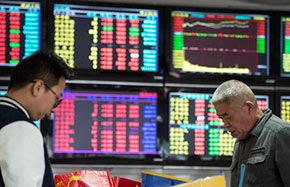
Hong Kong stocks closed down 372.42 points, or 1.81 percent, at 20,212.91 on Friday. The benchmark Hang Seng Index traded between 20,178.67 and 20, 580.81. Turnover totaled HK$71.604 billion ($9.194 billion). ($1 = HK$7.788)
China's stocks fell Friday, as the benchmark Shanghai Composite Index dropped 1.09 percent, or 27.76 points, to 2,528.28. The Shenzhen Component Index lost 1.1 percent, or 124.57 points, to finish at 11,228.3.
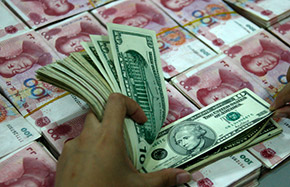
Yuan-denominated bond sales in Hong Kong rebounded in August from a four-month low. The rebound came as regulators eased concerns that they were cracking down on transfers of funds into the Chinese mainland.
Stocks on the Chinese mainland fell, driving the benchmark index to the lowest level in a week, after export orders slumped and Premier Wen Jiabao said the government won't alter economic policies amid concerns about inflation.
Standard Bank Group, Africa's largest bank by assets, is boosting its yuan business in a move to capitalize on the growing trade between China and Africa and the rising influence of the Chinese currency on the continent.
China's stock index futures closed down on Thursday with the contract for September, the most actively traded, down 0.58 percent from the previous trading day to 2,828.0 points.
The ChiNext Index, tracking China's Nasdaq-style board of growth enterprises, fell 3.75 points, or 0.41 percent, to close at 917.75 on Thursday.
Hong Kong stocks closed up 50.48 points, or 0.25 percent, at 20,585.33 on Thursday. The benchmark Hang Seng Index traded between 20,572.97 and 20, 975.30. Turnover totaled HK$87.059 billion ($11.18 billion).
China's stocks fell Thursday, as the benchmark Shanghai Composite Index edged down 0.44 percent, or 11.30 points, to 2,556.04.
The asset management arm of Edmond De Rothschild Group, owned by the Rothschild family, said it had bought more than 5 percent of China CYTS Tours Holding Co Ltd, worth $54 million at present.
Most stocks on the Chinese mainland fell, driving the benchmark index to its biggest monthly loss since May, as smaller companies slid on speculation that tighter credit will curb earnings growth and US consumer confidence declined.
China's consumer lending market is expected to triple to 21 trillion yuan ($3.3 trillion) by 2015, according to a report released on Wednesday by the Boston Consulting Group (BCG).