Urbanization seems to be robbing people of their sense of belonging, says Chen Kai, associate professor of communication studies at the Communication University of China.
The recent rises in commodity prices and looming inflation have become of increasing concern, not just to the Chinese government, but also to many ordinary people.
A series of tough measures have been implemented by Chinese authorities to curb rising commodity prices, taken for granted as the foundation of social security in the face of unaffordable housing. The impact at home and abroad is a hike in consumer prices.
Cancun is in the news again. Seven years ago, this coastal city in eastern Mexico was the venue for the 5th ministerial meeting of the World Trade Organization (WTO). Now, it is hosting the United Nations Conference on Climate Change.
China must overcome major challenges in order to achieve the target set by the State Council last year to reduce carbon dioxide emissions per unit of GDP by 40-45 percent from the 2005 level by 2020. Stern steps are clearly mapped out in the 12th Five-Year Plan (2011-2015), which shows China's firm resolve to address climate change.
Inflation is for real, as recent experience shows. How can it be prevented from rising further? A scholar wants the government to review the monetary policy and a commentator says it should change it to check inflation.
Where has the low-fat milk gone? The brand I usually buy has disappeared from the supermarket shelves, which is not good news for my diet.
Governments around the world are trying hard to stimulate consumption to propel economic growth. For China, it is also the means to move away from an excessively export-dependent economy and help rebalance the world economy. All these may make economic sense. But it does not make environmental sense at all.
Granting migrant workers medical care, education and endowment pensions is more advisable than encouraging collective negotiation, because negotiation cannot change the basic fact that there is now a labor shortage.
From currency wars, to disputes over coastal islands, to security on the Korean peninsula, China's foreign policy increasingly struggles with the question of what China's responsibilities should be. This will also be a major topic at the Cancun climate conference that opens on Monday.
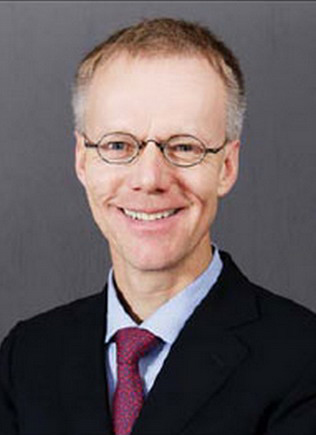
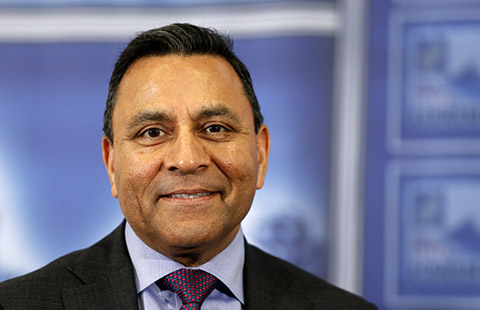
Steve Fahrenkrog,vice-president for regional development of the Project Management Institute, believes China has left its economic rival India in the shade when it comes to delivering major projects.
The United States Federal Reserve's policy of "quantitative easing" is reducing the value of the dollar relative to other currencies that have floating exchange rates. But what does the new Fed policy mean for one of the most important exchange rates of all – that of the renminbi relative to the dollar and to other currencies?