Classic Cantonese roasts
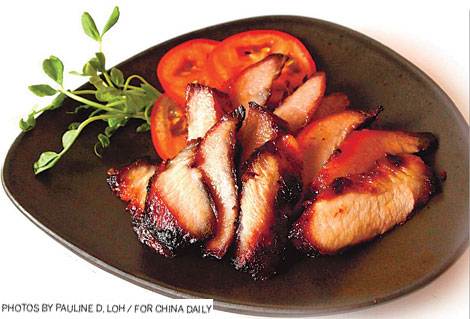
Sweet roasted lean pork strips, and crispy-skinned and salty belly pork are the two classic Cantonese roast meats familiar in Chinatowns all over the world. Pauline D. Loh shares her really easy recipes.
As an overseas transplant, one of the first experiences of my culinary heritage was when I got that plate of char siu and rice to eat on my own. It was a feast that signaled my graduation from infant gourmand-in-training to full-fledged Chinese gourmet.
But seriously, it was a meal that did mark a milestone in a lifetime of eating.
Char siu, or cha shao (in pinyin), is lean pork fillet that is "fork roasted" after being macerated in a sticky sweet sauce that gives the meat its characteristic shiny red glaze. The sugary marinade also burnishes the meat with crisp edges that are almost burnt black - but these are the best bits.
The fillet would be cut against the grain of the meat to maximize its tender goodness. Perhaps six to eight pieces would be piled on top of a steaming plate of white rice, already garnished with crisp, cool cucumber slices. With a final flourish, a ladleful of brown gravy would drench the meat and rice, and the plate carried to the table to the waiting diner.
It is a beautiful, colorful plate. The red-tinged meat slices give out the most tantalizing aroma, aided and abetted by fragrant brown gravy redolent of spices and sweet bean paste. The steam from the rice carries the scent upwards, filling the nose with all the goodness of the plate even before the taste buds get their turn.
The first mouthful must be rice and gravy. The brown gravy would have flowed in delicious rivulets down the mound of rice and you have to scoop inwards so the spoon gathers gravy before it shovels in a spoonful of snowy white grains.
It's savory and sweet all at once, with notes of Chinese five-spice and a subtle hint of mild soy bean paste behind the salty-sugary hit. As you chew, the rice grains release their sugar, tempting you to take a spoonful of plain rice next just to enjoy their satisfying fragrance. This is why the Chinese love perfectly cooked rice.
Now the taste buds are prepped, so to speak, it's time to bite into a slice of succulent meat, tender to the bite, juicy but crisp at the edges, slightly charred.
The sticky edges linger between the teeth, adding texture to the mouthful and a slight crunch of caramelized meat. It is such a delight to the palate and a temptation to reach for the next slice, just as soon as you fork up a slice of cucumber to enjoy the contrast of cool and crunch - and act as a palate cleanser.
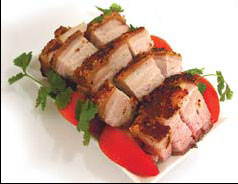
And then there's roast pork, siew yoke or shao rou, the other jewel in the barbecue crown. This is a belly slab with skin on that is dry rubbed with a simple mixture of Chinese five-spice and sea salt.
The Cantonese master roasters knew all about barbecue. The slabs of belly pork, left overnight to take in the salty, spicy flavors of the rub would be hung in a barrel-shaped oven to roast until the pork is tender and the crackling sizzling and crisp.
Belly pork is layered, with lean meat wedged between layers of fat that renders and moisturizes the meat as it cooks. Heat control is the secret here, with the meat roasted over medium heat until almost done. Then, the skin is seared over intense heat to crackle and puff up.
Siew yoke is cut into chunks so each portion is topped by a square of crackling that is the main attraction. It must be crisp and crunchy, with no hint of the gelatinous skin that was its former reincarnation.
My idea of heaven is to have equal portions of char siu and siew yoke on a plate, a combination that is ideally washed down with icy-cold beer or warmed Chinese wine.
I am disadvantaged by my current location, though, since southern chefs are not exactly common in the north. As usual, to paraphrase the wordsmiths, greed is the father of innovation and necessity the mother of invention, and I've figured out my own way to replicate these Cantonese classic roasts in my Beijing kitchen.
These two recipes are my New Year gifts to fellow southerners homesick for a taste of home.
Recipe | Cantonese roast pork fillet (Char Siu)
Ingredients:
4 pork cheeks (or 2 fillets)
4 tbsp char siu sauce
2 tbsp honey
Char siu sauce:
1 tbsp Chinese five-spice powder
2 tbsp malt sugar (or golden syrup or thick honey)
1 tsp Beijing sweet bean paste or 1 tbsp Cantonese yellow bean paste
1 tsp salt
1 tsp ginger juice (squeezed from 1 tbsp grated ginger)
1 tsp sweet red paprika
Method:
1. Blend ingredients for char siu sauce together. Set aside for flavors to mellow.
2. Scour the surface of the pork lightly with a sharp knife. This helps render any streaks of fat and gets the meat to absorb the marinade better.
3. Place pork into a ziplock bag and drizzle with 4 tbsp marinade. Reserve the rest for another time. Let the pork marinate six hours, or better still, overnight in the fridge.
4. Place pork fillets on a rack on top of a baking tray. Roast in hot oven or top grill for 25 minutes until edges are crisp and pork is cooked.
5. Cool slightly, cut across the grain and serve.
Food notes:
Pork cheeks are available at any good butcher. There are only two pieces per animal, but it is worth hunting them down because they are about the most tender, succulent cuts you can get. If you cannot find any, buy a lean fillet or a flank cut. What you are after is lean or lightly marbled meat that will not seize up and toughen during cooking.
Lee Kum Kee, the Hong Kong sauce manufacturer has an excellent ready-made char siu sauce that I am happy to use. But if you buy them in Beijing, add the honey to the marinade.
Recipe | Roasted pork belly (Siew Yoke)
Ingredients:
1kg slab belly pork
1 tbsp Chinese five-spice powder
1 tbsp sea salt
Method:
1. Rinse the belly pork slab and wipe completely dry with a cloth or kitchen towel.
2. Using a very sharp knife, scour the skin in two directions, creating a web of very fine slashes. These will help the crackling blister properly.
3. Blend the five-spice powder and salt and rub the mixture all over the belly slab, massaging the seasoning into the meat.
4. Leave the meat to marinate overnight.
5. Crank up the oven to the highest it will go - at least 250 C. Roast the pork for 25 to 35 minutes, by which time it should have cooked and the crackling starting to blister.
6. Take the slab out of the oven and pour off any excess oil, especially any that may have pooled on top of the skin. Cover the bottom of the slab with foil to prevent the pork from drying out and return to a hot grill to crackle the skin.
7. Rest five minutes and chop into generous chunks.
Food notes:
Nothing can be simpler. Here, there are few secrets except generous seasoning and a good heat to crackle the skin. It's pretty fool-proofed. My mother uses a recipe in which she rubs vinegar into the scored skin. For me, I'll dispense with that extra step. Heat, and a light spray of oil to get the scored skin going, is all you need to produce perfect crackling.
(China Daily 01/08/2011 page12)