Fukuda starts job with high approval rating

Updated: 2007-09-27 07:21
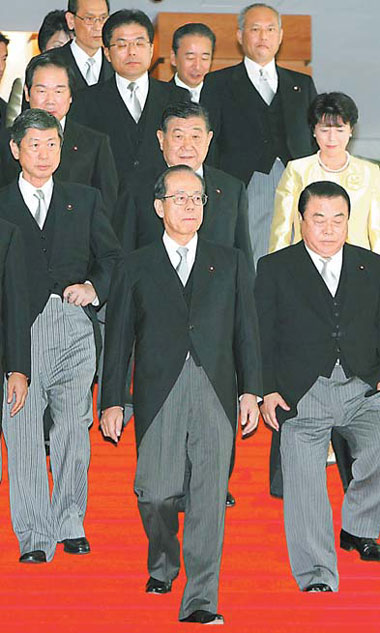
Japan's new Prime Minister Yasuo Fukuda (center) and his cabinet members arrive for a photo shoot after their first meeting in Tokyo yesterday.AFP
Japan's new Prime Minister Yasuo Fukuda officially took office yesterday, pledging to regain desperately needed public faith in the government and keep a contentious anti-terror naval mission alive.

In a boost for Fukuda, a poll released yesterday by Kyodo News agency showed the approval rating for his new Cabinet at 57.8 percent - almost 20 percentage points higher than his unpopular predecessor Shinzo Abe, who resigned suddenly two weeks ago.

Fukuda, 71, known as a subtle and wily compromiser who studied backroom politics at the knee of his prime minister father, cast himself as the steady hand that Japan needs after Abe's rocky, scandal-scarred one-year term.

After being officially sworn in at a palace ceremony yesterday, Fukuda and his ministers held their first Cabinet meeting to confirm their policy priorities before parliamentary debate is expected to resume next week with Fukuda's policy speech. "My job has just begun. I intend to charge ahead with my policies," Fukuda said yesterday.

His top legislative priority is the extension of the naval refueling mission in support of US-led forces in Afghanistan, which is expected to face strong resistance from the opposition. The mission started in 2001, and Washington has urged Tokyo to renew its commitment before the November 1 expiration date.

Nearly half of respondents to Kyodo's poll, or 49.6 percent, supported an extension of the mission, while 39.5 were opposed. Kyodo said it polled 1,025 voters on Tuesday and yesterday, and gave no margin of error.

In a statement issued earlier yesterday, Fukuda reiterated Tokyo's commitment to its alliance with Washington as a cornerstone of Japan's foreign policy.

"We will do our utmost to enable an extension of our naval support mission," Fukuda said.

Fukuda has expressed confidence that he can finesse the opposition into going along with the plan for the sake of Japan's relations with its No 1 ally, the United States, which has some 50,000 troops based in Japan.

Agencies

(China Daily 09/27/2007 page7)