By hook or by mook
Well-known blogger, writer and publisher Zhang Lixian's fan mail comprises not just letters of appreciation but also CDs, fruits, sweets, tea, and even walnuts complete with a nutcracker.
The object of all this adulation is his "mook" (short for magazine-book) Duku, a bi-monthly whose title literally translates as "reading depot".
Zhang, 37, who is a former journalist, has published six formal issues of Duku with a trial issue since last February. Zhang also brought out several sports and leisure publications in Beijing in the mid-1990s.
Duku has a plain-looking cover and presents non-academic, factual articles on a range of topics in no-frills language. But it has created a niche for itself by catering to a readership "fed up with soap operas and pop idols, and looking for something a little bit 'intellectual'", according to local media.
Its readers include Chinese-speaking people in and outside China and has emerged at the top of the best-selling list on www.dangdang.com, the publication's exclusive on-line distributor in China.
Duku's popularity is spread mainly through the Internet and by word of mouth, according to Zhang.
"When readers of print publications finally heard about Duku, the 'mook' had already won the hearts of thousands of netizens, who write and read blogs, visit e-shops, and chat through instant messaging on the Internet," Zhang said.
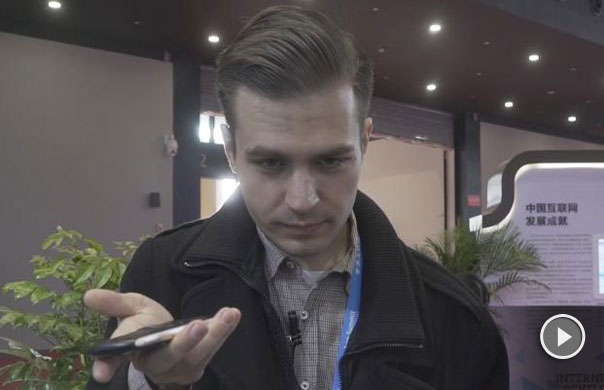
Above: Blogger, writer and publisher Zhang Lixian with his bi-monthly Duku. Each of the six issues has sold some 15,000 copies. Jiang Dong |

Besides Zhang's diaries, commentaries on cultural and sports figures and events, surfers can find almost anything they want to know about Duku from Zhang's blogs..
According to Zhang, about 1,000 copies are sold to viewers through his blogs for each issue of the publication. However, when the Duku reader shares the joys of reading Duku with others, the number of potential readers multiplies, he said.
Moreover, each of the six issues published so far has sold at least 15,000 copies via www.dangdang.com and in a limited number of high-brow bookstores across the country, Zhang told China Daily.
Certain titles have been so popular that reprints have been ordered to cater to those who want to build up their own complete collection of the serialized books, Zhang added.
Before putting out any issue, Zhang posts his story ideas on his blogs, to encourage interaction with and suggestions from potential authors and readers.
Surfing, MSN chat, reading comments and responses to his blogs have provided new ideas. Some of the best-received stories in Duku have been contributed by those he had never met before. "Now we are good friends and some have become part of my 'ghost editorial committee'."
Even so, Zhang said he did not expect his "mook" to become a bestseller with a massive readership.
"By nature, Duku caters to the minority of readers. Fiction, jargon-laden academic articles, rambling stories and kitschy narrations about celebrities are not part of the Duku staple," he explained.
Zhang is better known in the e-communities as Lao Liu, meaning No. 6, or Jian Zhao Chai Zhao, meaning the Unbeatable Warrior.
The idea for Duku first hit Zhang at midnight on September 5, 2005.
A month before, he had quit as editor-in-chief of a local tabloid and was looking for a higher-paying job.
On that foggy night, after hours on a shuttle bus from Zhang's home city of Shijiazhuang in North China's Hebei Province, Zhang got to his Beijing home very late.
"All the way, I was tortured by the question: Is there anything more meaningful that I can do if no one offers me a new job?" Zhang said.
Finally, he made a decision. "I will start my own publishing business."
Based on his experience and connections in media circles, Zhang came up with a blueprint for the book. He started from scratch to put his ideas into reality, working at his home PC as compiler, editor, publisher, marketer and distributor.
Thanks to his online fame and standing in the media, he found enthusiastic support from friends, including Ding Cong, a veteran comic artist who wrote the title for Duku, and Cai Zhizhong, a well-known Taiwan illustrator who designed the book plates.
The first issue came to life last February and proved an instant hit. "The downside of self-publishing is that I have no office or staff," Zhang said.
But he has strong backing from friends, former colleagues and most importantly those he meets on the Internet, said Zhang, who assigns stories by phone or online to the authors.
Even if the stories deal with hot issues, such as Beijing entertainer Guo Degang, an emerging xiangsheng performer, the authors are all required to limit their article to a word count.
Also, "they shall not impose their views but give readers the freedom to form their own views on a subject," Zhang said.
He added that reader responses showed that it did not matter who told the stories but rather, how they were told.
Some stories have attracted the attention of publishing houses.
"That's good news for my authors. Their stories may reach a larger audience," Zhang said.
The new issue of Duku is expected to be out in mid-February to mark one year of the magazine-book.
Among Duku's top stories are Beijing businessman Yang Lang's account of his many visits to the Wan'an Cemetery and his observations and thoughts on life and death; a story by Shen Zufen, a veteran researcher of Chinese poems, and another story about world-renowned Iranian artist Abas Kiarostami.
"By editing and publishing Duku, I have found my Blue Ocean," joked Zhang, referring to the idea detailed by W. Chan Kim, an American researcher on management in the book Blue Ocean Strategy: How to Create Uncontested Market Space and Make Competition Irrelevant.
(China Daily 01/25/2007 page20)