



Rocket successfully delivers satellite into orbit









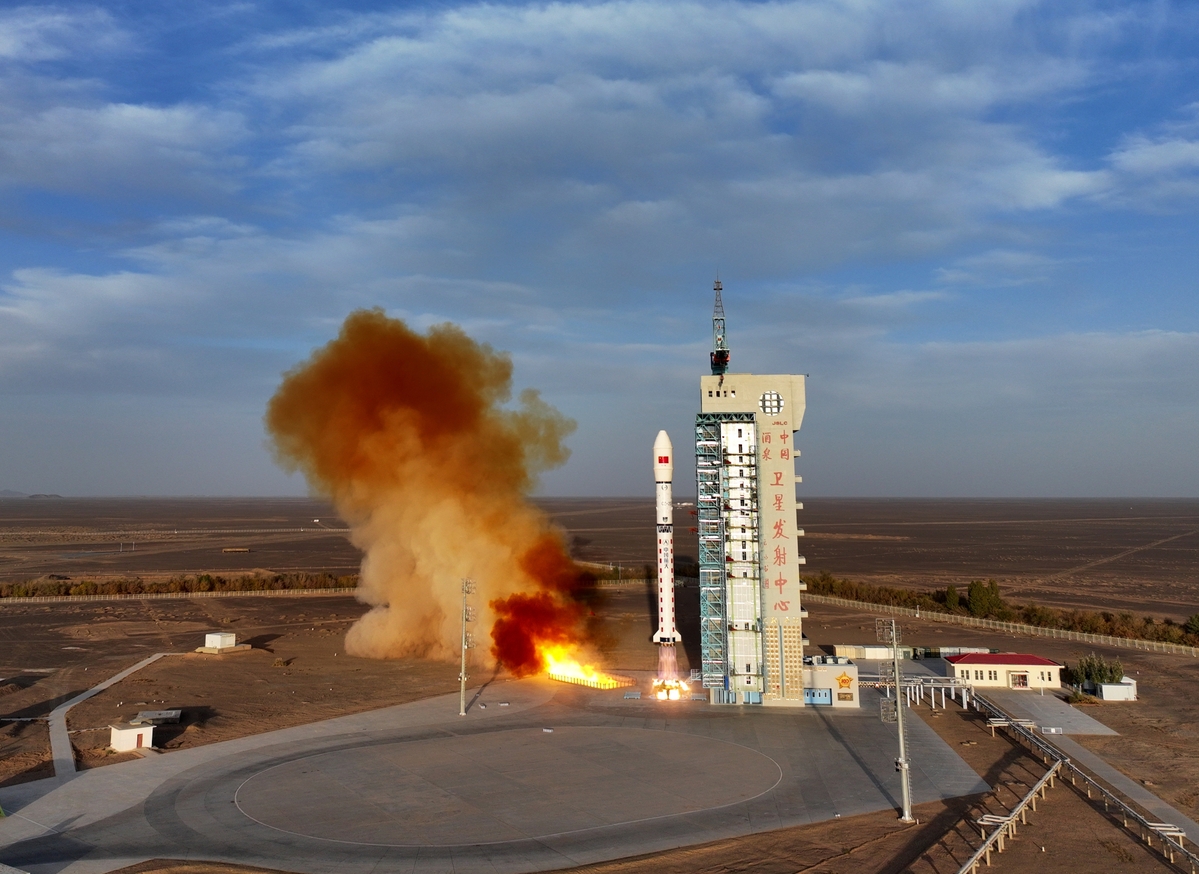
China used a Long March 2D carrier rocket to take an experimental satellite into space on Monday afternoon, according to China Aerospace Science and Technology Corp, or CASC, a leading State-owned space contractor.
The company said in a news release that the rocket blasted off at 6 pm from the Jiuquan Satellite Launch Center, in Northwest China's Gobi Desert, and was soon in place to put the Shiyan 31 satellite into orbit.
The satellite has been tasked with demonstrating new optical imaging technologies.
Both the satellite and the rocket were designed and built by the Shanghai Academy of Spaceflight Technology, a CASC subsidiary.
The Long March 2D model stands at 40.6 meters and has a diameter of 3.35 meters and a liftoff weight of 251 metric tons. It is typically used to transport satellites to low-Earth or sun-synchronous orbits and is capable of sending a 1.3-ton spacecraft to a sun-synchronous orbit at an altitude of 700 kilometers, or taking satellites with a combined weight of 4 tons to a low-Earth orbit.
Monday's mission marked the 599th launch of a rocket from the Long March family, and China's 62nd spaceflight in 2025.


- Xiplomacy: Warmth that transcends borders
- Earthquake in Sichuan leaves one dead, six injured
- Additional disaster relief items rushed to flood-hit Shaanxi
- China sees 5.4% rise in domestic tourism with 3.46b trips in H1
- Six disciplined over irregularities in recruitment process at special education school
- Guizhou to supervise probe into poisoning and asphyxiation accident that left four dead





