



Hainan University showcases implantable brain-computer interface technology









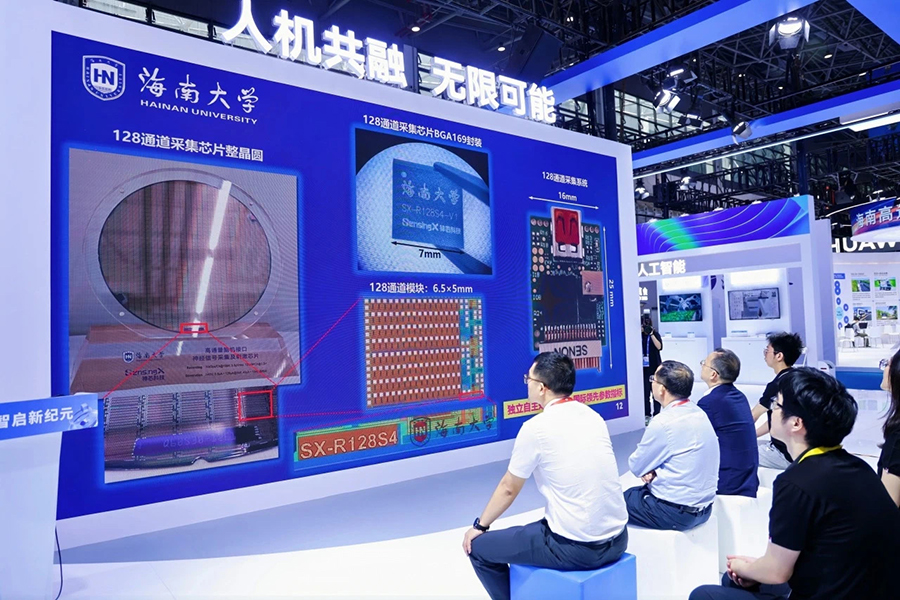
Hainan University has unveiled its independently developed implantable brain-computer interface (BCI) technology at the fifth China International Consumer Products Expo in Haikou, marking a major step toward China's self-sufficiency in the field.
The university showcased a series of advanced BCI products, including a specialized chip, neural signal acquisition and modulation systems, and a neuron positioning system - all achieving full supply-chain independence. The breakthrough introduces a "Chinese chip" to global brain science research and medical applications.
Key innovations include the SX-R128S4 high-throughput neural signal acquisition and stimulation chip, the SX-S32 high-degree-of-freedom neural modulation chip, and the SX-WD60 low-power wireless transmission chip. These components cover the entire BCI process - signal collection, regulation, and transmission - with performance rivaling leading international products.
The research team, with nearly 20 years' experience in BCI chip development, has earned recognition from academic and industry partners.
A team representative emphasized their commitment to innovation: "Specialized chips are the backbone of BCI systems. Our work ensures China no longer relies on imported implantable BCI chips, accelerating the industry's growth."
The development positions China among the frontrunners in next-generation neurotechnology, with potential applications in medicine, assistive devices, and neuroscience research.


- Shanxi emergency official probed after deadly mine blast
- One hundred thirty-six artifacts from Cambodia on display in Shanxi
- Hukou Waterfall roars to life after heavy upstream rainfall
- Lion King co-director heads jury at Chongqing animation festival
- Suzhou's Lotus Flower Market offers a summer spectacle of tradition and charm
- New exhibition in Shanghai highlights the pivotal role of Qin Dynasty





