



Chinese scientists propose new way for tumor targeting









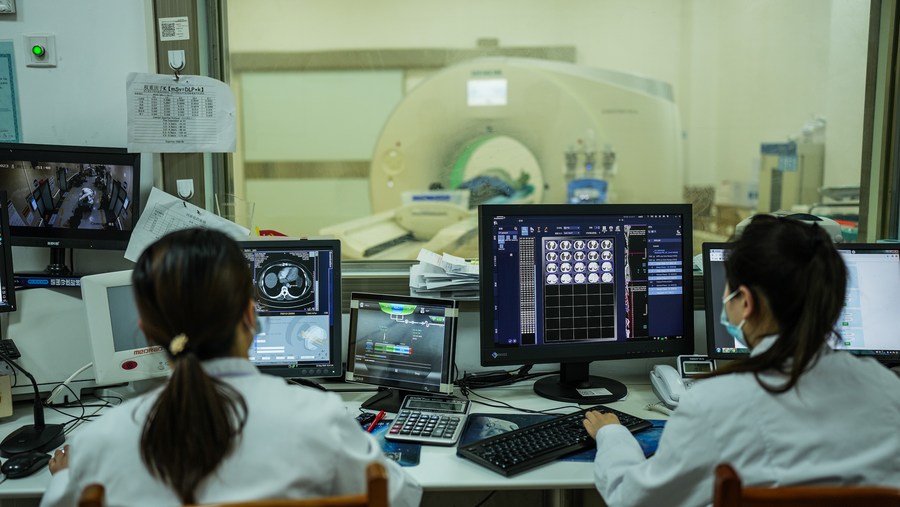
BEIJING -- Scientists from China have developed a method for constructing sequence-controlled glycooligomers that enhances the tumor targeting efficiency.
The study was published on Friday in the journal Cell Reports Physical Science by researchers from Shenzhen Institute of Advanced Technology (SIAT) under the Chinese Academy of Sciences, Henan University and other institutes.
According to the study, cancers of diverse origins exhibit more rapid and greater carbohydrate uptake and consumption compared to healthy cells. This is primarily due to factors like the Warburg effect and the high expression of glucose transporters on the surface of cancer cells, making carbohydrate efficient tools for targeting cancer. Therefore, focusing on carbohydrates offers a viable approach for selective treatment and diagnosis of cancer.
The researchers have found the synthesized glycooligomers feature affinity for binding with glucose transporters and demonstrate selective uptake by cancer cells, showing effective tumor-targeting abilities in vivo.
According to the study, the uptake of the synthesized glycooligomers by cancerous cells is found to be significantly higher than that in most healthy cells.
The study then further explored the tumor-targeting potential of the glycooligomers with optimized sequences.
"The method of constructing glycooligomers holds significant promise for biomedical uses, including precise cancer detection and treatment," said Geng Jin, a researcher at SIAT.


- Global sci-tech exchange to expand through International Month
- Mainland, HK police bust cross-border banking ring
- CAS launches program for extreme frontier breakthroughs
- China sent over 100 tons of disaster relief supplies to Nepal
- Yanshiping Station, world's highest passenger stop, eases travel in Xizang
- Nishan Forum on World Civilizations calls for a more equitable global governance system





