



Chinese scientists discover flower fossils in amber dating back 100m years









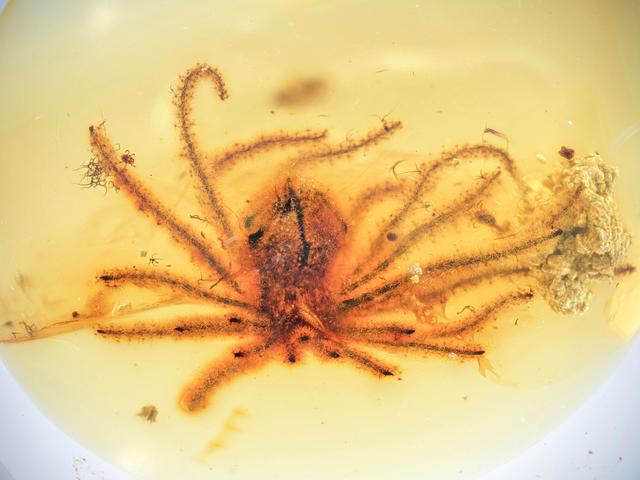
JINAN - Chinese scientists on Tuesday said they have discovered flower fossils preserved in amber dating back 100 million years, providing evidence for the study of the evolution of flowering plants in Southeast Asia and plate movement relations.
The discovery showed that some flowers found living today in South Africa have remained unchanged since the time of the dinosaurs.
The research team from the Qingdao University of Science and Technology (QUST), working with experts from The Open University in the UK and other institutions, found the flower fossils were nearly identical to the modern Phylica species, which is part of the Cape Fynbos flora.
The QUST team studied 21 pieces of amber found in Myanmar, which were formed about 100 million years ago, and discovered that the flowers showed high adaptability to frequent wildfires.
The study has been published in Nature Plants, a scientific journal that publishes primary research papers concerned with all aspects of plant biology, technology, ecology and evolution.


- Yang Chaoming: Self-cultivation and the common good go hand in hand
- Confucius' thought offers way to bridge differences
- Raising the national flag, inspiring the spirit of a city
- Algorithms and tech sharpen urban management in Qidong district
- From door to done: everything in 15 minutes
- 'Trust that the deep blue will meet you halfway'





