



Chinese, Japanese scientists collaborate on improving TCM herb growing









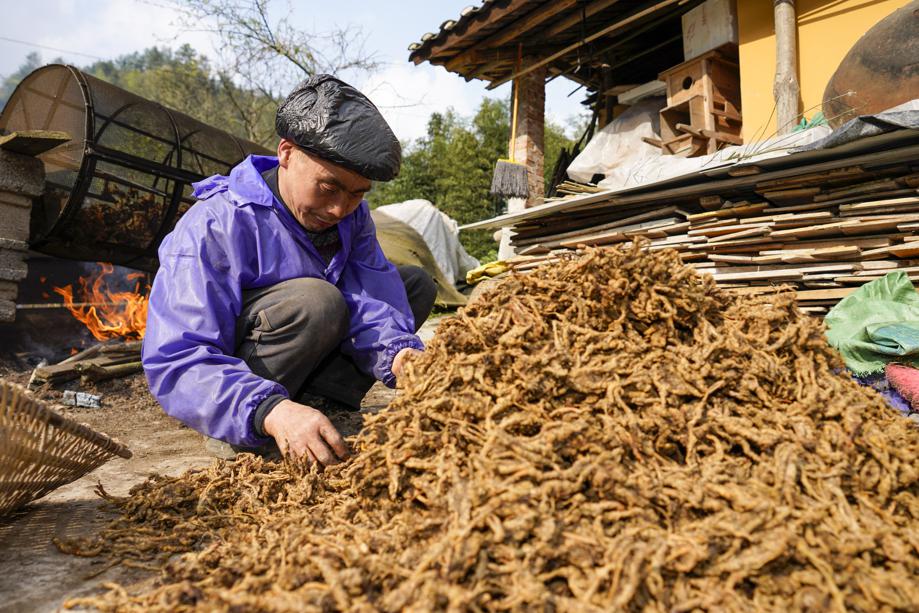
LANZHOU -- Scientists from China and Japan are collaborating on the research of microbial inoculants specifically applied to improve pest and disease control and enhance drought resistance of geo-authentic traditional Chinese medicine (TCM) herbs.
The research project is being jointly conducted by the Northwest Institute of Eco-environment and Resources under the Chinese Academy of Sciences and the RIKEN, a Japanese comprehensive research institution renowned for high-quality research in basic and applied science.
As one of the major, geo-authentic TCM production bases in the country, northwest China's Gansu Province boasts a long history of growing herbs of Angelica sinensis, Codonopsis pilosula and Astragalus root, according to Wang Ruoyu with the institute who has been committed to the research on biological control of plant diseases.
"Yet pests and diseases have restricted the development of TCM herb planting in Gansu since major producing areas in the province have a dry climate and unfavorable irrigation conditions," Wang said, noting that RIKEN has been doing world-class research on biological control of plant diseases.
"We hope to learn the advanced experience from our Japanese peers through this collaboration to effectively solve herb growing problems in Gansu," Wang said.


- First tunnel completed on Kyrgyzstan section of China-Central Asia railway
- Landslide in Jiangxi leaves 1 dead, 11 missing
- Shanghai marks 40th sister-city anniversary with Hamburg
- Global experts push for greater ocean literacy in education
- China to implement revised regulation on power accident response, investigation
- 599,000 evacuated over rainstorms in Fujian





