



Reverse rush to maintain growth in 2020 Spring Festival









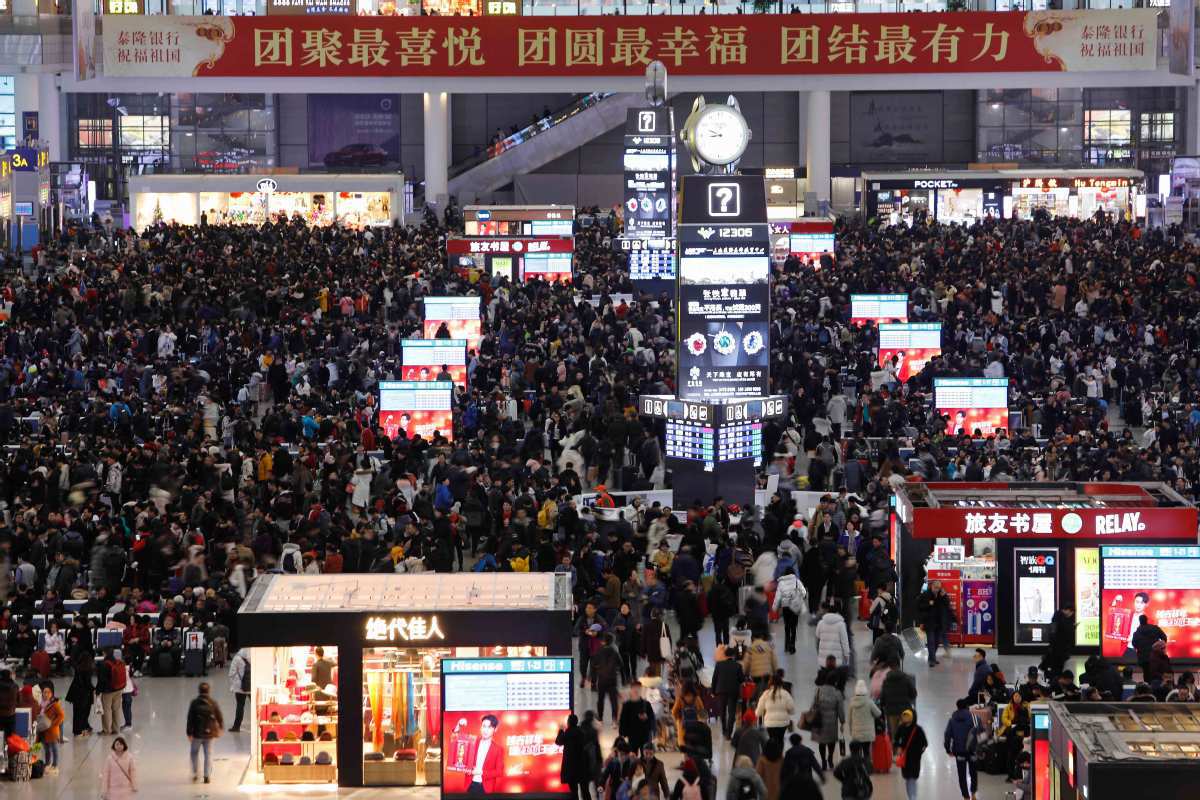
BEIJING -- The reverse rush is estimated to keep increasing during the 2020 Spring Festival travel rush, according to a report released by the China Academy of Transportation Sciences.
The reverse rush describes a phenomenon where more parents travel from their hometowns to major cities including Beijing and Shanghai to visit their children who work there.
The reverse rush maintained an average growth of 30 percent during the recent two years, according to Fliggy, Alibaba's online travel service provider.
Chinese transport authorities also encouraged reverse travel with preferential policies including discounted tickets for bullet trains to cities in the Yangtze River Delta area.
In addition to Beijing and Shanghai, cities including Chengdu, Hangzhou and Chongqing also became hot destinations of the reverse rush, said the report.
The upcoming holiday for the Spring Festival, a traditional festival for family reunions, will run from Jan. 24 to 30, while the travel rush will last for 40 days from Jan 10 to Feb 18, and the total number of trips is likely to hit 3 billion.


- China shines at WorldSkills Shanghai 2026
- New regulation on HIV/AIDS disclosure set to take effect in Chongqing
- Chinese railway innovations shine at transport technology fair in Berlin
- Hainan, Hong Kong, Macao, and Taiwan tourism sectors discuss cooperation
- China Coast Guard conducts law enforcement control exercise near Huangyan Island
- Understanding China in the new era: From vision to action





