



Researchers develop new method to improve saline-sodic land









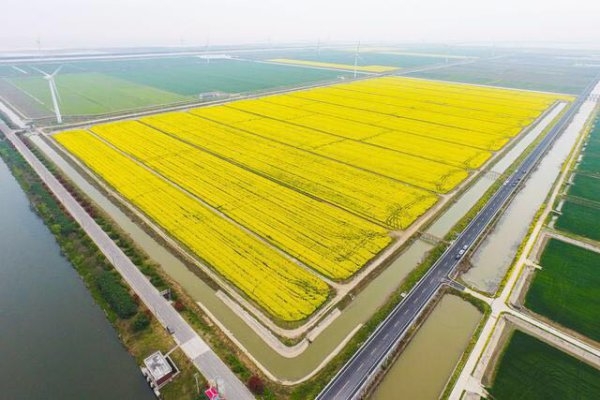
BEIJING -- Chinese researchers have developed a precise saline-sodic land improvement method to reduce the inhibition of the salts on soil productivity.
The researchers from the Northeast Institute of Geography and Agroecology of the Chinese Academy of Sciences conducted field experiments and improved the soil quality with site-specific management practices. The soil exchangeable sodium percentage and pH were reduced, while the hydraulic conductivity of the soil was increased.
Previously, they also developed integrated modes of reclamation and utilization of the saline-sodic soils which have been promoted in over 1 million mu (about 67,000 hectares) in west Jilin province, Northeast China.
The west of Songnen Plain in northeast China has about 56 million mu saline-sodic land, with high pH value and low water and air permeability.
The traditional method of reducing salinity by irrigation with diversion water used to receive limited crop yield. Scientists have been trying to figure out how to turn barren, salty soil into arable land.


- 7 killed in illegal mining incident in SW China
- Jinshan dazzles beachgoers with stunning fireworks display
- China Open sees record crowds, boosting consumer spending
- Fudan University initiative aims to advance global development
- Pingyao Ancient City sees peak tourist flows over National Day holiday
- ShanghaiEye Night highlights China-US cultural exchanges





