



Infrared cameras and drones record Tarim red deer in Xinjiang









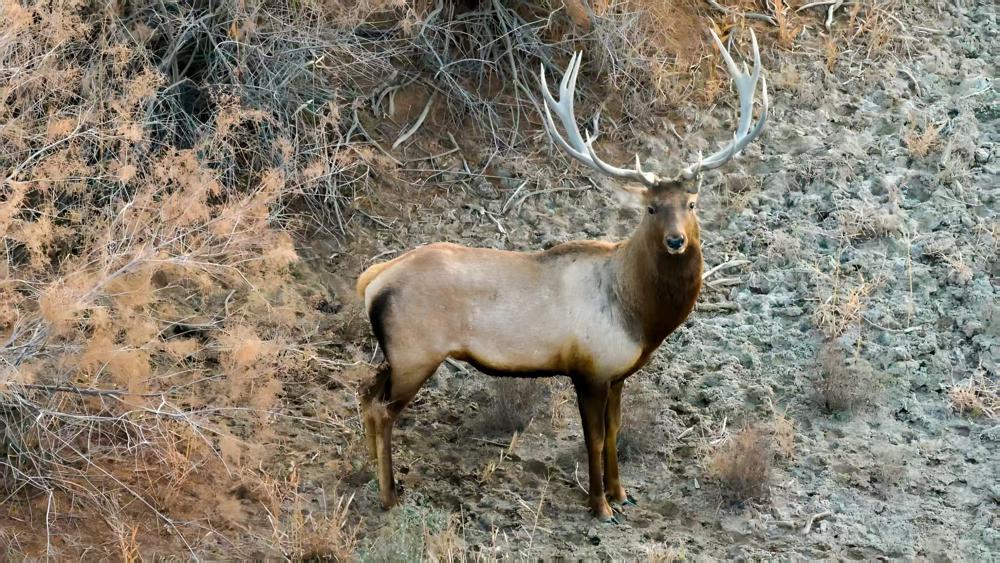
Infrared cameras and drones have, for the first time, recorded a group of five Tarim red deer (Cervus elaphus yarkandensis) — a first-class protected animal in China — along the banks of the Tarim River in Alaer city, Xinjiang Uygur autonomous region. They were recently observed wandering and foraging in the desert poplar forests.
Native to Xinjiang, the Tarim red deer is a desert-adapted subspecies and the world's only population of red deer (Cervus elaphus) that inhabits arid environments. They exhibit remarkable resilience, able to withstand extreme heat, drought, and highly saline-alkaline conditions. The animal can even drink heavily mineralized water and maintain a broad diet. They are considered a key indicator species for assessing ecosystem health in the Tarim River Basin.
According to Wang Zhichao, professor at Tarim University's school of life sciences and technology, the discovery marks a breakthrough in regional ecological conservation. It results largely from comprehensive ecological management initiatives across the basin and the expansion of ecological barriers along the nearby Taklimakan Desert, located south of Alaer.
Wang added that currently, 249 wildlife species inhabit the basin, with populations continuing to grow. These include 50 species under national protection.


- 5.2-magnitude quake hits Qinghai in NW China: CENC
- Ex-Shanghai official sentenced to death with reprieve for bribery
- Sudden deluge in Xinjiang sets daily and hourly records
- China tightens Antarctic environmental rules in draft law review
- Vanke founder Wang Shi files complaint over online harassment
- Draft law targets greater transparency in government procurement system





