



Chinese researchers use Earth science satellite to monitor offshore oil, gas platforms









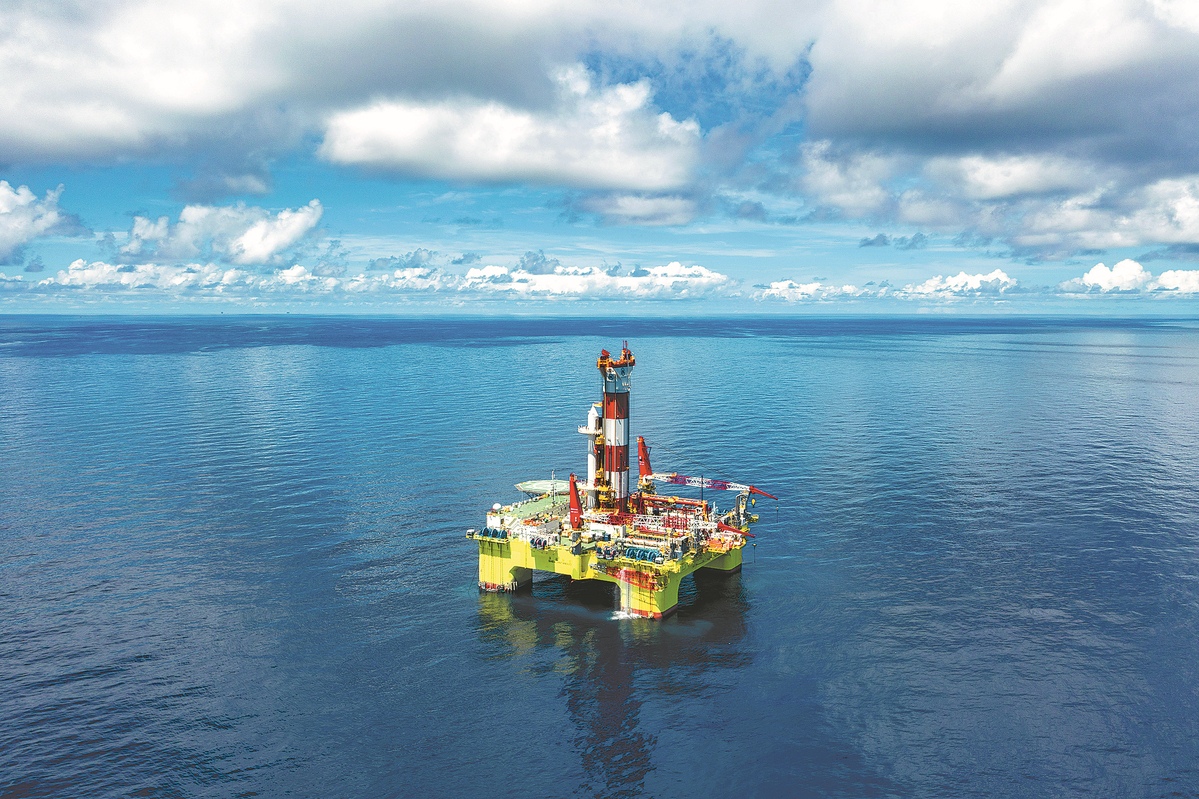
BEIJING -- Chinese researchers have unveiled a novel application of the Earth science satellite SDGSAT-1 for observing offshore oil and gas platforms.
The study, led by researchers from the Aerospace Information Research Institute of the Chinese Academy of Sciences (CAS), was recently published in the International Journal of Digital Earth.
As global demand for oil rises and the industry moves toward decarbonization, tailored monitoring of oil and gas platforms has become increasingly necessary. However, tracking these platforms in vast and dynamic oceanic regions has long posed challenges.
The researchers used the SDGSAT-1's Glimmer Imager and Thermal Infrared Spectrometer to track gas flaring activities in the South China Sea. This innovative approach enabled them to map platform operations with greater precision.
The findings helped researchers identify 113 oil and gas platforms amidst the complex maritime environment of islands, vessels, and other offshore facilities in the region.
"These findings highlight the competence of SDGSAT-1 in tracking the operational status of oil and gas platforms," according to the study.
Launched on Nov 5, 2021, the SDGSAT-1 is the world's first Earth science satellite dedicated to supporting the United Nations' 2030 Agenda for Sustainable Development.
Developed by the CAS, the satellite provides crucial space-based data to assess human-environment interactions and promote sustainable development.


- China to enhance public awareness of human rights
- Full text: National Human Rights Action Plan of China (2026-2030)
- Expats discover Shanghai's rural treasures by bike
- Chinese scientists report first physics results from JUNO
- China releases national human rights action plan for 2026-2030
- 7 people, 2 companies charged over deadly Hong Kong residential building fire





