



Women's rights and role in development in Xinjiang discussed at seminar









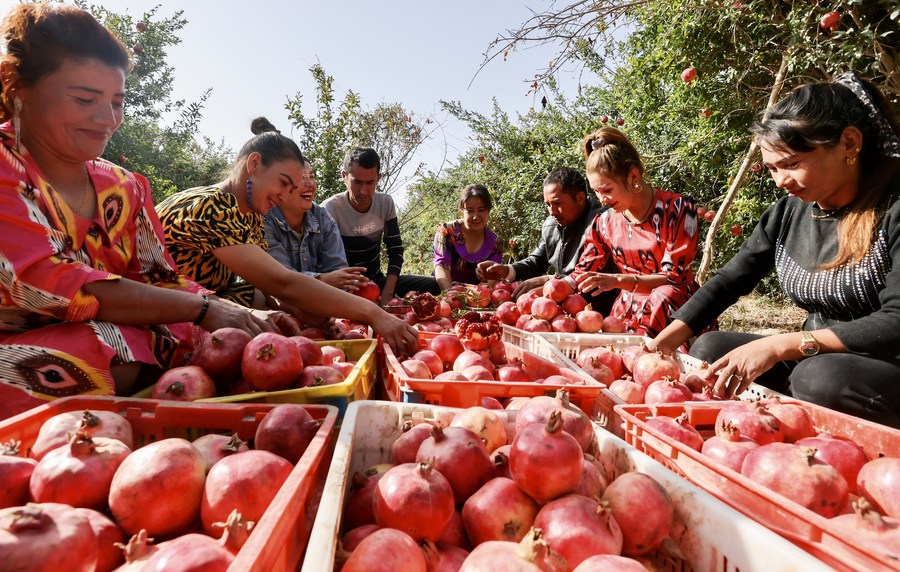
Women in Xinjiang have played a more important role in economic and social development as education and a better employment environment have become more accessible, experts said.
They made the remarks on Thursday at a webinar titled "Achievements in Protecting the Rights and Interests of Women in Xinjiang", which was a side event to the 49th regular session of the UN Human Rights Council.
Zulhayat Ismayil, vice principal of Xinjiang University, said China has made the development of women a priority. The status of women in Xinjiang has been significantly improved, she added.
Zhou Li, associate professor with the human rights research institute of the Southwest University of Political Science and Law, said women in Xinjiang have been more open to employment and also contributed more to economic and social development. A mature social environment has been formed for women to choose decent jobs freely and equally.
Xu Shuang, associate professor from the Minzu University of China's law school, said in an increasingly intelligent and networked modern society, education is a basic tool and an indispensable means for realizing human rights.
So far, compulsory education has been accessible to all in Xinjiang and 15 years of free education from kindergarten to high school have been available in four prefectures in southern parts of Xinjiang, Xu said.
The right to education allows Xinjiang women to step forward in the new era, she said.
The China Society for Human Rights Studies and the Research Center for Human Rights at the Northwest University of Political Science and Law co-organized the webinar.


- New Zealand film industry enhancing relations with Beijing's Shijingshan district
- Hunan showcases revolutionary heritage and youthful flair at tourism event
- Ceramics seen as bridge between China and the world
- APEC tourism ministerial meeting held in Macao
- Dingxi eyes TCM growth through Beijing-Tianjin-Hebei cooperation
- A decade of soaring Y-20





