



High-speed railway line opens in Zhejiang









A new high-speed railway in East China's Zhejiang province will open on Saturday, cutting in half the travel time between two major cities in the province, the national railway operator China State Railway Group said on Friday.
It is China's first high-speed railway with a controlling stake held by private capital.
The project is funded by a public-private partnership, with private capital accounting for 51 percent of the 44.9 billion yuan ($6.95 billion) investment.
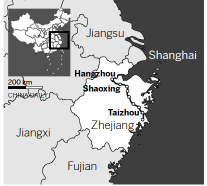
The 266-kilometer line links Hangzhou and Taizhou, passing Shaoxing, all important cities with prosperous economic development, and will cut travel time between the two destinations from about two hours to one hour.
The new railway is located in the hilly areas of central and eastern Zhejiang, which posed challenges to construction and design. Eighty-seven bridges and 56 tunnels have been built along the railway, accounting for 89 percent of the line's length.
In September 2017, Fosun Group took the lead in establishing a private consortium and signed the railway PPP project investment contract, with additional funding of 15 percent from China Railway Development Fund, 13.6 percent from Zhejiang Provincial Transportation Investment Group on behalf of the provincial government, and 10.2 percent each from Shaoxing and Taizhou, according to media reports.
On peak days, as many as 70 bullet train services will be offered along the railway.
The line also has adopted a new model of management to build the railway.
China's railway projects have usually been designed and constructed by different companies. The new line has one general contractor, China Railway Design Corp, who plays a leading role to deeply integrate design, material purchase and construction.
Xinhua contributed to this story.


- Xi congratulates Central Institute of Socialism on 70th founding anniversary
- Sichuan counties investigate sulfur fumigation of bamboo shoots
- Visa-free foreign arrivals in China reaches 8.99 million in Q3, accounting for 77.5% of all foreign arrivals
- Revolutionary heritage fosters Ningxia's growth
- Story of the halved quilt carries Long March spirit
- Artifacts retrace Red Army's passage through Guangdong





