



Fish fossils unearthed in SW China









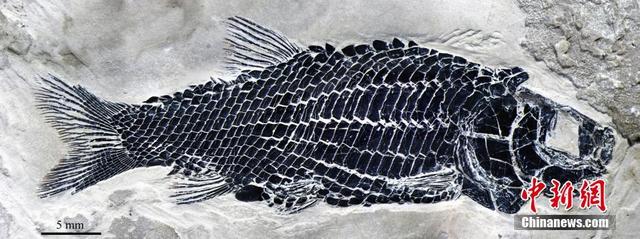
BEIJING -- A Chinese archaeologist has discovered fish fossils dating back 244 million years to the Middle Triassic period, according to the Science and Technology Daily on Wednesday.
The study, published in the journal Zoological Journal of the Linnean Society, describes the fossils, excavated from Middle Triassic marine deposits in Southwest China's Yunnan province.
Xu Guanghui, with the Institute of Vertebrate Paleontology and Paleoanthropology of the Chinese Academy of Sciences, identified the fish as a new, small-sized stem-neopterygian fish species.
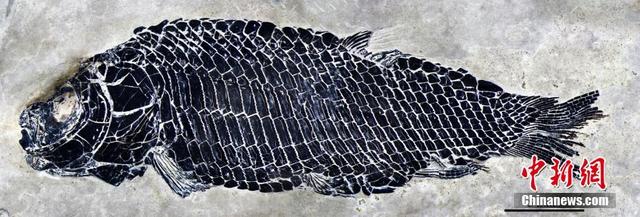
It is a special fish scavenger with a short maxilla, a slender jaw, long and sharp teeth, and a standard length of only about 3 cm.
The tiny fish decomposes sea animal remains, including those of large marine reptiles, quicker than microbes, making it a "sea cleaner" for preserving the marine ecosystem, Xu said.
The study is of great significance for understanding the food web of the Triassic marine ecosystem and the evolution of early neopterygian fish, said the report.


- Innovative ideas to be showcased at patent fair
- DPP slammed for betraying nation, history
- Hangzhou Bay Cross-Sea Railway Bridge hits milestone
- China Coast Guard monitors Philippine supply delivery in South China Sea
- From trash to fashion: Wuhan students give waste a new life
- Hunan sees return of rare species as Yangtze fishing ban bears fruit





