



'Toxic' liquor? Group seeks to defend doctor









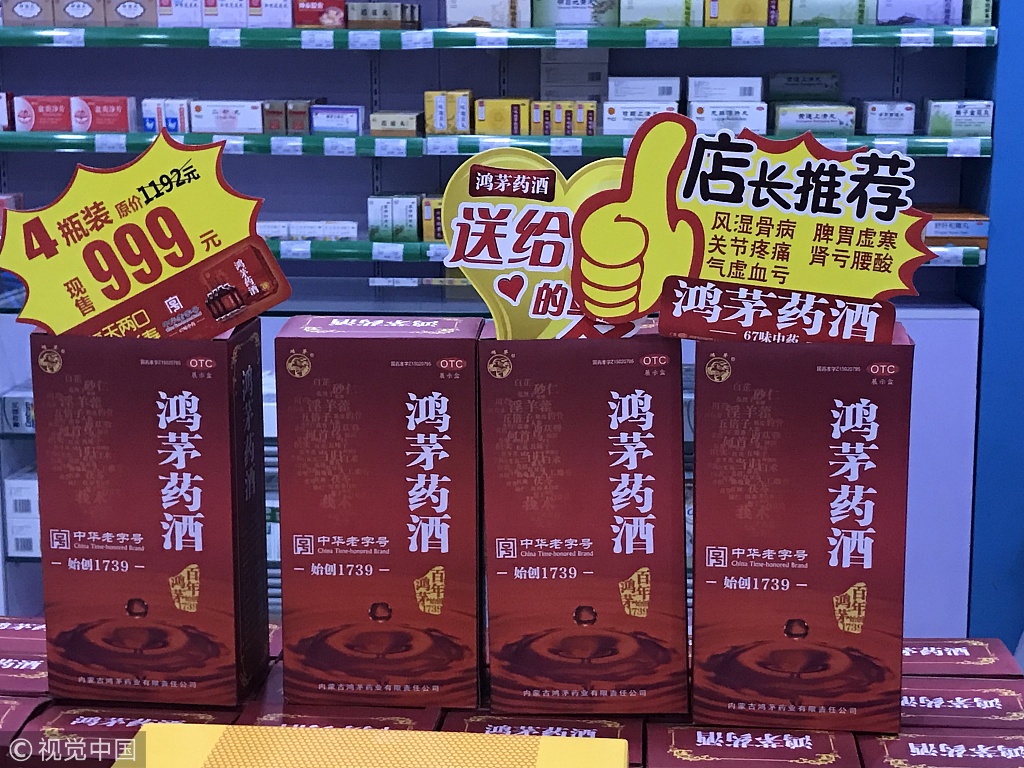
The detention of a doctor who said that a liquor product was toxic has prompted the Chinese Medical Doctor Association to call for caution in the use of the criminal law.
The group also said it would like to provide the doctor with legal assistance.
Tan Qindong, 39, who holds a master's degree in anesthesiology, was detained by police in Liangcheng county, Inner Mongolia autonomous region, on Jan 10 and the case has been transferred to prosecutors, the county's public security bureau said on Sunday.
According to the bureau, Tan claimed in an article he posted online that a liquor product produced by Hongmao Pharmaceutical Co, which is located in Liangcheng, was toxic. The claim allegedly caused big losses for the company.
Police detained Tan with sufficient evidence to prove criminal activity damaging the reputation of a business, it said.
In a statement on Monday, the association of doctors said it had carefully read the article written by Tan and the statement given by Liangcheng's public security bureau. It said it is trying to contact Tan's wife with an offer of assistance.
The association also urged pharmaceutical companies to strictly follow laws and regulations in their advertisements, and called on the public security bureau of Liangcheng to treat academic opinions and speeches with prudence and avoid treating civil disputes as crimes.
Tan published the article online in December. In it he said the health benefits of the liquor were exaggerated and that the manufacturer had been punished by drug supervision authorities in some places in China over false advertising.
Tan worked as an anesthesiologist at Third Affiliated Hospital of Southern Medical University, in Guangzhou, Guangdong province, and has worked at a technology company since 2015, according to Red Star News in Chengdu, Sichuan province.
Hongmao Pharmaceutical's advertisements state that the liquor is made from dozens of traditional Chinese medicines and can relieve pain, cure colds and increase vigor. It is a traditional Chinese medicine product approved by China's former Food and Drug Administration in 2015.
Li Ya, a partner at Zhongwen Law Firm in Beijing, said Hongmao should try to protect its rights through civil litigation, as there is a lack of evidence that Tan has damaged its business reputation.
"There is no evidence to prove the cause-effect relationship between Tan's article and the loss the company claimed," he said.
Li also said he had read the article thoroughly and found it basically consists of academic opinions. Normally in such cases companies should sue for compensation, he said.
Also on Monday, the China National Drug Administration said in a statement that the liquor is currently an over-the-counter drug, but it may cause serious side effects if people fail to follow instructions.
The administration is consulting experts to help decide whether to change the product's designation to a prescription drug, it said.


- Man hospitalized after suffering electric shock, falling from train
- Over 10,000 cruise tourists arrive in Tianjin port
- 6 dead, 4 injured in expressway accident in Huaihua
- Yang Chaoming: Self-cultivation and the common good go hand in hand
- Confucius' thought offers way to bridge differences
- Raising the national flag, inspiring the spirit of a city





