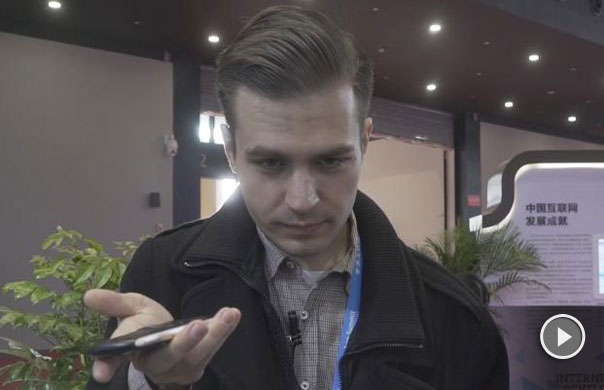
For many times the famous Chinese movie director Feng Xiaogang praised the speaking voice of his favorite actor Ge You, saying he could make stacks of money by registering Ge's distinctive voice as a trademark.
Feng was just joking, but it appears trademarked sounds could become reality on the Chinese mainland.
A draft revision of the nation's Trademark Law approved by the State Council last year allows sounds, smells and moving objects to be registered as trademarks in addition to the usual words, colors and graphics.

So-called sonic branding stretches the boundaries of traditional trademarks, necessary because visual images are no longer the only way to distinguish between products, said Zhang Malin, a law professor at Southeast University in Jiangsu province.
There are already many internationally famous iconic sounds such as the Nokia tune, the startup music "Intel inside" on computers, Motorola's "Hello, Moto", McDonald's five-note "I'm Lovin' It" jingle and the roaring lion at the beginning of MGM movies.
Mercedes-Benz considered filing an application for a trademark on the sound that its highly crafted car doors make when they close, said Yang Yanchao, an intellectual property rights expert at the Chinese Academy of Social Sciences.
All are familiar sounds recognizable to consumers for a certain product, he noted.

A qualified sound logo should be unique, memorable and flexible to distinguish the brand, he added.
"Sometimes it takes four or five months to create something that lasts just three seconds," Ollie Raphael, founder and executive director at Delicious Digital, a British company that specializes in digital video and motion graphics, told the Communicate Magazine.
But sound is "unconsciously logged by consumers and creates an emotional trigger, linking a product with a pleasant memory", said Raphael.
"Music makes people feel particular emotions, and because hearing does not require the same focused attention as looking, it allows sonic branding to reach the parts of the brain that other marketing tools cannot reach," he said.
Legislation on sound trademarks will not be difficult to define, but the challenges are hidden in implementation, said Yang.
Regulations on registration, examination and dispute resolution should be clear and more detailed than that for word trademarks, he noted.
Sound trademark databases and online search platforms are also needed, he said.
Hong Kong and Taiwan have already introduced the concept of sonic trademarks. The United States, the European Union, Singapore, Australia, South Korea and India also have it in their trademark laws.
In the EU, an application for a sound trademark must be graphically presented by musical notation or acoustic spectrum with a certain time and frequency.
And in the US, the application is acceptable by providing sound sample and clear description of the sound.
haonan@chinadaily.com.cn
(China Daily 02/06/2013 page17)