> Business
Bailout firms' CEOs face pay cuts
(China Daily)
Updated: 2009-10-23 08:43

Bailout firms' CEOs face pay cuts

WASHINGTON/NEW YORK: Top earners at financial and auto companies bailed out by the US government will see their pay slashed under an Obama administration plan aimed at addressing public outrage over eye-popping paychecks, two sources familiar with the matter said.

The plan calls for halving overall compensation, and cutting cash salary payouts by an average of 90 percent, said the sources, who requested anonymity because they were not authorized to speak publicly about the matter.

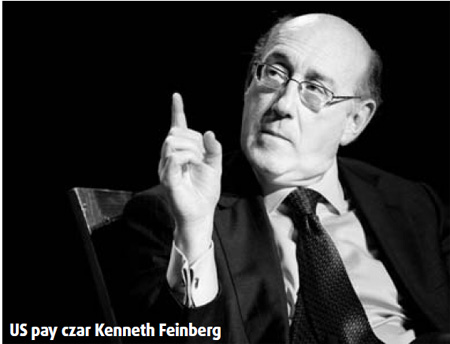
The sweeping cuts, being negotiated by US pay czar Kenneth Feinberg, would mark a bold move for an administration that has railed against excessively high pay on Wall Street.

White House economic advisor Lawrence Summers said he believed Feinberg's review would "produce an outcome where they will be very substantially reduced".

White House spokesman Bill Burton, traveling with President Barack Obama in New Jersey, told reporters: "The president put Ken Feinberg in place in order to be an advocate for taxpayers and it appears that Feinberg is doing what the president put him in place to do." Otherwise, Burton said, he would not comment ahead of the report, due on Oct 30.

The companies affected are: AIG, Bank of America, Citigroup, General Motors, Chrysler, GMAC and Chrysler Financial.

Tom Wilkinson, a GM spokesman, said that the auto company was "currently in discussions with Feinberg's office regarding executive compensation. We will have further information once those discussions have concluded".

Gina Proia, a spokeswoman for GMAC, said the finance company has "been working on a proposal that aims at embodying the principles set forth for compensation along with balancing the need to retain critical talent necessary to execute our turnaround. Until we receive notification about that plan, we have no further comment".

Chrysler Group issued a similar statement.

Representatives for Chrysler Financial, Bank of America, Citigroup and AIG declined to comment. A Treasury Department spokesman also declined to comment.

But company officials and lobbyists earlier this month said Bank of America, Citigroup, GMAC Financial Services and others were reworking their pay plans to ensure compensation reflects executive performance. They're giving executives more of their compensation in stock and stock options, and spreading pay over a longer period. They are also adopting plans to recapture some pay when bets go bad.

Blockbuster earnings and bonuses at Goldman Sachs Group Inc and other companies that received taxpayer assistance have stoked public anger over compensation as the United States grapples with a 9.8 percent unemployment level and little assistance for homeowners struggling to pay mortgages.

Feinberg, whose actions only impact companies that received "exceptional assistance" from the government, said on Tuesday that he may publicly disclose his rulings before the Oct 30 deadline. He could not be reached for comment on Wednesday.

The Wall Street Journal reported that he also planned to demand broader corporate governance changes, including splitting the roles of chairman and chief executive officer.

The sources said the top earners at AIG's financial products unit, largely blamed for risky bets that threatened the stability of the insurer, would not receive more than $200,000 in total individual pay.

That unit became the illustration of Wall Street insensitivity when it was revealed that its employees were receiving $165 million in retention bonuses, after taxpayers had pledged up to $180 billion to keep the company afloat.

In an interview with Reuters in August, Robert Benmosche, who became AIG's chief executive this summer, railed against efforts to regulate pay and criticism leveled at his employees, arguing, "You still need to pay people competitively."

Feinberg told a group of corporate directors on Tuesday that the bailed out companies have delivered to him a "consistent message" that they need to keep their pay competitive.

"You hear a great deal about the need for these companies to remain competitive," he said. "You hear that quite a bit."

Feinberg's review looked to be popular with organized labor and other groups, some of which have accused the administration of being cozy with Wall Street.

"I think he is right on the money and he is going after them as aggressively as he can," said Richard Ferlauto, director of corporate governance and pension investments for the American Federation of State, County and Municipal Employees.

But, Robert Profusek, a corporate governance lawyer with Jones Day in New York, called Feinberg's review "very discouraging".

Reuters-AP

(China Daily 10/23/2009 page17)