> Nation
Jilin Special: Changchun backs growth of cultural economy to the tune of 29.3 bn yuan
By Liu Mingtai (China Daily)
Updated: 2009-06-24 07:53

 Jilin Special: Changchun backs growth of cultural economy to the tune of 29.3 bn yuan

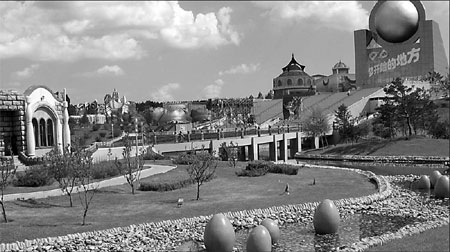
Inspired by Disneyland and Universal Studio Tours, Changchun Movie Wonderland is an ideal tourist destination in the city. Wang Jin

How important is culture to the vitality, prosperity and longevity of any given city in contemporary China? Whilst others may debate the competing claims of geography, infrastructure, natural resources or investment environment, for at least one city the sustenance of its cultural life remains of paramount importance.

Changchun, the capital of northeastern China's Jilin province, may not be numbered among China's most ancient cities, but its local government remains committed to nurturing its cultural growth - so much so that they've earmarked 29.3 billion yuan for cultural investment over the next five years.

Gao Guangbin, party secretary of the Changchun city committee, is adamant that supporting and maintaining the city's cultural growth is the key to its future: "Culture is an importance source of any city's social cohesion and creativity. It gives residents a sense of a common purpose and a shared history. It also showcases a city's collective strengths to outsiders and shows its true nature."

Ensuring that it maintains a vital sense of "self" is perhaps understandable for a city that sits as the very crossroads of Northeast Asia. Set in almost the exact center of long-established trade routes between the Korean peninsula, Russia, Japan and Mongolia, Changchun has recently capitalized on its pivotal position by establishing an annual investment and trade expo aimed at bringing together its disparate neighbors.

With so many diverse cultural influences swirling ever more closely round this increasingly cosmopolitan enclave, Gao's insistence on preserving Changchun's indigenous culture becomes considerably more understandable. Fortunately, the city has already made massive inroads in its preservation.

Emerging industry

Nestling, perhaps slightly awkwardly, among a number of hi-tech bedfellows, notably in the IT and environmentally friendly spheres, the cultural sector is now seen as something of a "sunrise industry". Although culture has long been a spur for tourism, it is only in the 21st century, with increased leisure time and greater levels of disposable income that a city's cultural heritage has rightly come to be seen as a potential cash generator. Changchun's cultural sector enjoyed a good 2008, delivering more than 4.2 billion yuan to the city's coffers, a year-on-year rise of some 22 percent, according to local statistics.

Jilin Special: Changchun backs growth of cultural economy to the tune of 29.3 bn yuan

Gao cites per capita gross domestic product (GDP) as the key index for evaluating the propensity for any urban population to become cultural consumers. According to Gao, in areas where the per capita GDP is $1,000 or below, then the local population's consumption pattern will focus purely on material items. When per capita GDP passes the $3,000 mark, then a combined material and cultural consumption pattern emerges. At the $5,000 level, many consumers see their spending patterns as primarily culturally-focused. According to local government figures, Changchun officially passed the $5,000 mark last year.

With its wealth of tourism resources, the city is almost uniquely well-positioned to benefit from this cultural awakening among its populace. It also benefits from a cultural element almost certainly missing from most Chinese cities - a well-established domestic film industry.

As the long-standing home of the eponymously-titled Changchun Film Group Corp (CFGC), one of China's leading movie-making groups, the city can add this key industry to its existing list of cultural assets, which already include tourism, exhibitions, animation and a host of creative companies. On the back of CFGC's success, the city is now hoping to emerge as one of China's leading film production centers.

The city has already capitalized on its celluloid success with the launch of Changchun Movie Wonderland, a film-themed fun park that has already proved a big hit with local residents and visitors alike. Taking both Hollywood's Universal Studio Tour and Disneyland as its inspiration, the Changchun Park seeks to attract tourists with its combination of movie-themed activities and thrilling state-of-the art rides.

The city has also not been slow in turning its other key industries and facilities into potential tourist attractions. Automotives, sculptures and works of art, as well as ice and snow landscapes and sports facilities have all been called upon in a bid to boost the city's visitor appeal.

More business-minded visitors have also been drawn to the city by its growing range of expos, trade shows and celebratory festivals. In recent years these have included events in the fields of cars and auto parts, agriculture, folk customs, movies and sculptures.

As an extension to its existing strengths in the film business, Changchun is also developing a lively and lucrative animation industry. The city is already home to the Jilin Animation College, one of the country's leading animation resources and a ready source of supply of talented staff for the fledgling industry. Currently there are 23 animation studios and more than 100 animation production companies based in the city.

The local government is actively supporting the growth of the city's animation base. At present some 100 million yuan's worth of investment is driving a number of animation-related projects across the city, including the Changchun digital animation base and the Jilin animation and creative gaming industrial park.

Government funding is also nurturing growth in a number of other creative sectors, including projects in the media, print, publishing, folk arts, performance, entertainment, and sports sectors.

Its success across the creative sectors has inspired the city government to invest in a major new urban project - the foundation of a dedicated creative industries zone. It is envisaged that, when completed, it will provide a "shop window" for the city's creative enterprises and boost the profitability of this rapidly emerging sector.

According to the city development plan, added value sourced from the cultural sector is set to reach $30 billion yuan by 2012, accounting for more than 6 percent of Changchun's entire GDP.

Locals' needs

Despite the obvious potential profitability of the city's creative economy, Gao maintains that this is not the dominant factor in the city's decision to drive the sector's growth. He believes that ensuring the facilities are in place to ensure the city's residents can enjoy a full and rewarding life remains of paramount importance.

Recent years have see the authorities placing increasing emphasis on the need for cultural construction. A number of its campaigns, including "Merry Countryside" and "Planting Culture in the Black Soil" have caught the attention of the CPC central committee and have, subsequently, been highly praised.

In a survey, jointly conducted last year by Oriental Outlook and the China Association of Mayors, Changchun was listed in the top 10 of Chinese cities in terms of local residents' satisfaction with their living environment.

In a bid to build these satisfaction levels still further, the local government has this year launched a series of high-profile events aimed at highlighting the cultural diversity that the city has to offer. So far these highly successful events have included a week-long festival of art and a well-supported book fair.

In terms of more permanent artistic endeavors, the local government has also drawn up ambitious plans to renew the city's cultural infrastructure. This will see a major construction program providing libraries, museums, exhibition halls, parks, stadiums, cinemas, and cultural and sports centers throughout the city. It will also see the development of a purpose-built opera house.

Extending the city's current network of public cultural facilities out to less well serviced rural areas is a key part of the scheme, as is renewed attention on the renovation of many of the city's historical and cultural heritage sites.

However Gao says that these construction projects are far from being the most important element of the city's cultural development. He says: "Human resources are of paramount importance when it comes to developing the cultural industry. We need to develop a number of cultural specialists and historical experts as some of our most valuable strategic resources.

"Only by encouraging the involvement of every member of our society in the city's cultural destiny and attracting professionals of the highest caliber to our city, will we achieve our full potential.

"We need to inspire the cultural and creative potential of local talents and employ knowledgeable individuals from outside the city to achieve the momentum necessary to establish Changchun as one of China's culturally most renowned cities."

(China Daily 06/24/2009 page4)