|
Fight Taliban, Pakistan tells victims
(China Daily)
Updated: 2009-06-18 07:53
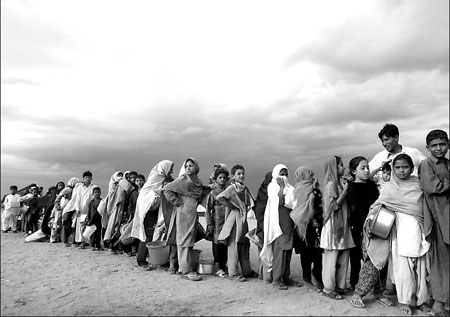
PESHAWAR: Civilians who lived under the Taliban's harsh rule in Pakistan's Swat Valley may soon be recruited to police the region - with preference going to those hit hardest during the militants' two-year campaign of terror, a top official says. Rebuilding the valley's decimated police force is considered crucial to bringing home more than 2 million people displaced by an army offensive and to keeping the Taliban from coming back. To fight an insurgency, "the people have to be actively with you," Malik Naveed Khan, inspector general of police for the North West Frontier Province, said. He said some 6,000 civilians would be recruited, along with a force of 2,500 ex-military personnel that lend further backing to the police. Authorities plan to open recruiting centers in camps where some 200,000 displaced Swatis and other refugees from surrounding districts are staying.

Khan said the plan needs formal approval from the provincial government, but that "everyone is on board". The goal is to have a full force ready by mid-August. Bashir Bilour, the province's senior minister, said authorities support the idea because of the citizens' "knowledge of the area, people and local customs and traditions. They will also have a feeling of ownership and participation in the process". Candidates for the new policing jobs need to be "able-bodied, tough people with a clear background, giving some preference to those whose houses have been burned and who have been targeted," Khan said. He said he expected recruits to be attracted by the salaries - $125 a month, about the same as a police constable earns. The government has already had some success in raising militias, known as lashkars, to fend off militants elsewhere in the northwest. Troops backed up a militia that arose in the Dir region this month and fought the Taliban, whom they blamed for a mosque bombing. Some experts caution that the new program could foster weapons trafficking and corruption. "It could end up being a bigger nuisance," said analyst Ikram Sehgal. "You run the risk of them going rogue or going into business for themselves." Khan outlined a clear plan for keeping the militias under control. He said the program would have a two-year time frame. Recruits would be given a uniform, weapons and training, would report to local police commanders and would be subject to police rules, he said. Several Swatis living in camps cautiously welcomed the idea of joining a militia, but insisted on a thorough vetting process to screen out infiltrating militants. "If the government provides proper facilities and training, then I and some of my friends are ready to join," said 22-year-old Taj Mohammad. "After all it is our soil. We have to protect our people." AP (China Daily 06/18/2009 page11) |