|
Can Japan's Silicon Valley pull it out of doldrums?
By William Pesek (China Daily)
Updated: 2009-05-20 08:13
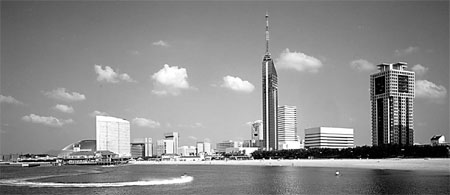
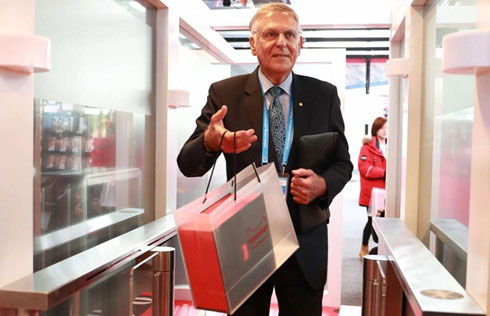
Tokyo is abuzz about who might soon be running the second-biggest economy. Events in the western city of Fukuoka may have an even bigger say in Japan's future. This city of 1.5 million aims to become Japan's Silicon Valley. As technology-crazed as the nation's 127 million people are, Japan has never encouraged universities, companies and investors to join hands to help the economy. The result is less innovation in a nation that should be awash in it. People such as Masaharu Okada of Kyushu University are working to change that. If they succeed, Japan's economic future will brighten. If they don't, expect the decades-long slide in living standards - and markets - to accelerate. Okada, 55, is the first to admit he's an odd character on campus. A lawyer by training, he spent many years working for technology firms in Boston, New York, Seattle and Tokyo, including Nippon Telegraph & Telephone Corp and Access Co. Now he's back in his hometown to light a fire under his students. "Japan has always been about big companies and lifetime employment," Okada says. "What's missing are startup companies like the ones in the US that come out of nowhere, create many good-paying jobs and change the world. We need to support this kind of thinking, and that is why I returned to Fukuoka and decided to work with students." Okada is deputy director of the University-Industry International Collaboration Center, and his specialty is intellectual-property strategies. It's all about encouraging students with an idea and a dream to execute it and locate the financing needed to create profitable companies from scratch. Why Fukuoka? Japan has long been too Tokyo-centric. Many executives aim to succeed in the nation's business and political center before looking overseas. Here, Fukuoka has a number of things going for it. One, its proximity to China and South Korea. Two, an international mindset that can seem more prevalent than in Tokyo or Osaka. And, well, it's a terrific place. In 2008, Monocle magazine named Fukuoka the 14th-most-livable city in the world. The criteria included urban planning, transportation links, crime rates, educational facilities and environmental initiatives. The quality of life Fukuokans enjoy is the envy of many Japanese. Fiscal reality It's also about fiscal reality. The global crisis means areas far outside Tokyo, like Kyushu, increasingly need to generate their own economic output. There's simply less public- spending to go around. In a recent report by the Economist Intelligence Unit and sponsored by Cisco Systems Inc, Japan ranked as the most innovative country based on the number of patents per million of population and other criteria. The trouble is, the vast majority of those patents are held by Japan's biggest companies. The tax system favors giants over start-ups, which exacerbates the concentration of new ideas in a handful of corporate boardrooms. It's time to change that. A growing hunger for green technologies around the globe is fueling Fukuoka's optimism. Around the city, small companies are producing more efficient hydrogen and solar energy, meeting global demand for recycling technologies and making diesel fuel out of discarded edible oils. The city's entrepreneurial spirit prompted Nobuyuki Idei, the former Sony Corp chief executive officer, to hold his annual Asia Innovation Initiative in Fukuoka in 2007 and 2008. It doesn't matter where Japan sets up its Silicon Valley, just so long as it does. As China, India and Southeast Asia raise the competitive pressure, Japan's ability to maintain a profitable export business for its large manufacturers is getting squeezed. The challenge is to create post-industrial export industries that are more about ideas and services. America's Silicon Valley didn't come about overnight. It was the result of a venture-capital system; robust private and public universities; brainpower from abroad; flexible labor markets; large research and development budgets including those of the US government; and loads of contrarian thinking. The importance of strong antitrust laws and openness to foreign investment also can't be understated. Considering all these ingredients, Japan faces an uphill climb. Getting over a deeply rooted resistance to immigration will be difficult enough, never mind cultivating a risk-taking dynamic in an aging workforce more akin to working at big companies than hanging out a shingle. Japan has no time to waste. This time, there is no room for half measures. Japan is highly skilled at borrowing to support growth. Even before a recent record stimulus package, the Organization for Economic Cooperation and Development expected public debt to approach 200 percent of gross domestic product next year. Stimulating innovation would pay much bigger dividends, and it's time Japan's leaders got serious. Throwing their weight and resources behind efforts in Fukuoka would be a good start. William Pesek is a Bloomberg News columnist. The opinions expressed are his own. (China Daily 05/20/2009 page16) |