![]() Can Kent put fizz back into real thing?
(China Daily)
Updated: 2008-07-02 07:47
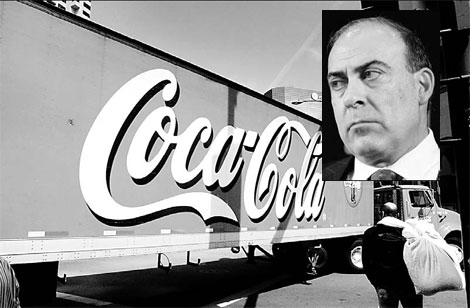
Muhtar Kent may be the only chief executive officer of Coca-Cola Co to benefit from an anemic US economy and record oil prices. The 55-year-old New York native moved into the top job at the world's biggest soft-drink maker yesterday with the stock down 15 percent since the start of this year - almost as low as when his predecessor was pulled out of retirement in 2004 to fix company sales and returns. That makes Kent's No 1 task to convince investors that they have been overestimating the impact of higher food and fuel prices on consumers outside North America, making the soft-drink maker as good as it has ever been, said Lauren Torres, an analyst at HSBC Global Research. "There are a lot of nervous people out there," said Torres, who with a "hold" rating is the most pessimistic of the 16 analysts covering the company. "Fundamentally, I don't think the story at Coke has changed. I think they are becoming a better company." The key to the beverage maker's strength is its overseas markets, where the weak dollar has worked to the Atlanta-based company's advantage, said John C. Thompson, a portfolio manager with Thompson Investment Management LLC. Particularly in emerging markets in Asia and Latin America, operating profit's percentage of sales has outstripped North America by twofold, making Coca-Cola a worthwhile investment, Thompson said. "We aren't anticipating Google growth rates here," said Thompson, whose firm oversees $1.2 billion in assets, including Coca-Cola stock. "You don't need rapid growth to make it a decent stock given the huge level of free cash flow they have." Free cash flow grew by $1 billion to $5.5 billion last year, with new growth helped by acquisitions of bottlers in the Philippines and elsewhere. HSBC's Torres predicts the shares will rise 19 percent over the next 12 months. The stock is projected to advance 27 percent, according to analyst estimates compiled by Bloomberg. While Coca-Cola has been unable to repair the North American market, Neville Isdell and Kent, his successor, accelerated growth overseas by focusing on emerging markets such as China and India, as well as mature markets, including Japan and the UK. The operating profit margin in North America was 22 percent last year, which compares with 39 percent in the division that includes North Asia and the Middle East and 54 percent in Latin America. Each division accounts for almost a quarter of total operating profit. Overseas performance helped bolster the company's stock last year to an eight-year high of $65.56 on Jan 10. In the months since, investor concern over a consumer cutback caused by high gasoline and food prices pushed Coca-Cola down to $51.98, its closing price in composite trading on the New York Stock Exchange on Monday. In North America and Europe, Coca-Cola is feeling a consumer slowdown. The company's second-largest distributor, Athens-based Coca-Cola Hellenic Bottling Co, said on June 13 that 2008 profit would be lower than previously forecast. That followed a similar statement May 28 by Atlanta-based Coca-Cola Enterprises Inc, the world's largest soft-drink distributor. Global sales

Globally that is not yet the case, with the volume of soda sales in the first quarter up 5 percent in all markets outside the North America. Volume was down 3 percent in Canada and the US. Overall revenue rose 21 percent in the first quarter. Kent, who has worked at Coca-Cola or its bottlers since 1978, was hired by Isdell in 2005 to oversee Coca-Cola's international divisions. Kent helped overcome a pesticide scare in India, falling canned-coffee sales in Japan and a frayed relationship over concentrate pricing with Coca-Cola Femsa SAB, the largest bottler in Latin America. He declined to be interviewed for this article. Kent's career also included management of Coca-Cola's Asia unit and a stint as CEO of Turkish brewer and bottler Efes Beverage Group. A decade ago, Kent was investigated for short-selling stock of Australian bottler Coca-Cola Amatil Ltd, where he was a manager, hours before the company told investors its profit would miss analysts' estimates. Kent, who wasn't charged with any wrongdoing, paid $260,000 to settle the case and later resigned from Amatil. Coca-Cola's board had an outside law firm investigate the matter before Isdell hired Kent. The company hasn't made the findings public. Kent has said the transaction was an honest mistake. Coca-Cola diversification Since becoming chief operating officer in December 2006, Kent has taken a special interest in promoting non-carbonated beverages and updating soda packaging. He helped negotiate the $4.1 billion purchase of Glaceau Vitaminwater-maker Energy Brands Inc and the buying of a stake in Honest Tea. PepsiCo Inc, with its Gatorade and Tropicana brands and snack food division, has outpaced Coca-Cola in diversification in the past decade. Kent and Isdell have said they are encouraged by growing sales of no-calorie Coca-Cola Zero, which the company calls the most successful new product since Diet Coke. The drink is now in 93 countries. Soda sales, which make up more than 80 percent of revenue worldwide, have declined in the US for seven consecutive quarters. Coca-Cola faces additional challenges. US fountain sales, which make up a third of revenue, have declined as cash-strapped consumers eat out less. Sales of 20-ounce soft drinks at convenience stores also have slowed, Coca-Cola said. US growth in sales of sports drinks, bottled water, water enhanced with vitamins and energy drinks, which have helped offset declines in soft drink sales, have decelerated, Morgan Stanley's Bill Pecoriello said June 23 at a conference by Beverage Digest. He is ranked by Institutional Investor magazine as the top US beverage analyst. Agencies (China Daily 07/02/2008 page16) |