Dumplings poisoned by 'saboteurs'
By Zhu Zhe
Updated: 2008-02-29 07:15
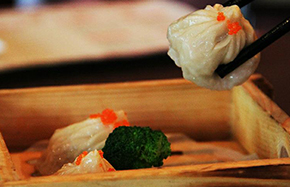
Chinese police yesterday said there was little chance that dumplings tainted with pesticides and blamed for making 10 people ill in Japan were contaminated in China.
"Our investigation shows that the poisoning incident in Japan was a case of sabotage, and not a food safety problem," Yu Xinmin, deputy director of the criminal investigation bureau with the Ministry of Public Security (MPS), said.
"And it's unlikely that the sabotage happened in China," he told a press conference organized by the State Council Information Office.

This is the first time that Chinese police have made a statement on the case, and Yu said the conclusion was arrived at after comprehensive investigation of the dumplings' raw materials, production procedures, transportation and personnel involved.
Wei Chuanzhong, deputy director of the General Administration of Quality Supervision, Inspection and Quarantine (AQSIQ), also said his organization had found no harmful chemicals in samples and no abnormal operations by the Chinese producer.
Traces of methamidophos, an insecticide banned in China from Jan 1, were found in the dumplings, on the packaging and in the vomit of the people who were sick in December and January after eating dumplings made by Tianyang Food Plant in Hebei.
There have been suggestions in both countries that the poisoning was deliberate and the contamination happened in the other country.
Japanese police said their tests had shown that methamidophos cannot permeate through sealed dumpling packages, indicating the contamination happened during production in China.
They also claimed that methamidophos found in the dumplings contained impurities, but all produced in Japan is pure. A small amount of methamidophos is made in the country to compare with other insecticides, Japanese media said.
However, Wang Guiqiang, a forensic science expert with the MPS, said laboratory tests conducted by the ministry showed that methamidophos with concentrations above 1 percent can permeate through packages after being stored for 10 hours at -18 C, a temperature that the dumplings were packaged, transported and sold.
"About 87 percent of our 62 test samples showed permeation," he said.
He also said impurities existed in methamidophos produced in many countries, as it is allowed by quality standards set by the United Nations Food and Agriculture Organization.
"So the impurities cannot be proof that the methamidophos is from China," he said.
Yu said both Chinese and Japanese police have evidence supporting their conclusions "but the problem is whose evidence is more scientific, objective and reliable".
Yu called for further investigation into the case and more cooperation from the Japanese side.
(China Daily 02/29/2008 page1)
|