Alcoa looks to greener growth in aluminum
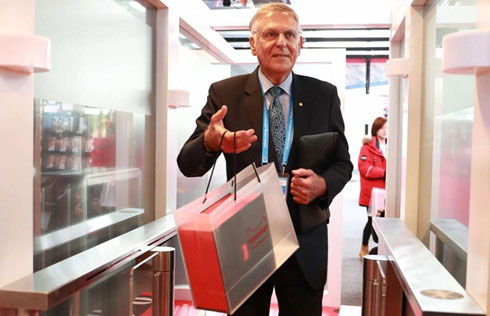
China's demand for aluminum is soaring, making for a potentially enormous market for global aluminum giant Alcoa. As the government attaches mounting importance to energy efficiency and emission reduction, Alcoa is offering advice on how to save energy and protect the environment, while at the same time expanding production to meet demand. Chen Jinya, newly appointed president for the Asia-Pacific Region of Alcoa, shares with China Daily reporter Wang Yu some of the company's commitments to and strategies in China.
Q: It is said that Alcoa is looking for expansion opportunities both upstream and downstream in the aluminum industry. Is that still true, especially as the government is sparing no effort to save energy and control emissions?
A: Alcoa views and treats China as a high priority because the country represents a major growth opportunity for all major aluminum companies. Alcoa came to China in 1993 and has since invested over $700 million. It is Alcoa's commitment to the Chinese aluminum industry to bring in new technologies, energy saving practices and environmental standards.
As a strong indication of Alcoa's commitment, the company has continued to expand investment in its largest facility in China, our Bohai operation. Some new products will be on stream from the Bohai in the middle of next year. Specific products include lithographic, can stock and sheet for use in the commercial transportation industry.
Q: We have learned that Alcoa was looking for merger and acquisition (M&A) opportunities in China. What is your top priority right now concerning potential M&As?
A: We will keep our door open for any growth option in China, including potential M&As. But we would rather keep tight-lipped on possible M&As right now.
Alcoa is committed to working in China for the long term and will do everything necessary to improve and enhance its strategic vision and productivity in the market. As a prudent business, Alcoa's priority is also improvement of its current business and productivity. The global aluminum industry is projected to double in the next 14 years. By the year 2020, China will consume as much aluminum as the rest of the world does today. With that foundation of opportunity, it is up to Alcoa to explore options that we can grow in order to support and foster this growth.
Q: What is your comment on the development of China's aluminum industry?
A: China's aluminum industry is growing with the growth of the economy. If one looks at aluminum consumption per capita, it is obvious that aluminum use is very closely related to the stages of the economic growth. For example, as of today, the aluminum consumption per capita in the US and Japan is between 28 to 30 kg. But in China, aluminum consumption is in its developing stage, with the figure of 6.67 kg per capita, although this is a big jump from a much lower number 10 years ago. China's growth needs aluminum and aluminum industry can do more to grow further.
China's aluminum industry is growing at a rate of 24 percent annually. From January to May, 2007, aluminum production increased by 36 percent, reaching 4.68 million tons, while alumina production increased to 7.62 million tons, up by 55 percent. The aluminum industry is full of potential and Alcoa will continue to be part of the growth and development.
Q: What is the most crucial factor in the aluminum segment to make sustainable and environmentally friendly development possible? Is it technology, investment or something else?
A: The most crucial factor in the industry that would make sustainable growth and environmental friendly development feasible is a paradigm shift. We must change our concept in developing and growing the aluminum industry. China needs a great amount of aluminum supplied and the aluminum industry must grow with lower emissions and energy consumption. At Alcoa, sustainability is a core value. The environment and energy will first be considered whenever a project is built or a plant is operated.
It should also be pointed out that aluminum has a unique selling position versus all the other materials and industries in this regard - the aluminum industry is projected to be greenhouse gas (GHG) neutral by the year 2020, simply through the projected growth of aluminum used in transportation industries (such as autos, airplanes, trucking, rail and marine craft). That means the aluminum used in transportation vehicles results in lower GHG emissions, which offset the GHG created when the material is produced. Aluminum is the only industry anywhere in the world that can make this claim, which certainly bodes well for the material as concerns about climate change grow each day.
Q: How does Alcoa manage to save energy and protect the environment while expanding production to meeting soaring demand?
A: These are not two contradictory processes. Growth and expansion must be based on energy saving and emission control. Again, there must be a paradigm shift. It is Alcoa's value that the environment comes first if there is any conflict between production, profit and environment protection. Alcoa has reduced GHG by 26 percent over 1990, several years ahead of our goal, while it has increased production. It can be done.
Q: What is your comment on China's long-term target to trim per-unit-GDP energy consumption and cut pollutant emissions?
A: We believe the efforts made by the Chinese government on environmental protection and energy saving make good sense. Any reduction in emissions and efforts to save energy must be recognized.
(China Daily 07/31/2007 page15)