What could be worse than a food scandal?
The answer: a fake food scandal designed to add dramatic tension to an
already delicate issue.
Some Chinese manufacturers have been accused of turning out inferior-quality
or counterfeit food or drug products. Some have been found to cut corners in
ingredients, while others might have used specifications out of sync with the
rest of the world.

Of course, the whole world has reason to worry. Food and drugs are not like
ordinary goods. If I bought a substandard T-shirt and it disintegrated the next
day, well, I just wasted a couple of bucks. But whatever I put into my body, the
consequences could be long-lasting.
That is why anyone who violates the law in these matters, more than in
anything else, should be prosecuted to the full extent of the law. Zheng Xiaoyu,
the former food and drug czar, did not get a tear of sympathy when he was
sentenced to die for taking bribes in exchange for approving drugs, some of
which did not comply with their own claims.
It is an ominous sign when journalists uncover food scandals. This is the job
of official food inspectors. If they are competent, journalists won't have a
field day doing such exposes. Yet, a journalist is not exceeding his function
when he does that. He provides the random checks that food producers probably
fear more than the mass campaigns that often begin with thunder and end with a
drizzle.
But just as there are corrupt officials, there are unscrupulous journalists.
The cardboard baozi story of this week adds a satirical twist to a tale of
international interest.
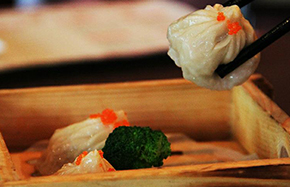
Here's what's been reported: A freelancing producer for Beijing TV, by the
name of Zi, asked a breakfast kitchen to make baozi (steamed bun with pork
fillings), but instead of pork and other edibles, he had them put in cardboard.
He videotaped the process and broadcast it as an investigative story.
If this is true, Zi was not being overzealous in
protecting consumer rights, but equated journalism with making fictional feature
films. He did not blow up a story, but scripted and directed it. The fact that
he was a freelancer does not really matter because most who work in China's
television industry do not have the iron-rice bowl. And lack of training is also
a lame excuse. Anyone who gets into journalism should know the difference
between telling a real story and fabricating one.
But in the mad dash for ratings, the sacred line dividing fact and fiction is
sometimes blurred. Many television shows use recreations, but contrary to the
common practice in other countries, most programs here keep it a secret. Next
time you see a talk show featuring a family feud, just remind yourself this
could be some unknown actors reading from a script.
I once told wannabe journalists that if you have a rich imagination and tend
to concoct or embellish your stories, you'd better get into a more lucrative
profession: writing for movies or television drama.
Uncovering a fake food scare may shed light on the deplorable lack of ethics
among some journalists, but it does not ease pressure on food safety officials,
whose job is much more essential to our lives. Just as one should not
incriminate a whole country's food industry with a few scandals, one should not
let one bad apple spoil the work of all journalists. We have heroes among us,
too, the most recent example being Fu Zhenzhong, the Henan television reporter
who exposed the shocking kiln slavery in Shanxi.
Email: raymondzhou@chinadaily.com.cn
(China Daily 07/21/2007 page4)