Aborigines remain in poverty, bad health

Updated: 2007-05-28 06:52

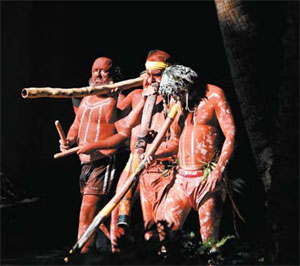
A group of traditionally dressed Aborigines play didgeridoos and music sticks as they lead a march through Sydney on Saturday to mark the 40th anniversary of the Aboriginal referendum. Reuters

Australia yesterday marked 40 years since a historic referendum granted Aborigines citizenship, but celebrations were muted by stark reminders the continent's original inhabitants are still poverty stricken and die much younger than the rest of society.

An overwhelming 91 percent of Australians voted in favor of reforms in the 1967 referendum that gave the federal government the power to make laws covering Aborigines and to count them in the official census for the first time.

Before then, Aborigines' legal rights varied from state to state, with some jurisdictions including them in laws covering wildlife and plants.

Rallies, marches and other ceremonies were held in capital cities on Saturday and yesterday to mark the anniversary - but the focus was on the Aborigines' continuing plight.

A minority of about 400,000 among a population of 21 million, Australia's Aborigines today suffer health and lifestyle problems more common to people living in the Third World than a fully developed nation like Australia.

On average, they die almost 20 years earlier than other Australians and suffer much higher rates of drug and alcohol abuse, diabetes and heart disease. Many live in slums in or on the fringes of cities, or in poverty in tiny, remote Outback communities.

Prime Minister John Howard said at a function in Canberra to mark the anniversary that many of the improvements in Aborigines' lives that supporters of the referendum had hoped for have not happened.

Howard's conservative government plans to increase spending on programs for Aborigines to about 3.5 billion Australian dollars ($2.86 billion) a year, but many indigenous leaders accuse him of trampling their hopes for special land rights that could give them an economic share of mining and farming developments.

Howard wants indigenous people to rely less on government handouts and to integrate more in the broader society.

"The right of an Aboriginal Australian to live on remote communal land and to speak an indigenous language is no right at all if it is accompanied by grinding poverty, overcrowding, poor health, community violence and isolation from mainstream Australian society," Howard said in a speech.

"There has to be an assumption of responsibility by Aboriginal communities as well as an offer of support from the government and the rest of the community," he said.

Howard is unpopular with many Aborigines, and one guest at yesterday's function yelled out at the end of the leader's speech accusing his government of genocidal policies, to widespread applause.

In South Australia state, about 1,000 people marched through the center of the capital, Adelaide, to mark the anniversary and in support of reconciliation between white and black Australians. Many hundreds more rallied on Saturday in Sydney and Melbourne on similar themes.

Agencies

(China Daily 05/28/2007 page7)