Altered photos stripped of their national awards
Updated: 2012-02-04 08:40
By Cheng Yingqi (China Daily)
|
|||||||||


BEIJING - Twenty-five photographs in a recent national contest were found to have been improved by computer technology and removed from the winning list.
The 25 disqualified photographs were categorized as documentary work, which was not supposed to receive computer enhancement. They account for almost half of the 52 winning works of their kind, the contest organizing committee disclosed in a statement on its website on Thursday.
The statement also said that another two photos shot on film were disqualified because the authors did not submit the original film within the required date.
 |
|
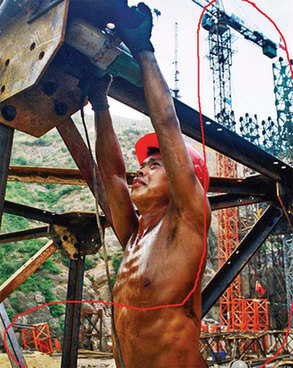
The color of the crane in this photo, submitted to the Image China contest, is inconsistent, Shanxi photographer Bai Suoliang pointed out. The person who took the picture was stripped of its award. Photo by blshe.com |
"In most cases, the problem of beautifying pictures with computer software appears in contests held for news photographs. But this contest is open to photographers nationwide, regardless of their occupation, and some participants simply do not know about the rule that they should not beautify their work," said Wang Wenlan, vice-president of China Photographers Association.
The Image China contest started in May last year, and received 21,870 works from 1,368 photographers nationwide by last October. Prizewinners would receive 200 to 10,000 yuan ($30 to $1,600) rewards.
Besides documentary work, the committee also gave prizes to artistic photos and landscape photos. The contest announcement did not specify that photos in any specific category could be improved by computer software.
The winning photos were revealed on Dec 23, but Shanxi photographer Bai Suoliang blew the whistle on the results.
On Dec 29 and Jan 2, Bai published posts on his blog, accusing two of the first-prize documentary works of being "forged".
On a photo named Dream Comes True, a young couple and an old couple both pose in front of the Tian'anmen Square rostrum in Beijing, but Bai said that the size of the two couples were out of sync with each other, and the direction of their shadows was wrong.
Bai posted more evidence in another post, with a dozen doubtful details, on an award-winning series of photos.
On Jan 3, the contest committee announced that they had noticed Bai's accusation and decided to revise the results, and were open to further reports on forged work.
"The participants in this contest might have innocently broken the rule, so removing their prize is enough. But if this happens to press photographers, we should punish them because they should be aware of the rule," said Wang, who is also a senior photographer of China Daily.
This is not the first time that forged photos have appeared in photography contests. In January 2010, the China Photographers Association stripped photographer Sang Yuzhu of his 2009 Golden Statue Award, the highest award for Chinese photographers, after discovering he plagiarized the winning photos.
Xu Lin, a retired senior editor of People's Daily, said he is happy to learn more and more people are paying attention to the problem.
"Fake photos won't come to an end in one blow, so we need a long-tern fight against it, and we need more people on our side," Xu said.






Hot Topics
Kim Jong-il, Mengniu, train crash probe, Vaclav Havel, New Year, coast guard death, Internet security, Mekong River, Strait of Hormuz, economic work conference
Editor's Picks

|
|

|

|

|

|