

 Comments
  Print
Print  Mail
Mail  Large Medium Small
John Deng, chairman of Vimicro Corporation
After graduating with three degrees in five years from UC Berkeley, a record in the school's 130 year history, Deng joined IBM as a senior researcher in the mid-1980s.
After leaving IBM, he co-founded Pixim, a company specializing in digital imaging, in 1998 in Silicon Valley. He sold his interests in Pixim in 1999 and returned to China to establish Vimicro, as he believed there were opportunities for digital imaging technology and DSP (digital signal processing) chips in consumer electronics and communication markets in China.
Vimicro became the first Chinese fabless chip company listed on NASDAQ in 2005. It is currently the global leader in multimedia signal processing chips. Its chips power over 60 percent of PC cameras shipped worldwide.
Q: Why did you choose to establish Vimicro in China and what is Vimicro's business model?
A: I returned from Silicon Valley in 1999. At that time, our integrated circuit (IC) industry still lagged behind other countries. But we were determined to come back since we saw huge market potential in China. The nation has strong demand for IC products, meanwhile it's a global manufacturing center.
In 2005, China accounted for one third of the world's $250-billion IC market. And semiconductors and chips were China's largest imported products, even more than crude oil or natural gas. So after a few years' efforts, we established a very unique business model through cooperating with the leading manufacturers in the industry such as Intel, Microsoft, Dell and so on. Meanwhile, we have spent a lot of effort in research and developing our own intellectual property. So far, we have accumulated more than 800 patents around the world and achieved some key breakthroughs in seven areas.
Q: How did Vimicro become a global company in terms of sales, technology as well as clients?
A: From innovation to value creation, it's not an easy process.
For Vimicro, a critical experience is that we tried to make every element of our business the best. For example, we are listed in NASDAQ, the most mature capital market in the world. Our employees are the best technical talents from China. Meanwhile, our clients are the top brands in the world. Only by integrating the best resources can you use innovation to create value.
Q: As the top executive of your company, what's your understanding of leadership?
A: Well, leadership is different from management. It's not about the leader, nor about skill. I think leadership is about how the leader treats followers to make everybody more successful.
I think leadership comes from your respect of your team, shareholders, directors, partners as well as clients. Through respect, you can win their trust and support, which is important for you to deal with difficulties and optimize your resources.
Richard Samuel Elman, CEO of Noble Group Limited
Elman started his career in the commodities trading business with Philip Brothers in the 1970s.
In 1986, he left Philip Brothers and started Noble in Hong Kong with an initial capital of $100,000.
Through a mixture of organic expansion and strategic acquisitions, he has built the company from a pure trading business into a value-added service provider along the supply chain for producers to customers by diversifying both horizontally across commodity markets and vertically through the supply chain.
In March 1997, Noble was listed on the Singapore Stock Exchange. It is now the biggest supply chain and logistics company based in Asia, one of the world's top five coffee merchants and supplies 50 percent of China's cocoa bean consumption for chocolate production. The company has also diversified its investments into coal mines, soybean crushing plants and loading ports across the globe.
Q: What does the term 'entrepreneurial spirit' mean to you?
A: It's the way you behave, its having a vision for the future, and I think it's getting it done. That's probably the most important thing. Lots of people think lots of good ideas but they don't actually execute. And I think at the end of the day, the people who are successful execute. Whether it's science or business, or whatever.
Q: So in that sense, it's the ability to have your ideas, and stick with it, and keep with it.
A: Yes, absolutely. You've got to see the goal posts and the opposite sides of the goal posts and make sure that you score the goal. It's a passion for what you do, it's a passion for how you do it, and if you do it with a huge amount of enthusiasm, you'll win.
Q: Are there any particular tips that you want to share with us?
A: Yeah, there are 1,500 people at Noble...Each one of us that joined helped us to grow to where we are today. You don't build a business like this by yourself. You need other people. And they're the ones who're actually building it.
It's probably easy for me. I just had the idea - I said let's double the size of this company every five years, and let all the other people figure out how to do it. Of course, I was involved as well.
Q: Can you share with us some critical dates and events when you were expanding the business?
A: I think clearly there were some critical dates and events. I think one of them was listing in Hong Kong in the first place, and then privatizing, and relisting in Singapore in 1997. And then of course, within 3 months of us relisting in 1997, we had the Asian Crisis - very reminiscent of perhaps what's happened recently in Thailand - and then we had to start all over again. So it was all back to square one.
I think maybe some people have seen our advertising, and certainly the people within Noble see it everyday, and our slogan is 'we're very hands on.' So we all get involved. We take it day by day. We have an end game and we try to achieve those results.
Q: Noble has won a lot of corporate governance awards. What does corporate governance mean to you?
A: Well, I think there's a Chinese expression that says, 'a fish smells from the head.'
So you have to set the standard and if you set high standards, then corporate governance becomes a way of life. It's not an issue. It's not should we do it properly, I mean there's two ways to do things - the right way and the wrong way - lets do it the right way, lets do it with respect, lets do it with transparency, lets treat our shareholders as a part of the company, not some encumbrance or annoyance that gets in your way. They are our shareholders, they've given us the equity to develop the business, and they've given us the franchise to do that.
And as I say, it's a way of life, and its not a big problem. Do unto others as you would want done unto yourself. That's the biblical phrase, or something like that, and that's how we operate.
Guo Guangchang, president & CEO, Shanghai Fosun High Technology Group Co Ltd
In 1992, Guo started his first company to capitalize on the potential opportunities from the opening up of the Chinese economy. His entrepreneurial spirit and perseverance paid off when his team successfully produced a hepatitis tester.
He formed Fosun Pharmaceutical in 1994 and had it listed on the Shanghai Stock Exchange in 1998.
In 1994, he entered the property market by establishing Forte Land, which was listed on the Hong Kong Stock Exchange in 2004.
In 2001, Guo expanded into the iron and steel industry and succeeded in turning around the loss making business of Nanjing Iron & Steel Group. He has also successfully invested in other industries including retail, securities and media.
 Guo's philosophy of "discover, manage and prosper" has helped him create one of China's largest conglomerates within the last two decades.
Q: You became a teacher at Fudan University after graduation. But later you left the ivory tower to lead an enterprise. Do you have a different understanding of entrepreneurial spirit due to these two periods?
A: It is almost the same. I still have the same sense of responsibility of doing something for society. When I worked in the university, I always tried to find and solve some theoretical problems because I majored in philosophy. After I started my own business, I still had the same wish. The fundamental responsibility of an enterprise is to create value and push forward social progress.
Q: You started your business in the pharmaceutical industry with which you were not very familiar. You even entered the real estate industry in 1994 and the steel industry in 2001. How do you deal with challenges arising from entering different industries?
A: The difference between Chinese enterprises and their foreign counterparts is that we are not mature and the industries we are in are not mature either. There is no full competition. Under such conditions, it doesn't matter who owns what. What matters is who can learn the fastest.
To a company involved in different industries, it is most important whether your team has the ability to study and whether you can immediately set up a team to learn the new situation.
Second, our company tries to become a professional company in diversified businesses. Professionalism is necessary for a company in many businesses. Such professionalism includes how to balance the risks among different industries, how to set up the best team to run the business in each industry, how to find new investment opportunities, and how to improve yourself in different industries.
Q: How does your personality affect your business?
A: Let me give you one example. If we are going somewhere today, and if I know one of us knows how to get there, I would not ask any question and follow. But if I am sure no one knows how to get there, I will find it out myself.
Fosun pays lots of attention to team building and cooperation. An important part of my personality is that I am good at drawing people together. That is also the personality of our company.
Jiang Nanchun, chairman & CEO of Focus Media (China) Holding Ltd
Jiang worked part-time in the advertising industry when he was a college student. He started his own advertising agency in 1994, focusing on IT advertising services.
He established Focus Media in 2003 and invented the concept of "commercial location advertising" in China. In one and a half years, he attracted funding of more than $85 million and expanded its markets to Hong Kong, Taiwan and Singapore.
Focus Media became China's largest commercial location advertising company within three years and was listed on NASDAQ in 2005. The company has since acquired several other advertising firms, including its largest competitor.
The company now operates in 75 Chinese cities, with a 70 percent share in the commercial location advertising market. It is also rapidly expanding into other advertising media such as mobile phones and cinemas.
Q: The value of Focus Media increased from an initial investment of 10 million yuan to the present market capitalization of $3.7 billion. Do you have any concerns about a future bottleneck with such business size and market dominance?
A: I don't think so. If you just regard Focus Media as a real estate TV advertising agency, you will think our growth potential is limited. But what Focus Media is doing now is building the largest life cycle media in China. I usually say Focus Media is neither TV, newspaper, nor outdoor advertising agency.
The thinking model of the advertising business has changed: advertising clients care about who their target customers are, and what their lifestyle is, and what touch points there are in their lives. People watch TV programs at home after work, but when they go to office buildings to take elevators, Karaoke, bars, shopping malls, they see advertisements on LCD displays and mobile phone screens.
So I firmly believe the future of media budgets will not be distributed according to different types of media, but among different time slots and spaces of consumers. Focus Media will seek development in two directions: more coverage and more subdivision.
Q: You said earlier that this is not a good time to enter the US and European market, but can you tell us why? What is your plan for Focus Media in China?
A: When I was on the road in the United States and Europe for the initial public offering, a simple characteristic is many buildings are not tall and have just several floors. Another characteristic is that populations are lower as compared to China, so people do not need to wait for too long for elevators. But in China, the elevators are usually crowded and people have to wait for five or 10 minutes to get into the elevators and spend another 10 minutes to get to their floors. So I think this business model of office building LCD TV advertising is mainly suitable to Asian markets like China, South Korean and Japan.
In China, we have office building displays, mobile phone advertising, LED displays on roads, but we need to go toward the Internet. The TV market still has many regulations, but in the Internet market, it is free and the Internet is becoming increasingly important, so we do not exclude the possibility of entering this area.
Kwok Siu Ming, chairman & CEO of Sa Sa International Holdings Ltd
In 1978, Kwok, with his wife, established their first cosmetics counter with an area of only 40 square feet. He found a niche in the cosmetics market and was able to offer deep discounts to customers. The business grew rapidly and soon expanded to occupy the whole basement in the shopping arcade.
Since then, Kwok has successfully expanded SaSa from one outlet to a network with over 100 retail outlets and 11 beauty centers in seven Asian countries. SaSa was listed in Hong Kong in 1997 and has a market capitalization of nearly HK$4 billion.
SaSa is now one of the most distinguished Hong Kong brands.
Q: How did you start the cosmetics retailing business?
A: In 1978, my wife and I rented a shop in a shopping mall in Hong Kong and began to sell cosmetics with an initial investment worth of 20,000 yuan. She was responsible for selling products, and I, replenishing the stock. I knew nothing about cosmetics at the beginning, and I soon found myself fascinated by the business.
Q: Are there some memorable turning points in the past 19-years of business?
A: Surely there are. One of them was in 1989 when the owner of the shopping mall suddenly raised the renting fees to 45,000 yuan from 8,500 yuan. This was still unaffordable for us although the business had grown bigger through 11 years of our efforts. We tried to negotiate with the owner, but failed. Very soon, he rented the shop out to others, which gave us a big blow. We made an immediate choice, moving out of the shopping mall to the open market which proved a wise choice.
The business in the open market was amazingly good, four to five times of before. What magic! And six months later, a Japanese television station interviewed us because SaSa had become much more popular among Japanese visitors to HK.
Q: How has SaSa grown more popular and powerful?
A: After the interview with the Japanese television station, a magazine from Taiwan came to visit us, which added to our confidence. We planned to open two stores annually. About one year later, we opened another store. In 1997, we had 10 stores and got listed in HK for raising funds. We began to expand overseas to Taiwan, Singapore and Malaysia until we had 20 stores and now we have almost 90 stores. We are looking forward to seeing the 100th SaSa store set up; probably it will be in Beijing.
Q: You mentioned a turning point, how about the others?
A: Another took place in the Financial Crisis (1997-1998), as 40 percent of SaSa's business came from outbound tourists before 1997, it slumped to 10 percent when the crisis hit Asia.
We then decided to shift more focus to local business, and SaSa had 15 to 20 more stores in HK during the 1998-2000 period, which generated an annual growth rate of five percent.
The other happened when SARS suddenly broke out. Few people would like to bother themselves buying cosmetics. We then turned to sell healthcare products, which again won consumers' hearts.
This makes me believe we should always be optimistic no matter what happens.
Q: What else have you learned?
A: We should keep updating ourselves, especially in the cosmetic sector, closely watching the trends and knowing the market needs. I love and enjoy doing the business.
I think we are only halfway to success.
(China Daily 02/05/2007 page6)

 Night views of Harbin through the lens
 Tibetans take train home after pilgrimage or travelling
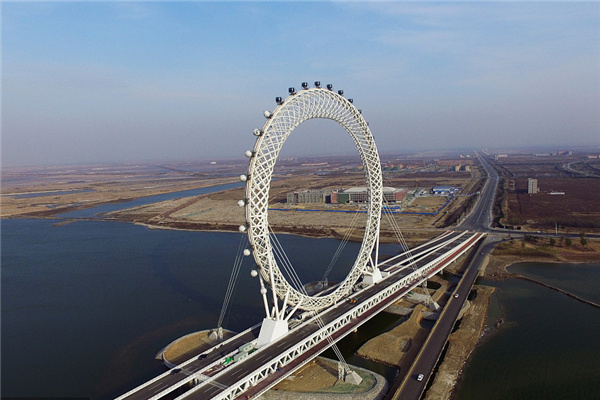 World's largest shaftless Ferris wheel built in China
 Ancient cities to be connected by Xi'an-Chengdu high-speed railway
 Snow turns Harbin into winter wonderland
 Reed Catkin Festival held in Wuhan
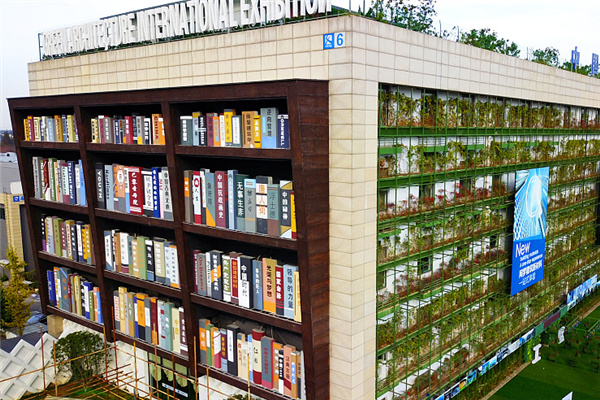 Is it a building or a bookshelf?
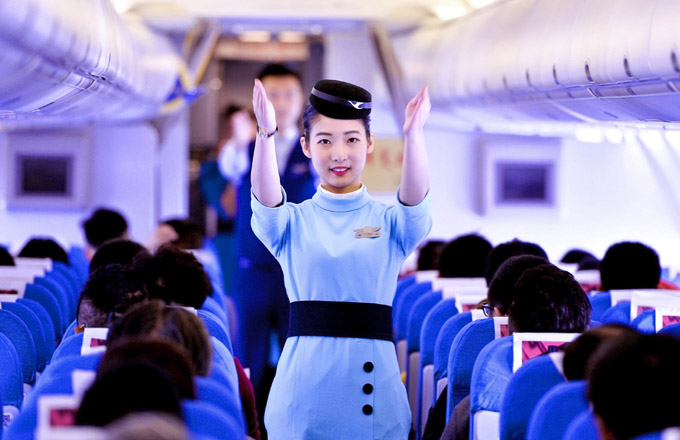 First flight
 Polar icebreaker Snow Dragon arrives in Antarctic
 Xi's vision on shared future for humanity
 UN's top environmental honors go to three in China
 German trains collide near Duesseldorf, several people injured
 China beats Germany 7-4 in men's curling Olympic qualification
 Bayern beat Paris Saint-Germain 3-1 in UEFA Champions League


Copyright 1995 - . All rights reserved. The content (including but not limited to text, photo, multimedia information, etc) published in this site belongs to China Daily Information Co (CDIC). Without written authorization from CDIC, such content shall not be republished or used in any form. Note: Browsers with 1024*768 or higher resolution are suggested for this site.
License for publishing multimedia online 0108263 Registration Number: 20100000002731