



Researchers release high-resolution maps of China's forest diversity









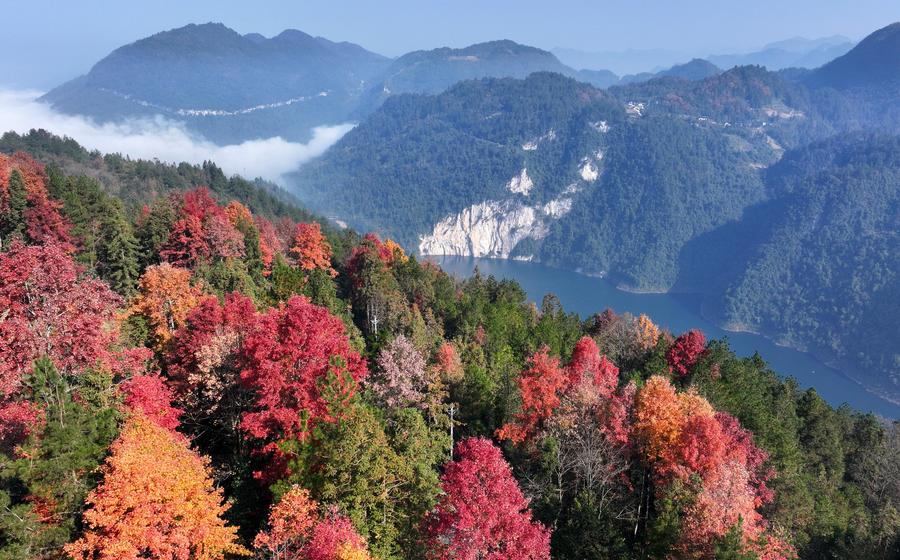
BEIJING -- Researchers have produced the first high-resolution maps detailing forest diversity patterns across China.
The study was led by the South China Botanical Garden of the Chinese Academy of Sciences, in collaboration with domestic and international institutions, and its results have been published in Nature Ecology & Evolution.
According to the study, forest diversity comprises two key dimensions: tree species richness and structural diversity. Both play vital roles in supporting wildlife and enhancing carbon storage. The previous understanding of these patterns was limited by the absence of comprehensive, fine-scale forest inventory data at the national level.
To address this gap, the research team analyzed data from nearly 3,400 forest plots containing over 300,000 individual trees. Based on this extensive dataset, they generated high-resolution maps that reveal the spatial distribution of species richness and structural diversity in China's natural forests.
The study has shown that distinct factors influence each aspect of diversity. Precipitation seasonality emerged as the primary predictor of tree species richness. Forests in regions with highly uneven intra-annual precipitation tend to host fewer tree species, as most woody plants are sensitive to large fluctuations in water availability. In contrast, forest age drives structural diversity, with older forests typically developing more layered canopies and supporting more shade-tolerant species.
Projections through the year 2100 suggest that ongoing forest maturation, combined with predicted increases in precipitation, could raise fine-scale species richness by approximately 36 percent and structural diversity by about 27 percent.
These findings provide important data for setting and achieving biodiversity goals. They also offer science-based guidance to improve how forests are protected and managed, per the study.
The researchers noted that future biodiversity shifts will present both opportunities and risks. While increased diversity may strengthen ecosystem resilience and carbon sequestration, it could also intensify competition, potentially further endangering rare and threatened species.
They emphasized that the enhanced in situ and ex situ conservation of threatened species is therefore essential to balance overall biodiversity gains with the protection of key taxa.


- Xi on environmental protection
- Guangzhou Metro partners with Singapore and Vietnam on rail cooperation
- Xiamen's Wuyuan Bay highlights ecological revival for World Environment Day
- China unveils top 10 eco-environmental science achievements for 2025
- China launches two groups of internet satellites within 24 hours
- Chinese astronomers uncover clues to formation of star clusters in Andromeda Galaxy's halo





