



Mysterious black marks reveal home of rare monkey









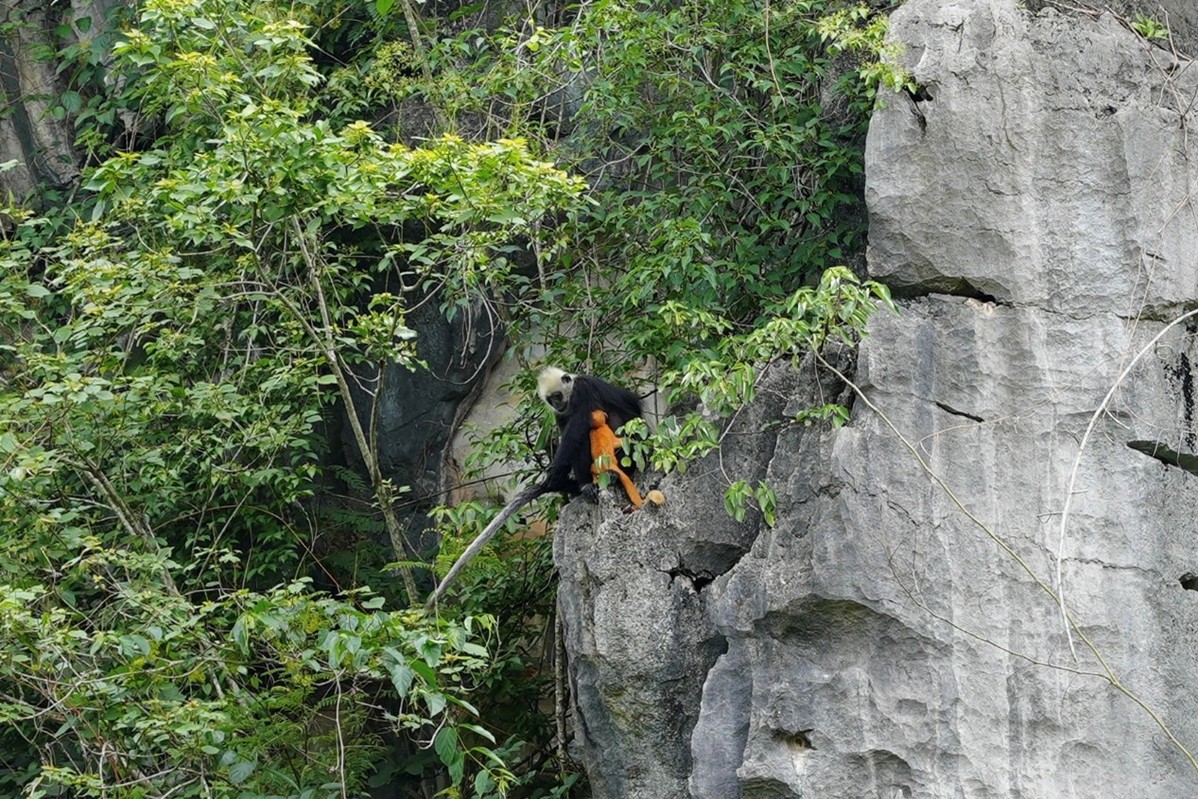
As for the existence of mysterious marks, they are actually left by white-headed langurs at their sleeping sites. These clues help researchers monitor the primates, who are now wild animals under first-class national protection, and the total population lives in the Chongzuo reserve.
The white-headed langur's population has experienced a surge from about 600 individuals at the end of the 1980s to more than 1400, by the year 2020.
Decades of conservation efforts, including habitat restoration and surveillance, have helped them bounce back, highlighting the broader significance of preserving biodiversity.
So next time you see a black streak on the cliff, that might just be a monkey's good-night note.
Li Wenzi, Yuan Ziyan, Xiao Yinuo, Zhou Xun, Wang Hong and Zhang Shenmao contributed to the story.


- Bridging Wuxi and Silicon Valley through global robotics research
- Police perform outreach to educate international students about exit-entry laws in Shanxi
- Beijing vice-mayor Xia Linmao under investigation
- National agricultural products conference opens in Linyi, Shandong
- Intl media tour participants learn about traditional Chinese culture in Zhuhai
- 66 finalist teams compete in AI-assisted medical image recognition in Guangxi





