



Reforms mulled to tackle aging society issues









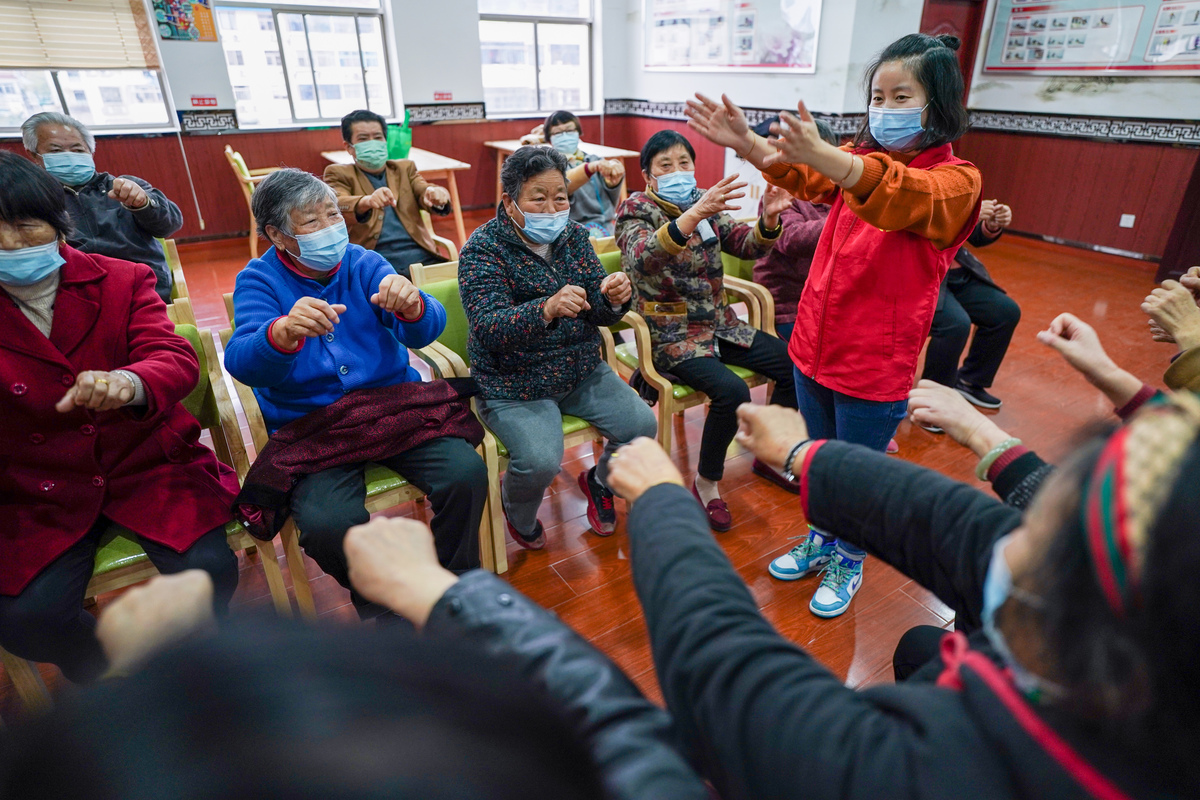
"It is urgent to target the healthcare demands of the elderly and improve senior healthcare services."
During a recent interview, He Dan, director of the center and a national political adviser, said that societal aging should not be treated as a "savage beast" eating into the country's healthy development, and conditions are favorable for China to address the challenges.
"First of all, our elderly workforce is very large because average life expectancy rose to 78.2 in 2021, and average healthy life expectancy has also been rising," she said.
"Most seniors in China are relatively young and energetic. They have rich experience, are in good health and long to actively participate in social activities, which is beneficial for long-term socioeconomic development."
She added that China's 280 million seniors have huge consumption potential and represent a promising market for elderly-oriented products and services.
Li Daokui, a professor at Tsinghua University's School of Economics and Management, said human resources are expected to keep increasing until 2040, then remain stable for about a decade, thanks to improvements in health and education levels.
"If the country's human resources can be further improved and deployed thoroughly, GDP growth can potentially reach 5.9 percent through to 2030, be kept at 4.9 percent from 2031 to 2040, and 4.1 percent from 2041 to 2050," Li said, citing modeling results from a study he co-authored.


- Shanghai advances property sales reform
- Chinese craftsman defends consecutive gold title in jewelry at the 48th WorldSkills Competition
- New high-speed train is the farthest north
- Confucius' wisdom offers insights for today's education
- Turkmenistan unveils Chinese-made FK-2000 air defense system
- China releases bilingual legal report highlighting key developments and reforms





