



However it's pronounced, tomatoes mean success









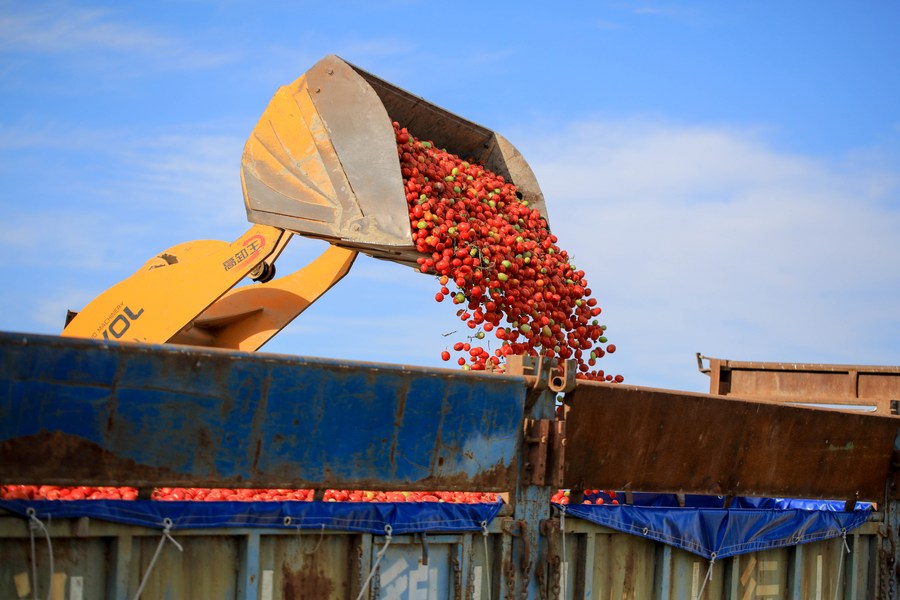
Some say "to-may-to", others say "to-mah-to", but growers in the Xinjiang Uygur autonomous region share similar stories of success.
Some of them shared their personal experiences about improving their lives at a news conference on Wednesday, countering what they said were lies about forced labor fabricated by some anti-China Westerners.
Salijan Xakir, a 39-year-old farmer from Hejing county in Bayingolin Mongol autonomous prefecture, said he started growing tomatoes in 2011 and earned 46,000 yuan ($7,000) that year. That encouraged him to expand his production.
Last year, Salijan and three friends invested 1.5 million yuan to grow tomato on a field of 47 hectares.
"We earned 2 million yuan from tomato cultivation last year. This year, we've expanded the field to 200 hectares," he said.
The ripe tomatoes are sent to local factories to be processed into ketchup, tomato seed oil, lycopene and other products that will be sold in cities across the country, he said.
By growing tomatoes, he managed to buy an apartment, a pickup truck and a car.
"During my spare time, I take my wife and three daughters on trips. We've created a happy life by the labor of our own hands," he said.
Rayilam Hamdulla, 22, works for the marketing department of a food manufacturer in Changji Hui autonomous prefecture. Its tomato juice and ketchup sell well on such e-commerce platforms as Taobao and Pinduoduo.
"My company has also improved the employment rate. Nearby tomato growers enjoy an increased income, as our company regularly orders from them," she said.


- China activates Level IV flood response in Heilongjiang
- China announces new steps to protect Huangyan Island National Nature Reserve
- Inner Mongolia's Hohhot named 'World Dairy Capital'
- Latest medical team leaves China to fight DRC Ebola outbreak
- China reports COVID-19 activity at moderate level
- Latest bulk drug procurement includes 65 types of medicines





