



Govt unveils plan to restore, expand mangrove coverage









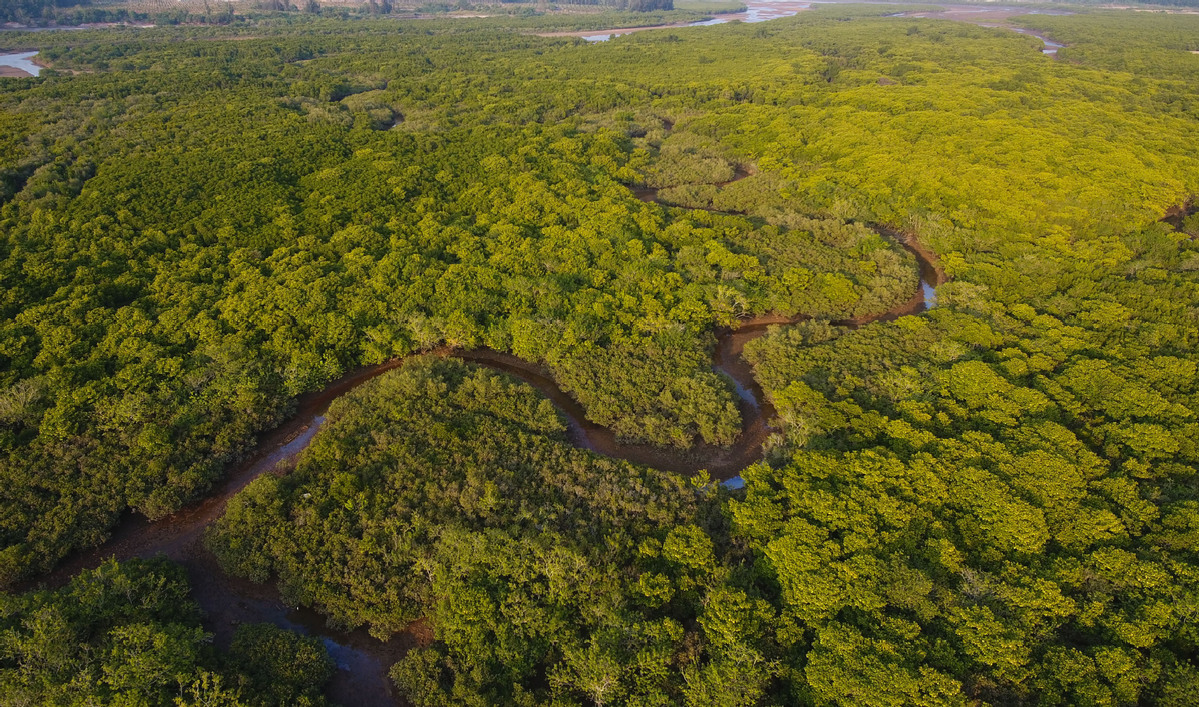
China has drafted an action plan to restore the country's 18,800 hectares mangrove forests and plant another 9,050 hectares in the next five years.
Under the plan announced by the Ministry of Natural Resources and the National Forestry and Grassland Administration, a comprehensive protection program will be launched, which will covers all the mangrove forests and areas suitable for it's growth.
The plan also emphasizes the importance of protecting current mangrove forest nature reserves and urges related departments to clean up all the fishing pools within the reserves.
"We'll strengthen technical support to boost mangrove forest protection and restoration, further intensifying surveillance system, and introduce related laws and regulations as soon as possible," Zhou Yuanbo, director of the ministry's bio-restoration bureau, said at a news conference on Friday.
In the 1950s, China had about 50,000 hectares of mangrove forest - a coverage that plays an important role of improving biodiversity in the marine. But the area declined sharply to 22,000 hectares in 2001 due to human activities, such as environmental pollution.
"Seashore mangrove wetlands boasting rich biodiversity have become a highly valued ecosystem in the world, as they can form natural sea shelterbelts to prevent wind and waves, protect levees and shores, promote silt formation and purify seawater," Wu Zhimin, director of the administration's wetland protection bureau, said.
According to the administration, China owns 37 sub-species of mangroves, mainly located in South China's Guangdong, Hainan and Fujian provinces as well as the Guangxi Zhuang autonomous region.


- Global sci-tech exchange to expand through International Month
- Mainland, HK police bust cross-border banking ring
- CAS launches program for extreme frontier breakthroughs
- China sent over 100 tons of disaster relief supplies to Nepal
- Yanshiping Station, world's highest passenger stop, eases travel in Xizang
- Nishan Forum on World Civilizations calls for a more equitable global governance system





