



Beijing moves to create lab network









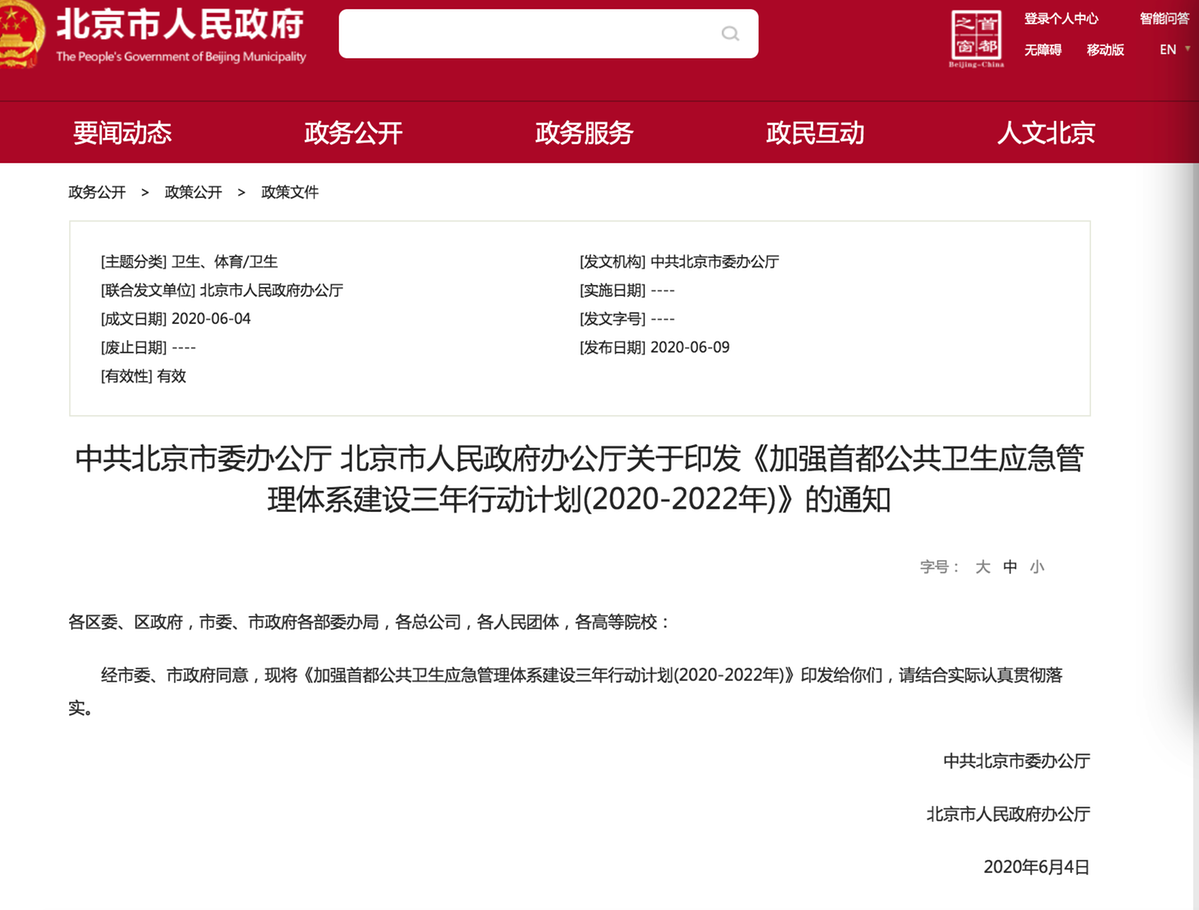
Beijing released detailed plans on Tuesday for key laboratories to handle infectious diseases, along with a screening system, to be established by the end of 2022.
The capital will set up a multilevel monitoring system for public health emergencies within three years to enhance its capacity in epidemiological investigations and epidemic analysis, under a three-year action plan published by the municipal government.
Disease surveillance spots will be designated at ports of entry, airports, railway stations, bus stations and schools, according to the plan.
Beijing's government will keep a close eye on infectious disease prevention and control, especially major diseases and emerging infectious diseases such as the novel coronavirus, the plan said.
Under the plan, the city's municipal health commission, in cooperation with other departments, including the city's development and reform commission and its science and technology commission and district governments, will build a infectious disease testing laboratory network.
A high-level Level 3 biological lab, is being considered as an early component, according to the plan. Once completed, the bio lab will be open to the city's medical institutions, universities and researchers, as well as enterprises.
Inspection and testing capacity will also be largely improved in the capital once detection methods are optimized and labs are built, the plan said.


- Experts intensify monitoring after deadly mudslide in Xizang
- Death toll rises following Jiangxi landslides
- Cross-border cooperation key to Himalayan disaster early warning
- China establishes communication channels as 261 foreign nationals remain missing
- Foreign journalists impressed by China's rapid disaster response, urge global climate action
- China assists 1,720 Nepalese border residents after mudslide hits border port





