



Threat from lake created by landslides starts to recede









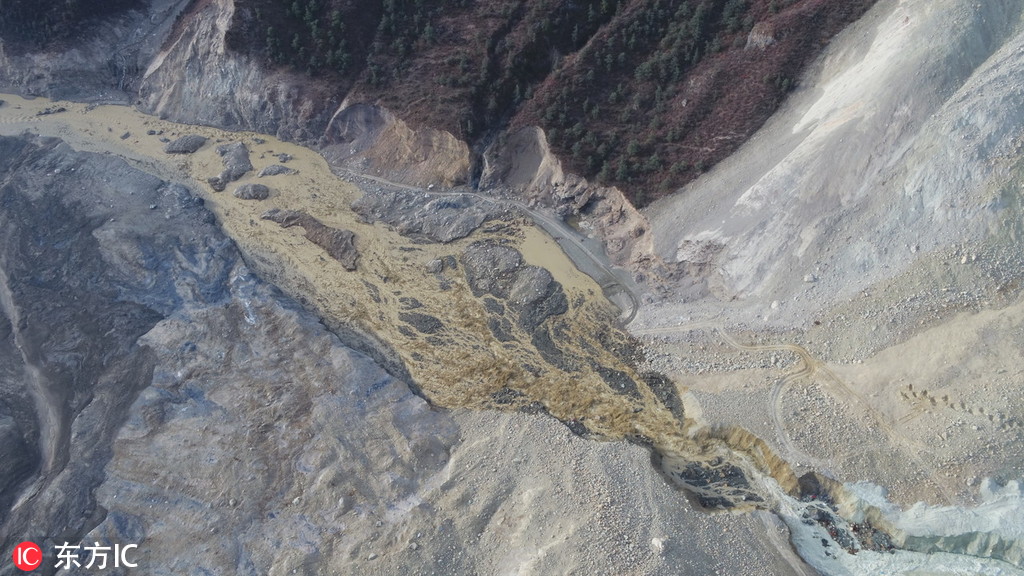
Water has started to recede from a lake created by landslides on the border of Sichuan province and the Tibet autonomous region as of 8 am on Thursday, Xinhua News Agency reported, citing disaster relief authorities.
There was still 79 million cubic meters of water in the lake, the report said, significantly lower than the 524 million cubic meters on Monday.
The water flowed in the lake at a speed of 507 cubic meters every second, lower than the 529 cubic meter of water that was coming in previously, Xinhua said.
Relief personnel from the Ministry of Emergency Management have arrived in Chamdo, Tibet, to monitor the situation, it said.
The lake formed when two landslides - one in Chamdo, Tibet, and the other in Garze Tibetan autonomous region, Sichuan - blocked the Jinsha River in mid-October.
A man-made floodway was created to channel the water and prevent a secondary disaster if the natural dam were to burst, Ministry of Emergency Management announced on Sunday.
The discharge - which began on Monday - has sent large volume of water downstream, washing away a bridge over the Jinsha River in Sichuan on Wednesday, disrupting traffic on a major highway connecting the province with Tibet.
Flood control authorities in Yunnan province farther south are still on alert to cope with the risks brought by the discharge, and are calculating the economic losses, local flood control authorities told Xinhua early on Thursday.


- Meet the only female competitor in Wall and Floor Tiling event
- Xiangxi: Where history echoes and renewal rises
- Xi's key moments during his US visit
- Dazzling performances spark new interest for spectators at WorldSkills Shanghai
- Countdown to Nishan forum: A bronze symbol of order
- Going for gold at WorldSkills competition





