



Xinjiang's man-made 'green wall' holds desertification in check









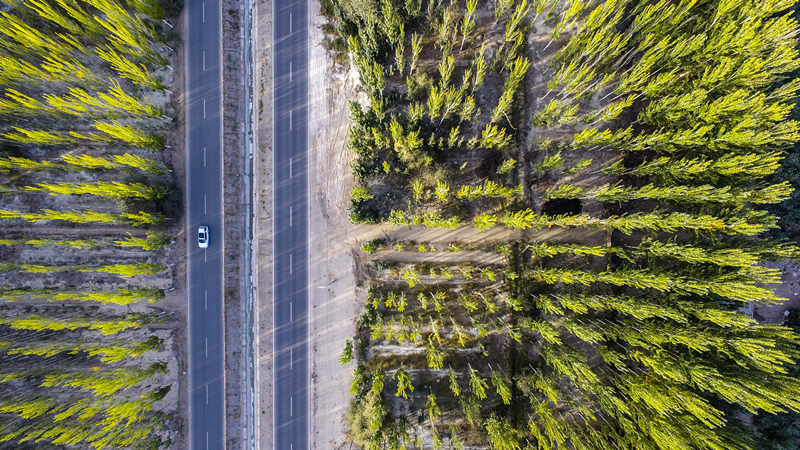
Groups of technicians and workers headed to Kekeya to solve the soil and water problems, and also build roads to aid the transportation of plants and trees to the barren land.
From the beginning, the local government mobilized the public to grow trees. Later, Aksu residents from all walks of life joined the campaign voluntarily, digging holes for trees and fertilizing the land.
"I still dream about digging tree holes, which made my entire body ache," said 50-something Lai Qing, reminiscing about her days of tree planting when she was 20.
From 1986 to 2015, 3.4 million volunteers planted about 13.37 million trees in Aksu, according to the local forestry bureau.
As a result, the number of dust-laden days per year fell sharply, from about 100 to 29, the local meteorological department said.
Thanks to the efforts of forest rangers, the survival rate of trees in Kekeya surpassed 87.5 percent, far beyond expectations.
"I would feel guilty if I failed to take care of the trees that people had worked so hard to plant," said Imam Memet, who has been patrolling and protecting Aksu's forests for three decades.


- Guangdong school officials investigated for recruitment misconduct
- China's youth unemployment rate rises as college graduates seek jobs
- Explore the landing pad of China's historic first rocket land recovery
- Rare otter found with expanding habitats in South China
- Shanghai unveils plans to advance women, children and family development
- Chinese defense minister commends Timor-Leste for upholding strategic autonomy





